
The Memory Algorithm
Every memory holds a secret. Some were never yours to begin with.
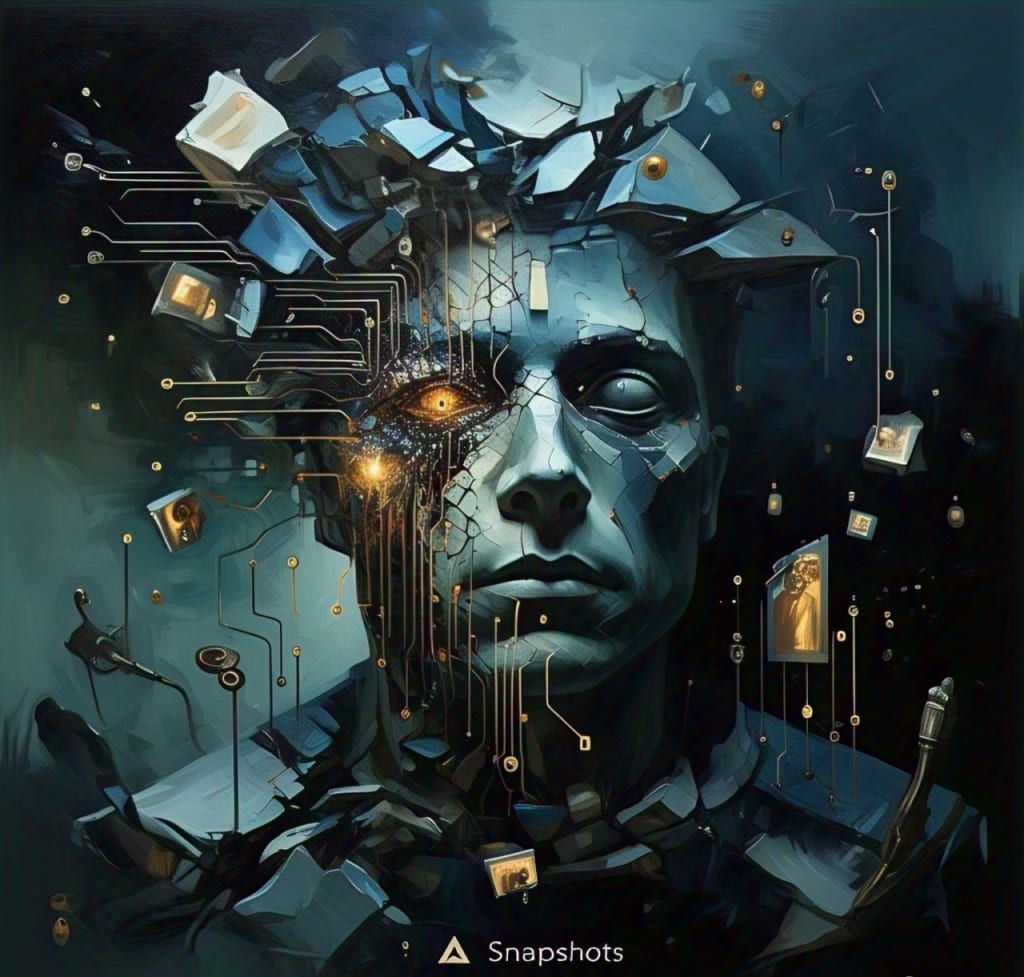
It began with the smell of roses.
Elena never kept flowers in her apartment. They wilted too quickly, and besides, she was allergic. But this morning, the sharp scent filled the kitchen as if someone had placed a fresh bouquet by the window.
She blinked against the sunlight. The apartment looked normal—white walls, old coffee machine humming, the usual pile of unopened mail. But something was off. It wasn’t the scent alone. It was the way the light fell too gently across the floor, like a memory instead of a moment.
She walked to the window. No flowers.
And yet, she remembered putting them there. Red roses. Wrapped in paper. The card had said Forgive me. She remembered picking it up, reading it, crying. She remembered breaking the vase. The memory was so vivid it made her chest tighten.
Except—it never happened.
Elena hadn’t dated anyone in three years.
She sat down, heart racing, and opened her laptop. Maybe it was another glitch. Dr. Kwon had warned her about side effects. “There’s a risk of memory bleed,” he had said. “Especially with complex patterns like grief or regret. The algorithm works best when emotions are clear-cut.”
But her emotions had never been clear-cut. That’s why she’d agreed to the procedure.
She tapped the icon: NeuroSync: Memory Algorithm 3.6
Her profile loaded. There it was—under “Emotional Realignments”:
Session 3: Memory Reconstruction – Event Cluster: Relationship (user-defined trauma)
Status: SUCCESSFUL
She hadn’t just deleted him. She’d rewritten him. Reprogrammed the entire year they’d spent together—every conversation, every touch—until the algorithm concluded she had never loved him at all.
So why did she remember roses?
By noon, Elena was outside the Memory Clinic.
The building was glass and silver, all sharp edges and digital serenity. People came here to be made whole again. Soldiers, abuse victims, grieving parents. And people like her—those who just wanted to forget.
“Miss Reyes?” the receptionist asked. “You’re not scheduled for a session today.”
“I think something’s wrong,” she said. “With the implant.”
They led her to a private room. Ten minutes later, Dr. Kwon entered, adjusting his glasses.
“Elena,” he said with careful warmth. “What are you experiencing?”
She told him. The roses. The card. The feeling that something real had slipped through.
He nodded slowly, tapping on a tablet. “It’s not uncommon. Memory isn’t a vault—it’s a network. Our process can’t erase a feeling entirely if it’s tied to multiple nodes.”
“I thought that’s what the algorithm did. Find the patterns. Rewrite the triggers.”
“It does. But think of it like painting over a wall. The old color can still bleed through if the light hits just right.”
She stared at him. “So the memories are still there?”
“No. Just echoes. Fragments. They don’t belong to your conscious timeline anymore.” He paused. “Would you like us to reinforce the deletion?”
She hesitated.
That was the problem. She shouldn’t be hesitating. She had signed every waiver, paid every credit, and erased every trace of him. And yet—
“No,” she said quietly. “I need to know if any of it was real.”
Dr. Kwon studied her. “There’s another option. An audit. We can pull a copy of your neural logs and review the reconstructed patterns. It may help you differentiate between original and synthetic events.”
She nodded. “Do it.”
The audit arrived two days later.
She opened the secure file on her kitchen table, surrounded by silence. The report was dense—neural activity graphs, memory node maps, emotion pulse overlays—but one word made her stop cold:
ANOMALY DETECTED.
Memory Cluster 47-B:
Source ID: External
Integration Status: Unverified
Content Summary: Emotional resonance, recurring imagery (roses, card, male voice)
The file was flagged for external contamination. Not from her brain. Not from her experience.
She felt sick. Had someone else’s memories been implanted into her?
She scrolled further. There was an audio file attached. Heart racing, she pressed play.
“I shouldn’t have done it, El. I thought erasing it would help, but... I miss you. Even now. I hope this gets through. I left the roses by the window. Like before.”
A man’s voice. Familiar. Not hers.
The file cut off. No metadata. No name.
By midnight, she was back at the clinic.
“This is illegal,” she snapped. “You said the memories were mine—how did someone else’s end up in my head?”
Dr. Kwon looked truly shaken. “That shouldn’t be possible. NeuroSync servers are isolated. Cross-contamination has never happened.”
“But it did,” she said. “And now I remember someone who doesn’t exist.”
He stared at the file. “This might not be contamination,” he said slowly. “It could be a backdoor.”
“A what?”
He leaned in. “We once had a developer—a brilliant guy. He argued that deleting memories was unethical. Said it was erasing identity. He proposed a failsafe. That anyone undergoing deletion should have a way to recover their truth.”
“You’re saying this was… planted?”
“If he found a way to embed personal data into the algorithm—yes. The voice could be his. Or yours. Or both, fused in a test sequence.”
“Who was he?”
Dr. Kwon looked down. “His name was Julian Marr. He was my co-founder. He disappeared two years ago after a data breach.”
The name hit her like a wave.
Julian.
She had no memory of that name. But her chest hurt. Her throat closed up.
She knew that name.
She found the building from the photo embedded in the file’s code—a half-collapsed apartment block in the Lower Docks, shut down after a fire.
Room 306.
Dust coated everything. Burnt wallpaper curled off the walls. But in the corner, beneath a layer of soot, stood a broken vase.
Red petals. Dry. Ancient.
And beside it, a charred card. Only two words remained legible.
Forgive me.
Elena stood there a long time, breathing in the ghost of a memory she never lived.
Or maybe, she once had.
She left the building just before dawn. The streets were still. Above her, the city blinked with the quiet pulse of machines dreaming for their owners.
Back home, she opened the NeuroSync interface. Her cursor hovered over the “Reinforce Deletion” button.
Then moved.
Export Memory Cluster 47-B.
Create Private Archive.
Label: Truth (Unverified).
She closed the laptop.
And this time, bought real roses.
She didn’t know if the memories were hers. But the feeling was.
And maybe, that was enough.
About the Creator
Umar zeb
Hi, I'm U zeb, a passionate writer and lifelong learner with a love for exploring new topics and sharing knowledge. On Vocal Media, I write about [topics you're interested in, e.g., personal development, technology, etc
How To Solve Lifestyle Challenges That Affect Emotional Availability
Emotional availability is the quality of a human being being open, responsive and present in a relation. Although most individuals believe that it is mainly a personality characteristic, lifestyle factors tend to have a significant influence on the extent to which a person is or will be emotionally available. The limitation of the connection to others may be caused by stressful routines, excessive workloads, unresolved personal problems, lack of self-care, etc. In a chaotic or tiresome life, there are few opportunities to share emotions and a lot of space is taken by not meaningful conversations, empathy or vulnerability in romantic relationships.
By Olivia Smith6 days ago in Humans



Comments
There are no comments for this story
Be the first to respond and start the conversation.