
The Man Who Listened to the Pipes: John Lowry and the Disaster That Didn’t Happen
In 2005, the Texas City refinery was a ticking time bomb of cut corners and disabled alarms. While the world remembers the explosion that killed 15 people, almost no one remembers the mechanic who stood in the way of a second catastrophe


The gripping story of John Lowry, the refinery mechanic who risked his job to expose critical safety failures at a Texas City oil plant, preventing a second massive explosion through sheer persistence.
Introduction: The Beast That Never Sleeps
To understand the life of a refinery mechanic, you have to understand the noise. A refinery is not a building; it is a machine the size of a city. It is a labyrinth of steel pipes, pressurized vessels, and distillation towers that hiss, groan, and shudder 24 hours a day.
It smells of sulfur and money.
In 2005, the Texas City refinery was one of the largest and most complex facilities in the United States. It was the beating heart of the American fuel supply, processing over 400,000 barrels of crude oil every single day.
But inside the gates, the men who turned the wrenches knew the truth: The beast was sick.
Budget cuts had hollowed out the maintenance programs. "Run to failure" had shifted from a cynical joke to an operational philosophy. Safety bypasses—temporary fixes meant to last 24 hours—were left in place for months.
John Lowry was one of the men who kept the beast running. He was a veteran maintenance mechanic, the kind of guy who could diagnose a failing pump by the vibration in the floorboards. He wasn't a suit. He wasn't a regulator. He was the guy with grease under his fingernails and a distinct lack of patience for corporate double-talk.
In early 2005, Lowry walked past an isomerization unit—a high-stakes section of the plant where chemicals are converted to boost octane ratings—and he saw something that stopped him cold.
The gauges were lying.
Part I: The Phantom Pressure
The Isomerization unit (ISOM) is dangerous territory. It deals with volatile hydrocarbons under immense heat and pressure. If you lose containment in an ISOM unit, you don't get a fire; you get a vapor cloud explosion that can level a city block.
Lowry noticed that the pressure indicators on a critical relief system were erratic. They were spiking and flatlining in a way that defied physics.
He climbed the gantry to investigate. What he found was a mechanic's nightmare.
The safety valves—the last line of defense against an explosion—were compromised.
The instrumentation lines were clogged.
But worst of all, he found evidence of a "workaround."
In a refinery, if a safety alarm keeps going off and slowing down production, a lazy or pressured manager might bypass it. They might jumper the circuit or mechanically block the valve. It silences the alarm, but it blinds the operators.
Lowry realized the unit was flying blind. If the pressure spiked, the control room wouldn't know until the steel started to scream.
He pulled out his logbook. He took photos. He noted the temperatures.
He knew what he was looking at: A bomb.
Part II: The Culture of "Not Right Now"
In a healthy safety culture, a mechanic raising a red flag is a hero. The plant manager shuts down the unit, they fix the valve, and everyone goes home safe.
Texas City in 2005 was not a healthy culture.
When Lowry took his findings to his supervisors, he didn't get a thank you. He got a sigh.
"We know about the sensor, John. It’s on the list for the next turnaround."
"We can't bring the unit down now. Gas prices are up. We need the product."
"Don't worry about it. The secondary systems will catch it."
Lowry knew the secondary systems were just as neglected as the primary ones. He argued. He pointed to the "bypass" tags that were months out of date.
He was met with the stonewall that kills more workers than any chemical leak: Production Pressure.
The refinery was a profit machine. Every hour of downtime cost the company hundreds of thousands of dollars. A mechanic waving a clipboard was seen as an obstacle to revenue.
Lowry was labeled "difficult." He was the guy who "couldn't let things go." He was the guy who "wasn't a team player."
In the breakroom, other guys told him to drop it. "Do you want to get fired, John? They'll walk you out. Just keep your head down."
But Lowry couldn't sleep. He knew the physics. Steel has a yield point. It doesn't care about quarterly profits. If the pressure exceeds the vessel's rating, the vessel opens.
Part III: The Whistle in the Wind
Lowry decided that keeping his job was less important than keeping his life—and the lives of the men working on the unit next to him.
He went outside the chain of command.
He contacted the union safety reps. He filed reports that went above the plant management. He refused to sign off on maintenance cards that claimed the system was "operational."
This is a lonely place to be. When you refuse to sign off, you are essentially accusing your boss of lying. You are stopping the assembly line.
The company retaliated in the subtle ways corporations do.
He was reassigned to less desirable tasks.
He was isolated.
He was scrutinized for minor infractions—being two minutes late, or not wearing his safety glasses in a safe zone. They were building a file to fire him.
But the paper trail he created was now real. It was in the system. They couldn't say they didn't know.
Part IV: The Redline
Then came the day the physics caught up with the finances.
It was a standard shift. The ISOM unit was running hot, pushing production targets.
Deep inside the column, a process upset occurred. Liquid filled the vessel higher than it was supposed to. The pressure began to build.
In the control room, the board was green. The disabled alarms were silent. The bypassed sensors were reading "Normal."
But out on the unit, the steel was groaning. The pipes were vibrating with a frequency that rattles teeth.
Lowry wasn't on the tower that specific moment, but his warnings were in the mind of a senior operator who was walking the line.
This operator heard the sound. It was the sound of a relief valve trying to lift but struggling against a blockage, or a pipe expanding under stress.
A pressure spike.
If this had happened a month earlier, the operator might have trusted the control room. He might have radioed in and been told, "Instruments look good, keep running."
But because Lowry had made noise—because he had pointed out the faulty gauges and the blind spots—the operator hesitated.
He didn't trust the green light.
He trusted the vibration.
Part V: The Manual Save
The operator made a split-second decision. He didn't call for permission. He didn't check the manual.
He ran to the emergency manual vent—a "dump" valve that would release the pressure to a flare stack.
It was a drastic move. It would flare off thousands of dollars of product. It would be visible for miles. It would trigger an environmental report. If he was wrong, he would be fired on the spot.
He cranked the wheel.
WHOOSH.
A massive jet of hydrocarbon gas roared up the flare stack and ignited. The ground shook. The pressure in the ISOM unit dropped instantly.
The pipes stopped shaking. The groaning metal settled.
The explosion didn't happen.
Later analysis of the data recorder showed how close it was. The pressure had spiked to near-burst levels. If that operator had waited sixty seconds—maybe even thirty seconds—to confirm with the control room, the vessel would have catastrophically failed.
It would have unleashed a shockwave that would have shredded the surrounding pipe racks and vaporized anyone within 500 feet.
Part VI: The Ghost of March 23
The chilling context of this story is what happened elsewhere in Texas City that same year.
On March 23, 2005, the BP Texas City refinery did suffer a catastrophic explosion in a different unit (the Isomerization unit startup). A vapor cloud ignited, killing 15 workers and injuring 180.
It was the deadliest industrial accident in the US in decades.
The investigation into that disaster revealed exactly what Lowry had warned about:
Broken level indicators.
Disabled alarms.
A culture that prioritized speed over safety.
Trailers placed too close to hazardous units.
Lowry’s near-miss was a separate incident in the same timeline of negligence. It proved that the March 23 disaster wasn't a freak accident; it was a statistical inevitability. The entire plant was a minefield.
Lowry’s unit survived because one man refused to accept the lie. The other unit died because the lie was believed.
Part VII: The Unwanted Prophet
You might expect that after the near-miss—and certainly after the March 23 disaster—John Lowry would be hailed as a savior. You might expect management to say, "My God, you were right. We need to listen to you."
That didn't happen.
In the corporate world, being right when the boss is wrong is an unforgivable sin.
The near-miss was hushed up. It was classified as a "process upset" and buried in the files. There was no investigation into why the alarms failed because they didn't want to admit they had been bypassed on purpose.
Lowry was not promoted. He was not given a safety award.
Instead, the pressure on him increased. He was seen as a liability—a man who knew where the bodies were buried (or almost buried).
He eventually left his position, transferred out of the crosshairs. But he didn't leave quietly. He cooperated with federal investigators from the Chemical Safety Board (CSB). He told them about the bypasses. He told them about the culture.
His testimony helped the CSB write one of the most scathing reports in industrial history, exposing the "check-the-box" safety culture that permeated the industry.
Part VIII: The Invisible Graveyard
We drive past refineries and chemical plants every day. We see the steam rising and the lights twinkling. We assume that the people running them know what they are doing. We assume the regulations are keeping us safe.
The story of John Lowry teaches us that often, the only thing keeping us safe is the stubbornness of a single individual.
There is a concept in safety engineering called "The Tombstone Mentality." It means that rules are only written after enough people have died to force the issue.
Lowry fought against the Tombstone Mentality. He tried to write the rule before the funeral.
We will never know the names of the men and women who didn't die that day because the manual vent was opened. They went home to their families. They watched TV. They grew old. They have no idea that they were minutes away from being a statistic.
Conclusion: The Cost of Silence
John Lowry’s story is a reminder of the burden carried by the American worker.
We talk about "infrastructure" as if it is concrete and steel. But infrastructure is people. It is the mechanic who notices the rust. It is the electrician who notices the frayed wire. It is the operator who notices the gauge is stuck.
When we create a culture where these people are afraid to speak—where they are fired for "slowing down the line"—we are choosing to blow up.
Texas City was a tragedy. But it was also a warning.
It warned us that safety is not a manual; it is a value. And if that value isn't held by the CEO, it won't be held by the manager.
And if it's not held by the manager, it falls to the mechanic.
John Lowry held the line. He didn't do it for fame. He didn't do it for money. He did it because he knew what the sound of buckling steel meant, and he refused to let it be the last sound his friends ever heard.
He is the patron saint of the near-miss—the disaster you never heard of, thanks to the courage you never saw.
About the Creator
Frank Massey
Tech, AI, and social media writer with a passion for storytelling. I turn complex trends into engaging, relatable content. Exploring the future, one story at a time
Keep reading
More stories from Frank Massey and writers in Humans and other communities.
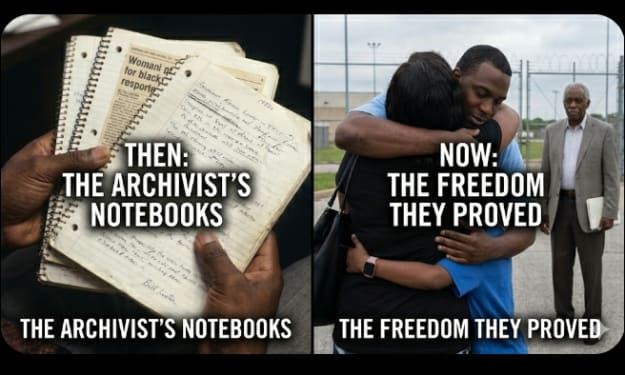
The Archivist of the Invisible: How Bill Luster’s Notebooks Became the Conscience of a Courtroom
The untold true story of Bill Luster, the reporter whose meticulous archiving of witness statements and police notes helped overturn wrongful convictions in the Midwest when the legal system had moved on.
By Frank Massey about 20 hours ago in Humans
A Pachelbel Canon Night
When I was writing my first book, the world around me was asleep, and I was awake in the wonder of the light. Every guidance was in the nuance of the living form. I had a house then and not much else, but I had a room for which to grow and live, and everything else was a beam of light to see by. I lived in prayer, in meditation, and there was no radical transformation. It was more of a sifting and taking it all in.
By Canuck Scriber Lisa Lachapelle17 days ago in Humans
Who Should Lead in Relationships
Have you ever wondered who should wear the pants in a relationship? It's a question that has sparked countless debates around dinner tables, in therapy sessions, and during late-night conversations with friends. The truth is, relationship leadership isn't as black and white as our grandparents might have thought. In today's world, the dynamics of who leads in a relationship have evolved dramatically, and the answer might surprise you.
By LaMarion Ziegler2 days ago in Humans
Bruce Lee and The God of War: Kuan Ti
It starts with love.. The Power to the God Of War and Wealth Walk into a Chinese restaurant (even in Oklahoma, USA), a Chinese police station, a kung fu martial arts studio or even a Chinese temple and you often see a red faced warrior holding a heavy quan-do (spear like weapon).
By WILD WAYNE : The Dragon King5 days ago in Chapters


Comments
There are no comments for this story
Be the first to respond and start the conversation.