
The man they knew
Reaching into one's heart for sincere kindness
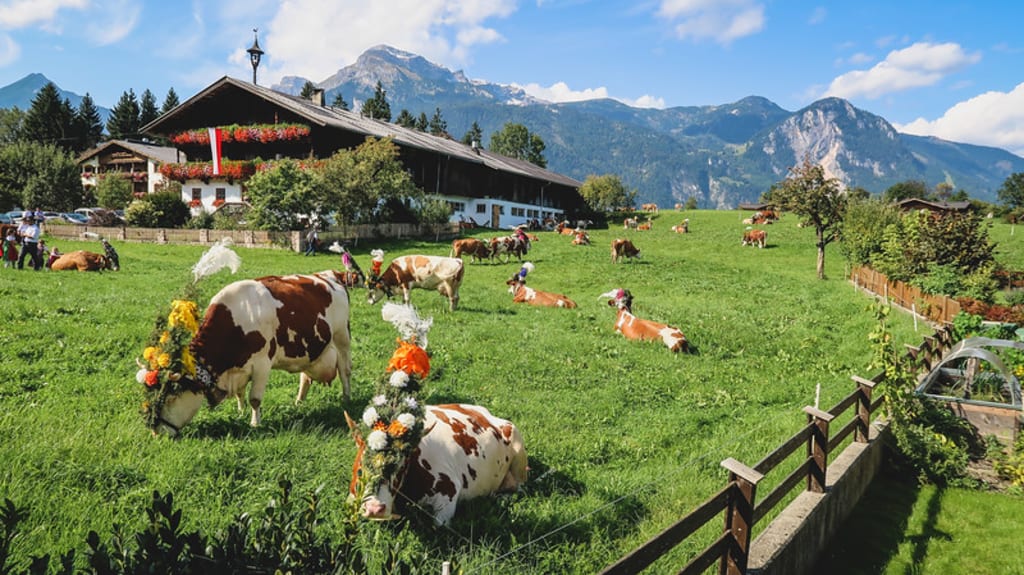
After dinner, Clara and her two children would join each other in their back yard to play baseball in what had recently been the most pleasant weather on perfect spring evenings. When they moved to Lienz, Austria in early May 1945, she had brought three mitts and a few baseballs, the only physical memento of their life in America. Something about the warm breeze tonight reminded her of the joy she had felt being outside with her children in Southern Vermont. Her son Joseph was soon to be eleven years old and he was proud of the accuracy of his pitches. His younger sister Barbara fared very well keeping up with him in the game of catch. Upon arriving at their uncle’s farm, Joseph found a nice piece of narrow wood in the forest that they used as a baseball bat. Each day they threw the ball around outside for a couple of hours. Kids from neighboring houses began to take notice and slowly made their way over. Although their new friends had never played baseball before, Joseph and Barbara taught them the basics. Before long, Clara’s two children had made a solid pack of friends who welcomed them into their community.
On this property that also served as an Inn, it felt so good to be home, the warm and inviting chalet in the Alps she remembered from her childhood. ‘Not a worry in the world today,’ she thought. ‘The war is over. I am where I should be.’ Uncle Franz walked toward them from the house and sat down on his favorite wooden bench to watch the children happily running together in his field. He shifted his weight, inhaled the aromatic alpine air, then reached into his pocket to pull out a leather pouch containing his pipe and tobacco. He found joy taking his time loading the tobacco into the bowl of his wooden pipe. This followed by lighting the tobacco with one single match. Even though the pipe was lit, he let the match burn until the flame nearly touched his fingers. The pleasure of each step in his ritual could be seen in his eyes as he returned the pouch to his pocket and leaned back into the bench.
Clara left the children to play amongst themselves. As she approached her Uncle, he patted the bench and motioned her to sit by his side. His resemblance to her father was so bold that looking at him brought overwhelming feelings of nostalgia to her heart. Nothing could bring her more comfort than to be with family again, living around other souls who accepted everything about her.
“I have been notified that we have guests arriving from the north tomorrow. Many details have not been shared, but the courier made it clear that we are to spare no expense on our guests who are used to finer things. They are paying handsomely for their stay.” He looked across the field toward the mountain as he spoke. “Most particularly, every meal needs to be authentically Bavarian. Although I know you have prepared the guest rooms in the best manner possible, I’ll ask you to return to the rooms once more this evening to ensure nothing is out of place.”
Clara liked having guests who brought conversation and laughter into their large home. She began to think about the meals she would prepare and wondered out loud about the visitors. “The kids and I have never been around wealthy people, so I hope they will feel comfortable with us.” This thought came from the girl who had lived in a place where she was made to feel unwelcome.
Uncle Franz removed his pipe from his lips, turning to look at her with those kind eyes. “Clara, the rooms will probably be filled for a full month by visitors who are known to be very private in their ways. We will make a concession to them by not invading their space when they are in the home, especially the living room where they will congregate. I will introduce you to a man named Mr. Braun and you will keep your distance from him as best possible. For the most part, I request Joseph and Barbara remain outside to play during the day; this shouldn’t be a problem with the warm weather during June. When your kids are inside the house, they should migrate to their own bedrooms, making the least amount of noise.”
The next day Clara and Uncle Franz were off to an early start. There were cold cuts and cheese to be sliced, bread was baking in the oven, vegetable platters were being arranged, and a large turkey was soaking in a bucket of brine. She went about setting the table with a vase filled with flowers from the yard, the finest china, polished silver, and crisply ironed cloth napkins. She poured cold water from the well into her grandfather’s crystal goblets.
Around noon, Clara heard the hotel patrons begin assembling in the dining hall, so she peaked her head out of the kitchen one last time to ensure the table was properly set. She could hear the chairs scooting on the wooden floor. Once there was silence, that was her queue to serve lunch. She set down each platter, trying not to stare at the guests. Her eyes suddenly stopped; she looked away but felt frozen with fear.
There he was. ‘Slow breaths and concentrate,’ she thought. When Uncle Franz noticed her expression, he stepped in and led her away. In a separate room he explained that this Inn was a stopping point for Nazi’s escaping persecution in Germany. They were traveling on the Ratline.
The Inn was Franz’s only opportunity to recoup some of the money his family lost during poor economic times brought on by the war. “Remember, it’s only temporary Clara. Mr. Braun and his colleagues want to remain unrecognized and leave here as safely and quickly as possible. You must go about your duties in a very professional manner.”
The war had officially ended less than a month ago, bringing the shocking announcement of Hitler’s suicide in his bunker, but Clara knew who ‘Mr. Braun’ really was. He was no longer the ebullient orator displayed to the world. After lunch, she watched him walk into the living room with the worried face of someone terribly lost, someone who felt the anguish of fighting and losing a war. At a time when most men would drop to their knees from pure exhaustion, these men were now forced to open a new chapter they did not want to write.
A few days later, Clara ventured outside to watch Barbara and Joseph. She waved when they saw her, then took a seat on the wooden bench. She heard the back door to the kitchen open and turned to see Mr. Braun coming her way followed by his dog, Blondi. The dog sprinted from Mr. Braun’s side toward her children. He gestured with his hand a silent request to sit and she obliged with a smile.
They sat quietly. Joseph hit the ball so hard with the bat that he had to boast, shouting in English, “How’d you like that one, Mama?”
Mr. Braun smiled at the boys’ glee, then turned to her and politely asked, “How is it that your boy came to learn English so well?”
“I was born in Austria in 1915 then my father moved our family to America in search of work when I was ten years old. It was exciting for us! But as soon as WWII was in full force, our neighbors in Vermont began to ostracize us solely because we were German. Although I spoke perfect German and English, we were still shunned. Early in the war my husband was killed in action, then not long ago, my father died and our financial situation became dire. Joseph, Barbara and I were blessed when my uncle asked us to return to Austria where employment was offered to me at his Inn,” Clara explained. “It has worked well for us because he and I need each other. He needs help running the Inn, and I need to provide for my children.” She smiled at Mr. Braun and he nodded his head in understanding.
From then on, Mr. Braun met Clara outside on the bench where they became acquainted through conversation. The world knew him to be a monster, but she liked him and had chosen the side of humanity by treating him kindly, especially after experiencing such foul treatment in Vermont. He reciprocated her kindness.
He would reminisce about his youth while he watched Joseph laughing and playing with his friends. When his mind stepped away from the problems flooding his mind, one could see that he had really come to care for Joseph.
Joseph and Barbara were devastated the day Mr. Braun left Austria. In less than a month they had grown to feel close to him and his dog. Mr. Braun’s appearance had dramatically changed since he had grown a healthy beard that strangely resembled the two priests who came to drive him away. As he said his goodbyes, the kids began to weep.
He called Blondi to the car but a priest insisted this was not an option as the trip needed to remain highly covert. He silently remained in the car with his head lowered toward his knees. When he was ready to speak, he rose from the car. “Okay, Father,” he agreed. Mr. Braun warmly wrapped his arms around his beloved dog, squeezing her with all the love his heart could muster. He looked across the yard and summoned Joseph and Barbara to the car. He knelt down and put their hands in his, softly saying, “I’d like you two to take care of Blondi for me since I can’t take her with me.” They rushed into his arms and hugged him once more.
Mr. Braun’s hands were trembling when he led Blondi’s collar to Joseph’s hands. He returned to the car and was spirited away.
After Mr. Braun left, Clara returned to her usual household duties, preparing for the next visitors to arrive later that week. She tied the apron strings behind her back and headed to gather the sheets off the beds.
Clara opened the window to freshen the air in Mr. Braun’s room. The laughing children playing outside with Blondi could be heard inside the house. When she reached under the corner of the mattress to remove the fitted sheet, she noticed a brown leather tote bag had been left behind on the floor.
It was too late to summon Mr. Braun back to the house to retrieve it. What to do? Many thoughts passed through her mind, but she kept returning to the realism that he was gone. She picked up the bag and slowly opened the clasp. Inside was a small black notebook. She reached her hand in to lift it out then saw a rectangular bundle wrapped in fabric and tied with twine at the bottom of the bag. She untied the bundle, finding a stack of crisp German Reichsmark. She laid the money on the bed stand and slowly, she counted the bills and found he left behind what amounted to $20,000. Her hands shook. She untied the tether that held the notebook together and sat down on the bed. This felt like an immense invasion of privacy, as she was a firm believer of minding her own business. Yet again, she knew he would never be the owner of the notebook again.
She pulled the cover open and could smell his scent left behind on the paper. It was thick and the pages were wrinkled and full of entries. She looked down at the first line on the first page and read a sentence written by the man who was escaping his country and leaving his entire life and existence behind. He had written, “They do not know me.”
About the Creator
Keep reading
More stories from writers in Humans and other communities.
Cabin Fever Because of Snow, Sleet, and Freezing Rain That Turned to Icy Roads
What Is Cabin Fever? The short answer is that cabin fever is restlessness from being in a confined area. Cabin fever is the distressing irritability or restlessness experienced when a person or group is stuck at an isolated location or in confined quarters for an extended time. Research shows that prolonged cold, gray skies, and being stuck indoors can trigger mood shifts similar to “winter blues.”
By Margaret Minnicks3 days ago in Humans
Missing Girl’s Parents Describe ‘Unbearable Fear’ as Search Enters Critical Phase
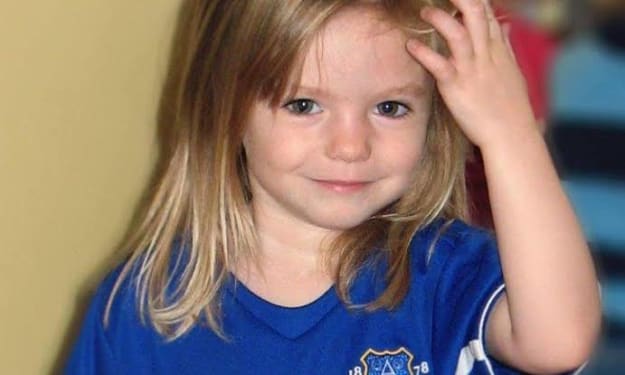
The parents of a missing girl have spoken publicly for the first time since their daughter disappeared, describing their anguish as an “unbearable fear” while authorities intensify efforts to locate her. The emotional appeal comes as police expand search operations and urge the public to come forward with any information, no matter how small it may seem. The girl, whose identity is being withheld for legal and safety reasons, was last seen several days ago near her family’s home. Since then, dozens of officers, volunteers, and search-and-rescue teams have been deployed across nearby neighborhoods, wooded areas, and waterways. Standing outside their home, the child’s mother and father addressed reporters with visible distress, clutching a photograph of their daughter. “We wake up every morning hoping this nightmare will end,” her mother said. “Not knowing where she is or whether she is safe is an unbearable fear that no parent should ever have to face.” Timeline of the Disappearance According to police, the girl was reported missing after failing to return home at her usual time. Family members initially believed she may have gone to a friend’s house or become delayed, but concern grew when repeated calls went unanswered. Authorities have not released specific details about the circumstances of her disappearance, citing the ongoing investigation. However, they confirmed that surveillance footage from nearby streets and businesses is being reviewed, and mobile phone data is being analyzed for potential leads. A senior police spokesperson said there is currently no confirmed evidence of foul play but emphasized that all possibilities remain under consideration. “We are treating this as a high-priority case,” the spokesperson said. “Our focus is on locating the child as quickly and safely as possible.” Community Mobilizes The disappearance has shaken the local community, prompting a wave of volunteer efforts. Neighbors have organized search parties, distributing flyers and combing parks, trails, and vacant lots. Local schools held moments of silence, and community centers have opened their doors to coordinate volunteer teams and provide emotional support to the family. “It’s heartbreaking,” said one neighbor. “Everyone is checking their cameras, retracing steps, doing whatever they can to help.” Social media has also played a major role, with thousands of people sharing the girl’s photo and description. While police welcome public awareness, they caution against speculation or spreading unverified information. “False tips and rumors can distract from genuine leads,” the police spokesperson said. “We urge people to rely on official updates.” Parents’ Emotional Plea In their statement, the parents directly addressed their daughter, hoping she might hear their message. “If you can hear us, please know we love you more than anything,” her father said. “We are waiting for you. We will never stop looking.” They also appealed to anyone who may have seen their child or has information about her whereabouts. “Please, if you know something, say something,” the mother added. “Even the smallest detail could bring her home.” Their words resonated deeply with families across the region, many of whom expressed solidarity and fear that such a tragedy could happen to anyone. Psychological Toll of Uncertainty Experts say the uncertainty surrounding a missing child can be more traumatic than receiving bad news, as families remain trapped between hope and dread. “The brain struggles with not knowing,” explained a child trauma psychologist. “Parents replay every moment, every decision, questioning themselves. It creates intense emotional distress and exhaustion.” Support services have been offered to the family, including counseling and crisis assistance. Authorities say these resources are vital not only for the parents but also for siblings and extended relatives affected by the situation. Law Enforcement Strategy Police confirmed that specialized units trained in missing persons cases have been brought in to assist local officers. Search dogs, drones, and thermal imaging equipment are being used in difficult terrain. Investigators are also interviewing friends, teachers, and acquaintances to reconstruct the girl’s recent movements. Digital evidence, such as online activity and messaging, is being examined to determine whether she communicated with anyone shortly before her disappearance. “We leave no stone unturned,” the police spokesperson said. “Every lead is pursued.” Public Caution and Compassion Authorities have urged the public to remain vigilant but calm. They remind residents to report suspicious activity immediately while avoiding actions that could interfere with the investigation. Community leaders have emphasized the importance of compassion, particularly toward the family. “This is not a time for judgment or blame,” said a local council representative. “This is a time for unity and care.” Hope Amid Fear Despite the fear and uncertainty, the parents said they are holding onto hope. “We believe our daughter is out there,” her mother said. “And we believe she will come home.” Candles and flowers now line the front fence of the family’s home, a quiet symbol of collective concern and prayer. Children in the neighborhood have left handwritten notes wishing for her safe return. Conclusion As the search continues, the case has become a powerful reminder of how fragile everyday life can be and how deeply a community can be affected by one child’s disappearance. The parents’ words—describing their pain as “unbearable fear”—capture the emotional weight of waiting without answers. Authorities continue to appeal for information and promise that the search will not stop until the girl is found. For her family and community, each passing hour is filled with worry, but also with determination that she will be brought home safely.
By Fiaz Ahmed a day ago in Humans
Killing him slowly
There’s an intruder in my house again. He stumbles through the door, wet carrier bags in hand. He’s bought me offerings. I show my appreciation, letting him caress my beautiful body. He wants to touch me. I rub myself against his legs. He sighs, dropping the bags. He can’t resist touching me. Running his hand slowly down my spine, I arch my back towards his caress, let out a low purr. It’s what we both need.
By N J Delmas6 days ago in Horror



Comments
There are no comments for this story
Be the first to respond and start the conversation.