
The Leaves That Fall So Slowly
An emotional journey through memory, grief, and healing


In a quiet village, where time moved gently and trees whispered like old friends, lived an elderly woman named Mira. Her cottage sat beneath a grand oak tree, its leaves known for falling slower than any others in the village. People often said the tree was enchanted, but Mira believed something else. To her, the leaves carried memories—drifting softly through the air, refusing to be forgotten.
Mira had once lived a life full of laughter. Her husband, Arun, had strong hands and a voice that cracked when he sang, but it always made her smile. He had built the very home they lived in, planting that oak tree beside it as a gift to their newborn daughter, Lila. Lila was the light of their world, spinning barefoot under the branches, painting flowers on the window glass, and bringing joy like sunshine.
But time, as it does, turned cruel.
Arun died on a winter morning. He kissed Mira’s forehead, whispered something about the warmth of the fire, and was gone. Mira’s world cracked in half, but she held on for Lila. For years, mother and daughter leaned on each other. Then, one spring, a sudden fever took Lila too. The doctors tried, the neighbors prayed, but nothing helped. Mira remembered holding her child’s hand as it turned cold, singing lullabies with a breaking voice.
Alone, Mira drifted into silence.
Each autumn, she would sit under the oak tree and watch the leaves fall. Each one seemed to carry a memory—a giggle, a shared meal, a quiet moment of love. She talked to the tree. She wept. Sometimes she smiled. She had no one left, yet she felt their presence in the rustling leaves, in the golden light of late afternoons.
The village children called her "the lady of the tree" and made up stories about her. But one day, a little boy named Rami ran into her garden chasing a paper airplane. Seeing her, he froze, unsure whether to run or speak.
Mira smiled gently and beckoned him over. “Want to know a secret?” she asked.
He nodded.
“These leaves,” she said, holding one out, “fall slowly because they carry memories. They remind us of people we’ve loved. They don’t fall fast because they’re not ready to be forgotten.”
The boy didn’t fully understand, but he stayed. She told him stories—of love, of loss, of small moments that once meant everything. He came back the next day, and the next. Soon, more children came. Then their parents. People brought their grief, their silence, and their longing. Mira listened to them all. Her garden, once silent, became a place for stories, for healing.
One autumn, Mira didn’t come out to sit beneath the oak. The villagers found her in her bed, a soft smile on her face and a golden leaf resting in her palm.
They buried her under the tree she had loved so dearly.
Now, every autumn, the villagers gather beneath the oak. They bring flowers, photos, and stories. They sit in silence or speak softly. The children run, but even they pause when the leaves begin to fall, drifting slowly through the air like gentle memories.
Mira is gone, but the tree remains. And the leaves? They still fall slowly—carrying with them the weight of love, the ache of loss, and the beauty of remembrance.
Because grief doesn’t always shout. Sometimes, it falls gently, like leaves—reminding us that love never really leaves. It just changes shape.
In the falling leaves, we see ourselves—fragile, remembering, healing. Like Mira’s tree, humanity holds our stories, our pain, and hope. Together, we learn to cherish what was lost and embrace the beauty in moving forward.
About the Creator
Leesh lala
A mind full of dreams, a heart wired for wonder. I craft stories, chase beauty in chaos, and leave sparks of meaning behind. Built to rise, made to inspire.
Keep reading
More stories from Leesh lala and writers in Humans and other communities.
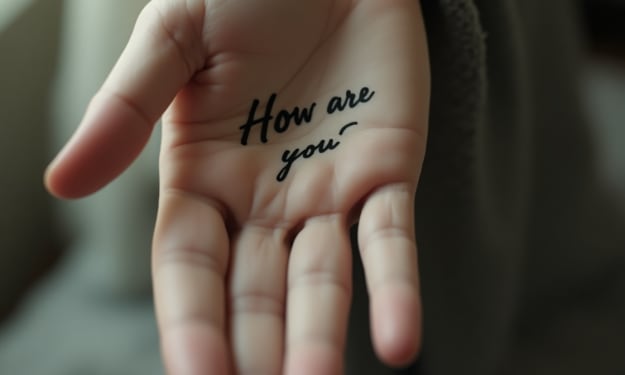
How Are You
In the rush of our everyday lives, caught between calendars and commitments, there’s a small phrase that often slips past unnoticed—a phrase so simple, so familiar, yet deeply powerful. “How are you?” We hear it in the morning over sleepy yawns, on quick phone calls, in passing at work, or through the soft hum of evening conversations. It’s everywhere—whispered, spoken, messaged, asked. And behind those three gentle words lies a world of kindness, humanity, and the heartbeat of family.
By Leesh lala8 months ago in Humans
A Pachelbel Canon Night
When I was writing my first book, the world around me was asleep, and I was awake in the wonder of the light. Every guidance was in the nuance of the living form. I had a house then and not much else, but I had a room for which to grow and live, and everything else was a beam of light to see by. I lived in prayer, in meditation, and there was no radical transformation. It was more of a sifting and taking it all in.
By Canuck Scriber Lisa Lachapelle17 days ago in Humans



Comments (1)
Wonderfully written