
The Last Photo of Hiroshima
Some moments deserve to be remembered forever. Even the ones right before everything ends.

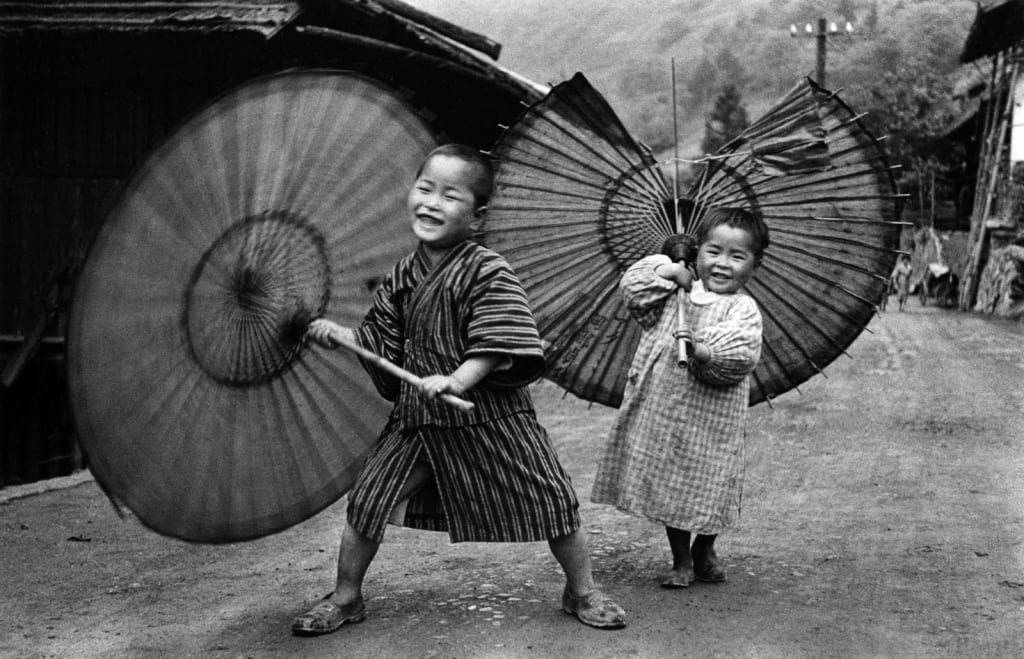
August 6, 1945 – Hiroshima, 8:13 AM.
Kenji Yamamoto adjusted the focus of his worn Leica camera, his fingers trembling just slightly—not from fear, but from the strange calm in the air. Something about the light that morning felt… too still.
The sky was painted in soft blues and oranges. Street vendors were setting up, bicycles glided by, and children played with folded paper cranes. Life moved in quiet harmony.
Across the street, near the Shima Hospital, Kenji noticed a girl. Maybe six years old. She wore a white kimono with pink flowers. Her bare feet tapped gently on the stone as she crumbled rice into her palm to feed the pigeons. Her hair shone like polished chestnut in the sun.
Something in his heart paused.
Click.
He captured her.
He never saw her again.
8:15 AM.
A white light brighter than the sun exploded above the city. For a moment, time itself seemed to hold its breath.
Then came the roar.
Buildings turned to ash.
People disappeared mid-step.
Everything... burned.
Kenji was thrown into the side of a building. Debris rained down. His ears rang like church bells gone mad. When he opened his eyes, Hiroshima was gone.
Smoke.
Screams.
Silence.
Later that day.
Kenji was alive. Burned. Bleeding. But breathing.
All around him, the world he knew had turned into a graveyard of shadows. Children lay motionless on school steps. Mothers called names that would never be answered. A man, skin peeling like paper, begged for water beside the ruins of a tea shop.
Kenji crawled back toward where he had been. Miraculously, buried beneath charred rubble, his Leica camera remained. Cracked, scorched—but not destroyed.
He held it to his chest like a child holds a lost toy found again.
“This… must be remembered,” he whispered hoarsely.
The days that followed.
Kenji documented what the world wouldn’t believe without proof.
He took photos of burnt schoolbags. Of rivers filled with bodies. Of a soldier sitting beside a melted helmet that once belonged to his brother. No captions. Just truth.
But in his heart, he waited for one frame—the one he took just seconds before the sky fell. The little girl in the white kimono.
He hadn’t developed it yet. He didn’t even know if it had survived.
A month later – Osaka.
Radiation sickness was already eating away at Kenji’s health. His gums bled. His hands shook uncontrollably. But he had one mission left.
At a small, hidden darkroom in Osaka, he handed his friend the camera.
"Please… I need to see her. One last time."
They developed the film roll together. Most of the images were fogged—ruined by the heat of the bomb.
But one photo came out.
One image, sharp and beautiful.
A little girl in a white kimono. Feeding pigeons. Smiling.
Kenji stared at her for a long time. Silent tears rolled down his face.
“She was real,” he said.
“She mattered.”
Kenji passed away six months later.
He was buried with his camera in his hands.
Years later.
The photo made its way into history. It was titled:
“The Last Smile of Hiroshima.”
The girl's name was never known.
No one ever claimed her.
No relatives came forward.
She became a symbol—not of destruction, but of life right before destruction.
Historians argued over military reasons, politics, strategy. But for people who saw that photo, it wasn’t about the bomb.
It was about a child.
A smile.
A moment that should have lasted forever—but didn’t.
Today.
In the Hiroshima Peace Memorial Museum, the photo still hangs. Some walk past it quickly. Others stand and stare, unmoving, with hands over their hearts.
Beside it is a small plaque that reads:
“Taken one minute before the atomic bomb dropped.
Photographer: Kenji Yamamoto.
Subject: Unknown.”
But maybe the girl doesn’t need a name.
Maybe she is every child who didn’t grow up.
Every story that ended too soon.
Every war that should never have started.
And maybe, just maybe…
A photograph can stop the world from forgetting what it should never repeat.
The End.
About the Creator
Afaq Mughal
Writing what the heart feels but the mouth can’t say. Stories that heal, hurt, and hold you.
Keep reading
More stories from Afaq Mughal and writers in Humans and other communities.
Ballistic Missiles
Introduction In the modern world, few weapons have captured global attention as much as Ballistic Missile. These powerful weapons are designed to travel long distances at incredible speeds, carrying conventional or nuclear warheads. From the tense years of the Cold War to today's complex geopolitical landscape, ballistic missiles have shaped military strategies and international diplomacy.
By Ashen Asmadalaabout 23 hours ago in Humans
TUS NUA - ch 53
TUS NUA – ch 53 New Beginnings – Mia and Midnight (*)(*)(*) Finola knew Ali’s brother-in-law needed to put his mind at rest. She fed her arm through his and led him outside. “We’ll sit here. If you like, I can put a block around us so our conversation will be private.”
By Margaret Brennan5 days ago in Fiction



Comments
There are no comments for this story
Be the first to respond and start the conversation.