
The Incredible Journey of Sergei Krikalev
Lost in Space
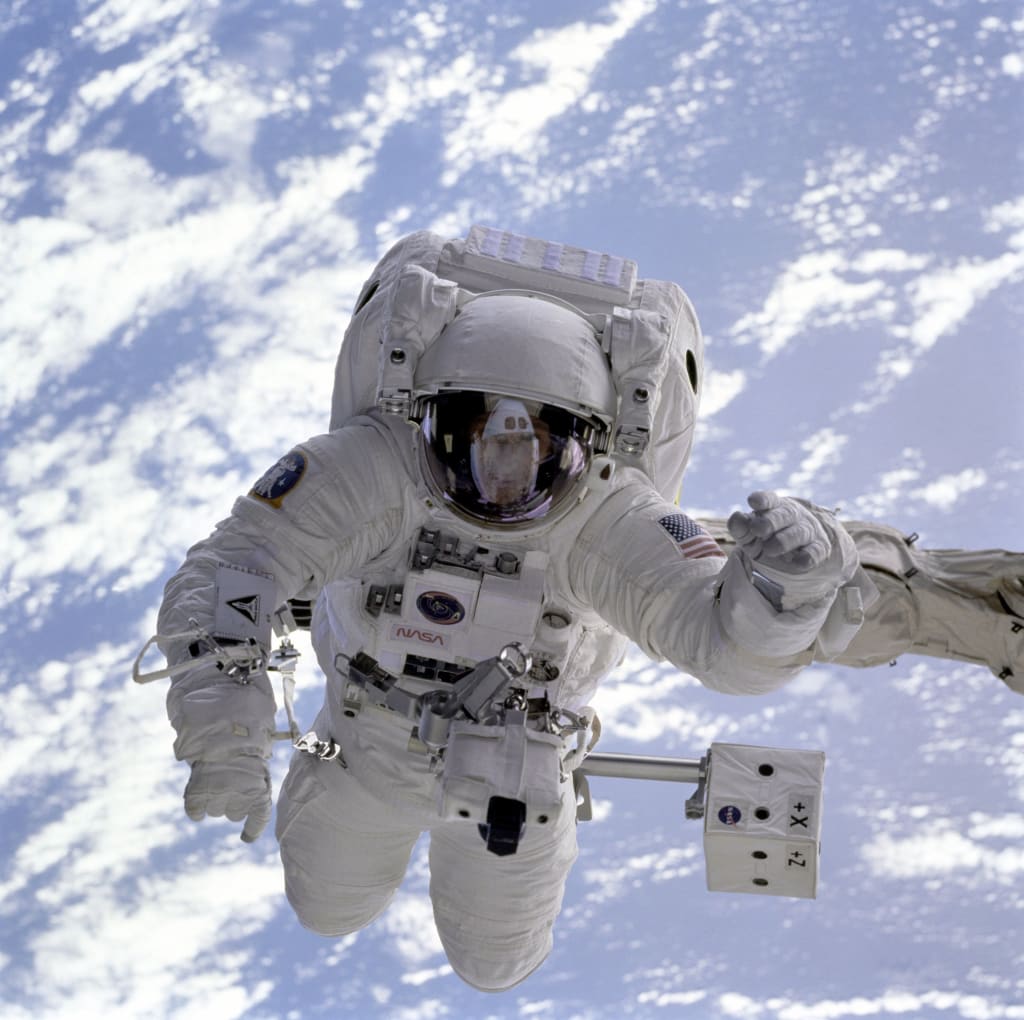
We've all fantasized about what it would be like to explore outer space. The idea of becoming an astronaut has captivated the minds of both young children and adults alike. However, there is one spaceman who experienced a real-life cosmic nightmare—a tale of being lost in space. Join me on this extraordinary journey as we delve into the collapse of nations and embark on a voyage through literal time travel. This is the captivating story of the astronaut who endured 311 lonely days in the vastness of space.
The race for space had its roots in the mid-20th century Cold War, where the Soviet Union and the USA engaged in a fierce competition to showcase their technological superiority in spaceflight. Sergei Krikalev, born on August 27th, 1958, in Leningrad (now St. Petersburg), Russia, was well aware of this intense space race from a young age. Sergei's lifelong passion for the stars led him to pursue a degree in mechanical engineering, which he obtained in 1981 from the Leningrad Mechanical Institute.
Following his graduation, Sergei joined NPO Energia, the Russian industrial organization responsible for manned space flight activities in the Soviet space program. He initially worked on testing space flight equipment and served as part of the ground control team for space missions. Sergei played a pivotal role in the in-orbit rescue mission of the Salyut 7 space station in 1985, where he remotely guided repairs to the station's control system.
Sergei's remarkable achievements led to his selection for cosmonaut training. This rigorous course covered a broad range of space-related subjects, including astronomy, orbital mechanics, and scientific experimentation methods. Finally, in 1986, Sergei earned his cosmonaut wings. You may be wondering why I refer to Sergei as a cosmonaut instead of an astronaut. The term "cosmonaut" specifically applies to individuals trained by the Russian Space Agency, with the word itself meaning "universe sailor." Pretty cool, right?
In early 1988, Sergei commenced training for his first long-duration space flight aboard the Mir space station, which, at the time, held the record as the largest artificial satellite in orbit. Launched on February 20th, 1986, Mir aimed to study the effects of space travel on the human body and conduct observational sciences, including Earth surface studies.
On November 26th, 1988, Sergei embarked on the Soyuz TM-7 expedition, a joint mission involving French and Soviet space adventurers, to travel to Mir. The mission concluded 151 days later on April 27th, 1989. With a relatively smooth operation under his belt, Sergei yearned for another journey beyond Earth's bounds. Little did he know that his next spaceflight would leave him longing for a return to our planet.
Life on Mirs was the next chapter of Sergei's extraordinary tale. By December 1990, he was already preparing for his second space flight as part of the crew for the Soyuz TM-12 mission. On May 18th, 1991, Sergei arrived at the Baikonur Cosmodrome, the world's first spaceport, located in what is now Kazakhstan. Accompanying him were Anatoly Artsebarksy, an experienced Ukrainian commander, and Helen Sharman, the first British astronaut.
The Baikonur Cosmodrome had witnessed remarkable milestones in space travel, including the launch of the first artificial Earth satellite, Sputnik, on October 4th, 1957, and Yuri Gagarin's historic journey as the first human in space on April 12th, 1961. While Sergei's mission seemed routine, in the realm of space travel, he was soon to become a part of Baikonur's historic travelers.
As their spacecraft neared Mir after a two-day journey, the targeting system failed, requiring Sergei to dock their rocket manually. Manual docking in space is a perilous task, with the slightest mistake potentially proving fatal. However, displaying his cool-headed nature, Sergei skillfully docked the crew safely. Mir could accommodate up to six people, but usually housed only three cosmonauts at a time due to its cramped conditions. With 16 sunrises and sunsets each day, residents had to block portholes to simulate nighttime during their sleep.
Cosmonauts typically woke up at around 8:00 a.m. on Moscow's time zone and commenced their day's work, conducting scientific experiments and maintaining the space station. At 1:00 p.m., they gathered in the communal area for lunch and a workout. These workouts were not merely for show. In the low gravity of space, it is crucial to maintain muscle mass, as astronauts can experience up to a 20% loss in muscle mass on even short missions lasting five to 11 days. Following lunch and exercise, the cosmonauts spent another three hours working, followed by an additional hour of exercise.
The day concluded with dinner and leisure time in the evening, often spent gazing out of the portholes, marveling at the beauty of Earth. Although space offered its wonders, life on Mir was far from glamorous. Mir was often likened to the fictional spaceship, the Millennium Falcon, representing both a masterpiece of modern engineering and a piece of junk. Technical malfunctions plagued the station, and by the time Sergei arrived for his second visit, Mir was beset with numerous electrical problems, resulting in random flickering lights.
This constant reminder of reliance on faulty technology for survival, which included breathing and pressurization systems, was not only frustrating but also heightened the astronauts' awareness of their vulnerability. Moreover, the frequent technical issues caused rapid fluctuations in temperature and humidity, turning the station into a breeding ground for microorganisms. The resulting unpleasant odors of mold and "space pilot BO" permeated the station, adding to the challenging living conditions.
The dissolution of the Soviet Union brought about significant financial challenges for Russia, including its space program. With limited funds available, bringing Sergei back from Mir became a low priority. As days turned into weeks and weeks turned into months, Sergei found himself facing an uncertain future in the vastness of space.
Despite the difficult circumstances, Sergei remained focused on his duties and continued to conduct experiments, maintain the space station, and communicate with mission control. He relied on the support of his wife, Yelena, who provided updates on the changing situation on Earth and offered him solace during this trying time.
While Sergei's dedication to his work kept him occupied, he couldn't help but wonder about the fate of the space program and his own mission. The political turmoil in the Soviet Union had far-reaching consequences, and the future of space exploration hung in the balance.
Months turned into a year, and Sergei surpassed the previous record for the longest single spaceflight by Valeri Polyakov, who spent 437 days in space. Sergei's prolonged stay aboard Mir pushed the boundaries of human endurance and resilience. He faced physical and psychological challenges, adapting to the isolation and the weightlessness of space for an extended period.
Finally, on March 25th, 1992, Sergei's 311-day odyssey in space came to an end. The financial situation in Russia had improved, allowing for a planned Soyuz spacecraft to be launched to bring him back to Earth. On his return, Sergei was greeted as a hero, hailed for his resilience and dedication to the space program during such turbulent times.
Sergei Krikalev's journey is a testament to the indomitable spirit of exploration and the triumph of the human will. Lost in space amidst the collapse of a nation, he persevered and became a symbol of hope and inspiration for future astronauts. His story reminds us of the challenges and sacrifices that come with venturing into the unknown, but also the incredible rewards and knowledge that await those who dare to reach for the stars.
About the Creator
Keep reading
More stories from Myke & Amy and writers in Humans and other communities.
From Seat Belts to Smoking Bans
Beginning in the 1950s, Dr. John States, an American orthopedic surgeon and sports car enthusiast, worked as a physician at the Watkins Glen International Speedway in New York. Witnessing numerous high-speed crashes, Dr. States noticed something intriguing: despite the faster speeds, racecar drivers were more likely to survive crashes without serious injuries compared to drivers on regular roads.
By Myke & Amy3 years ago in Humans
A Transparent Look at Vocal Challenges and Top Stories
Almost three years ago, we shared a resource article that served as a place for people to suggest new challenge prompts. We thought it would be a good idea to refresh that thread, and take the opportunity to answer a few common questions about top stories, how challenges are judged and how submissions are reviewed.
By Vocal Curation Team4 days ago in Resources



Comments
There are no comments for this story
Be the first to respond and start the conversation.