
The Impact of AI on Jobs and Industries: Unveiling the Rapid Rise of Generative AI
Subtitle: Navigating the Transformative Landscape of Artificial Intelligence: From Job Disruption to Creative Reshaping
Introduction
Artificial Intelligence (AI) has propelled us into an era where machines and software are transforming industries and job landscapes at an unprecedented pace. While AI's evolution was once synonymous with hardware advancements, the real game-changer is rapidly advancing software. From automating repetitive tasks to generating creative content, AI is pushing the boundaries of what was once thought impossible. This article delves into the growing role of AI, its potential to reshape the job market, and the implications for various industries.
AI Beyond Hardware: A Paradigm Shift
Traditionally, AI's perceived threat lay in the automation of manual labor and routine tasks. However, this narrative has drastically evolved. The expansion of generative AI has led to the creation of tools like Chad GPT and Mid-Journey, enabling anyone to produce essays, art, and content, regardless of individual skill. Creative jobs, once believed to be safe from automation, are now being challenged by AI-generated content. The rapid advancements in generative content mechanisms are reshaping our understanding of AI's capabilities.
The Disruption and Reshaping of Industries
Recent studies suggest that AI's impact on the workforce will be substantial. The World Economic Forum predicts that over 80% of the US workforce will be affected by AI, with around 25% of jobs replaced within the next five years. Some experts worry that AI could eliminate more jobs than it creates, potentially exacerbating issues like the erosion of the middle class. The once-distant prospect of AI replacing roles such as delivery, driving, and manufacturing is now a reality, but the scope of AI's influence goes beyond mere physical tasks.
Generative AI: Reshaping Creative Fields
AI's ability to create content is not limited to repetitive tasks. Tools like Chad GPT and Mid-Journey are taking on creative jobs like art and essay writing. The unexpected replacement of roles that were once considered uniquely human demonstrates the magnitude of AI's progress. The rise of AI-generated content is leading to a new era where virtual entities, like YouTube personalities, could be entirely AI-generated, blurring the line between real and synthetic.
Industries at the Crossroads: AI's Transformative Power
AI's transformative influence extends across a wide range of sectors. In marketing and advertising, AI-generated content is already making a substantial impact. Deloitte's survey reveals that a significant portion of corporate budgets is allocated to digital advertising, a space that AI is infiltrating by generating cost-effective, high-quality visuals. Beyond advertising, AI is also being integrated into banking operations, enhancing tasks like anti-money laundering surveillance.
The Writer's Dilemma: AI's Role in Content Creation
The Writer's Guild Association stands at the forefront of the AI Revolution, with negotiations centered around AI's role in television and film production. The potential to automate the content creation process raises concerns about originality, derivative work, and legal implications. While AI can generate content, it faces legal challenges and the ethical dilemma of AI-driven misinformation.
The Dual Nature of AI's Impact
The question of whether AI will replace jobs is nuanced. Repetitive, mundane tasks are at the greatest risk of replacement. Jobs involving data collection and synthesis are also susceptible to automation, as AI proves more adept at handling these tasks efficiently. However, AI's success hinges on human input and oversight. The more jobs AI replaces, the more prone it becomes to inaccuracies, ultimately leading to a phenomenon called "hallucinations."
The Challenge of Misinformation and Ethics
The democratization of AI tools has led to both creative opportunities and ethical dilemmas. AI-generated content, when used irresponsibly, can lead to misinformation and manipulation. Ensuring that AI learns ethical standards and differentiates between good and evil is crucial to mitigate potential damage. The rise of AI tools demands that society becomes more discerning consumers of digital content.
AI's Positive Potential and Societal Implications
Amidst its challenges, AI also holds immense potential for positive change. AI's ability to map proteins has already revolutionized biology, offering solutions to previously unsolvable problems. While job displacement is a concern, AI can foster new opportunities and industries. However, the key lies in harnessing AI's capabilities while prioritizing ethics, transparency, and responsible use.
Conclusion
The age of AI has dawned, challenging our perceptions of automation and creativity. Generative AI's rapid progress is reshaping industries and threatening traditional job roles. As AI-generated content permeates marketing, advertising, banking, and more, industries must adapt to a new paradigm. The potential loss of jobs requires a collective effort to ensure that AI serves humanity's best interests, upholding ethical standards while harnessing its positive potential for a better future.
About the Creator
Keep reading
More stories from Justin Villar and writers in Humans and other communities.
Unraveling China's Economic Shifts: A Closer Look at the Impact and Implications
Introduction In the whirlwind of global economic shifts, China's economy has emerged as a central focus. Recent reports indicate a slowing Chinese economy and its subsequent effects are reverberating across the world stage. This article aims to dissect the nuances of China's economic challenges, the intricate web of consequences they trigger, and the potential ramifications for investors and the global economic landscape.
By Justin Villar2 years ago in FYI
Whiskey At Dusk
Guess the whiskey was more important to you in the end, wasn’t it? It was more than the well-being of your friends; more vital than showing up to the places you promised you would and could come to; more critical of a matter than fulfilling your damn responsibilities and getting the press off your back.
By Snarky Lisa7 days ago in Humans
The Complicated Life and Art of Kanye West in Public Eye
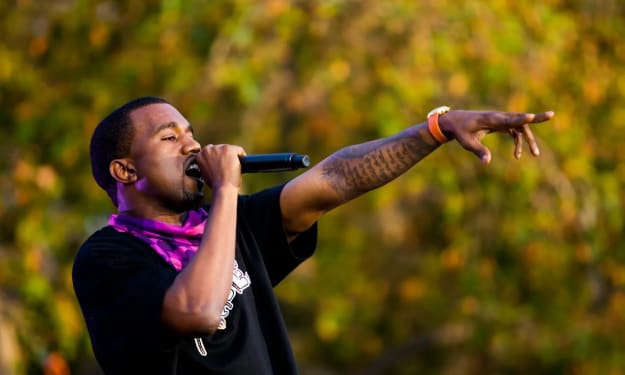
There are artists who make songs, and then there are artists who start conversations. Kanye West belongs to the second kind. His name carries weight, emotion, anger, and admiration all at once. People do not just listen to his music. They react to it. They argue about it. They feel unsettled by it. For many, kanye west represents raw ambition mixed with deep insecurity. He is praised as a musical genius and criticized as a public figure who often crosses lines. This article is not about defending or attacking him. It is about understanding him. About looking at how his art, choices, and struggles continue to shape culture in ways that are impossible to ignore.
By Muqadas khan5 days ago in Humans
One Hard Thing
Stop me if you’ve heard this one before: You have the number, you know your schedule- you’ve even picked out the perfect day and time to make this appointment. Shoot, you’ve even picked out alternative days and times just in case their schedules can’t accommodate you!
By Taylor Rigsby6 days ago in Motivation


Comments
There are no comments for this story
Be the first to respond and start the conversation.