
The Human Brain and Beliefs: Understanding the Connection
Exploring the neuroscience behind how beliefs are formed and processed in the human brain, and the implications for understanding and promoting open-mindedness and tolerance

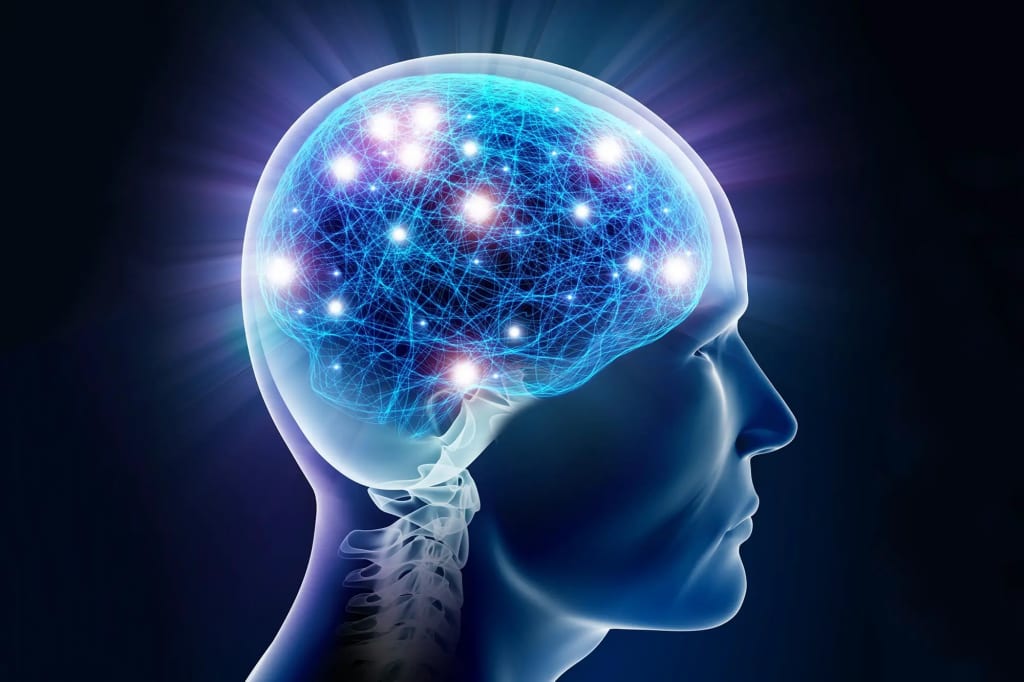
Beliefs are an integral part of the human experience, shaping how we perceive the world around us and influencing our behavior and decision-making. But where do our beliefs come from, and how are they processed in the human brain? In this article, we will explore the connection between the human brain and beliefs, and how understanding this connection can provide insight into why we believe what we do.
The Role of the Brain in Belief Formation
Beliefs are formed and reinforced by a complex interplay between our brains, our experiences, and our social environment. At the most basic level, beliefs are shaped by the processing of sensory information by the brain. When we encounter new information, our brains automatically evaluate it based on our existing beliefs and experiences, and determine whether to accept or reject it.
This process of evaluating new information is influenced by a number of factors, including our emotional state, our cognitive biases, and our prior knowledge. For example, when we encounter information that contradicts our existing beliefs, we may experience cognitive dissonance, a state of psychological discomfort that arises when we hold conflicting beliefs or values. This can lead us to reject the new information or to seek out additional information that supports our existing beliefs, in order to resolve the dissonance.
Neuroscience research has also shown that our beliefs are heavily influenced by the social environment in which we live. Our brains are wired to seek out social connections and to conform to social norms, and this can lead us to adopt the beliefs of those around us. This is known as social learning, and it can be seen in the way that beliefs are transmitted across generations, through families, communities, and cultural traditions.
Belief Processing in the Brain
The processing of beliefs in the brain involves a complex interplay between several different regions and networks. One key region involved in belief processing is the prefrontal cortex, which is responsible for higher-order cognitive processes such as decision-making and goal-setting. The prefrontal cortex is involved in evaluating and processing new information, and in deciding whether to accept or reject it based on our existing beliefs.
Another important region involved in belief processing is the limbic system, which is responsible for regulating emotions and motivation. The limbic system plays a key role in shaping our beliefs by assigning emotional value to different pieces of information, and by reinforcing or punishing certain beliefs based on the emotional response they elicit.
Finally, the default mode network (DMN) is also involved in belief processing. The DMN is a network of brain regions that are active when we are not engaged in focused attention or cognitive tasks, and it is believed to be involved in self-reflection and the processing of autobiographical memories. Research has shown that the DMN is activated when we engage in religious or spiritual practices, suggesting that it may play a role in the processing of beliefs related to spirituality and meaning-making.
Implications for Understanding Belief
Understanding the connection between the human brain and beliefs has important implications for a range of areas, from education and politics to religion and spirituality. By understanding the ways in which beliefs are formed and reinforced in the brain, we can develop more effective strategies for promoting open-mindedness, critical thinking, and tolerance of diverse beliefs and perspectives.
One important lesson from neuroscience research on beliefs is that our beliefs are not fixed or immutable, but are shaped by a complex interplay of factors that can be influenced and changed over time. This suggests that beliefs can be a source of growth and transformation, rather than a source of rigid dogma or intolerance.
In conclusion, the human brain plays a central role in shaping our beliefs, through the processing of sensory information, social learning, and the interplay between different brain regions
About the Creator
Keep reading
More stories from Galip Yüksel and writers in Humans and other communities.
The Voice in the Dark
In the history of big cities there are moments when everything turns into chaos and people don't know where to go in those moments only the people with real character and tarbiyat can lead others to safety this is the true story of Rick Rescorla who was born in a small town in England and later moved to America he was a man who had seen many wars and he knew that safety is not something you get by luck it is something you prepare for every single day
By Hazrat Umer2 days ago in Humans




Comments
There are no comments for this story
Be the first to respond and start the conversation.