
"The Human Brain: A Powerhouse of Potential"
An Astonishing Bus Travel from "Mouth" to "Brain"

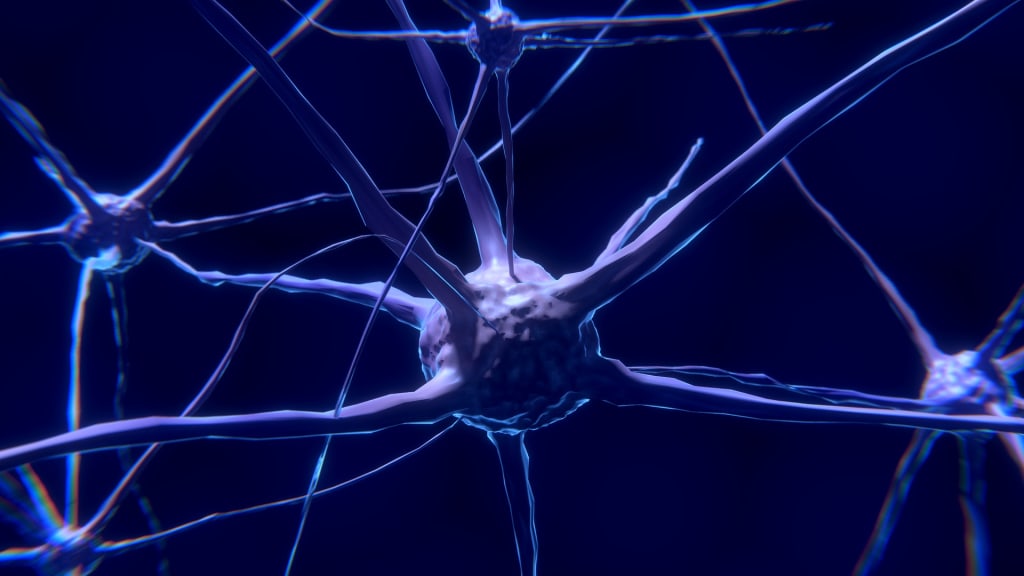
"The brain is a wonderful organ. It starts working the moment you are born, and never stops until you start writing a Blog to inspire others" - Jenish J
Welcome to our new series of imaginative bus routes! In this post, we'll be exploring some fun and educational ways to travel between the "Mouth" station and the "Brain" station.
Whether you're a student, teacher, parent, or just someone looking to have a little fun and learn something new, these bus routes have something for everyone.
Get ready to hop aboard and take a journey through the amazing capabilities of the human memory. So let's get started !!
The Memory Lane Express:
This bus route takes you through the parts of the brain responsible for storing and recalling memories. You'll learn about the different types of memory and how they work!!
The memory is a crucial function of the human brain that allows us to store and retrieve information from our experiences. There are several different types of memory, including:
- Short-term memory:
This is the memory system that holds a limited amount of information for a short period of time, usually just a few seconds to a few minutes. Short-term memory is important for tasks such as remembering a phone number long enough to dial it.
- Long-term memory:
This is the memory system that can store an almost unlimited amount of information indefinitely. Long-term memory is divided into two main types: declarative memory, which includes facts and events, and procedural memory, which includes skills and habits.
- Sensory memory:
This is the memory system that briefly stores sensory information, such as sights, sounds, and touches, before it is either discarded or transferred to short-term memory.
- Working memory:
This is the memory system that holds information in active use and allows us to manipulate it, such as when we do mental arithmetic or try to remember a list of items while shopping.
The brain has a remarkable
The Speech Center Shuttle:
This bus route takes you straight to the part of the brain that controls your ability to communicate with others. You'll pass through the tongue, lips, and throat, learning about the mechanics of speech and the role they play in producing sounds.
- The tongue:
This stop would highlight the role of the tongue in speech, including its role in shaping the sounds of certain consonants and in helping to produce various types of articulation.
- The lips:
This stop would showcase the role of the lips in speech, including their role in producing certain consonants and in shaping the sounds of certain vowels.
- The throat:
This stop would highlight the role of the throat in speech, including the role of the larynx (or voice box) in producing vocal sounds and the role of the pharynx (or throat) in helping to produce certain consonants.
- The primary motor cortex:
This region of the brain is responsible for controlling voluntary movements, including those involved in speaking and writing.
- The Broca's area:
This region of the brain, located in the frontal lobe, is involved in the production of spoken language.
Thought Highway:
The "Thought Highway" bus route would take passengers on a journey through the neural pathways and brain regions involved in higher-level thinking and problem-solving. Here are some of the stops that could be included on this route:
- The prefrontal cortex:
This region of the brain, located in the frontal lobe, is involved in a variety of higher-level cognitive functions, including decision-making, planning, and problem-solving.
- The hippocampus:
This region of the brain, located in the temporal lobe, is involved in memory and spatial navigation.
- The basal ganglia:
This group of structures, located deep within the brain, is involved in the processing of new information and the formation of habits.
- The parietal lobe:
This region of the brain is involved in a variety of functions, including the processing of sensory information, spatial awareness, and mathematical calculations.
- The occipital lobe:
This region of the brain is responsible for processing visual information.
During the journey, passengers could learn about the ability to store and retrieve memories, and scientists are still studying how this process works and how it can be influenced by various factors, such as age, stress, and lifestyle. Also they have learnt about the various brain regions and neural pathways involved in higher-level thinking and problem-solving, as well as the complex processes that allow us to engage in these cognitive functions.
About the Creator
Jenish
Blog Writer
Keep reading
More stories from writers in Humans and other communities.
How to Check Loyalty in Relationship Before You Get Hurt
Loyalty does not imply perfection. It is all about consistency, honesty, and emotional safety. When loyalty is there, trust increases. When it is missing, uncertainty gradually erodes the partnership. Many people disregard early warning signs, believing that things will improve. We feel it is better to observe, ponder, and comprehend loyalty before emotional damage occurs.
By Bloom Boldly4 days ago in Humans
Center Stage with Paul Stewart
*** I'm keen to republish the interviews I did for my series with Vocal creators. It's been a few years and I thought it might be nice to revisit these wonderful conversations. I'll be releasing them one at a time for a few weeks/months.
By Heather Hubler3 days ago in Interview




Comments
There are no comments for this story
Be the first to respond and start the conversation.