
The Hitchhiker's Guide to the Galaxy
Laugh-out-loud space odyssey
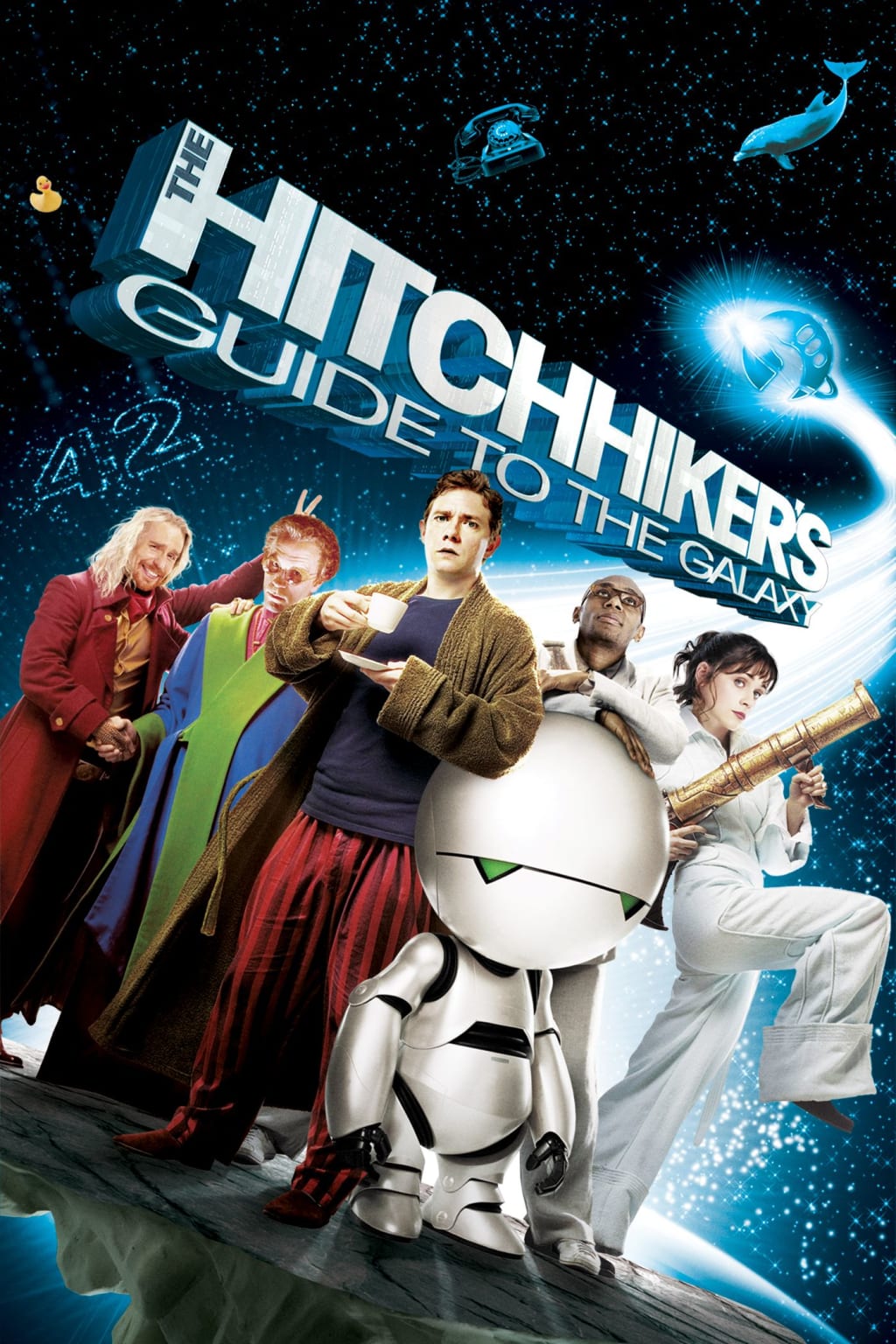
One of the greatest comedy stories of all time is "The Hitchhiker's Guide to the Galaxy" by Douglas Adams. The story follows the misadventures of an ordinary man named Arthur Dent, who is whisked away from Earth just moments before its destruction to make way for an intergalactic highway.
As Arthur struggles to make sense of the absurdity of his new surroundings, he is joined by an eccentric cast of characters, including a depressed robot named Marvin, an alien researcher named Ford Prefect, and Zaphod Beeblebrox, the two-headed, three-armed, and thoroughly unpredictable President of the Galaxy.
Throughout their travels, the group encounters a number of bizarre and often hilarious situations, from a planet inhabited entirely by sentient mattresses to a restaurant where the diners are the main course. Along the way, they must also confront a sinister plot to uncover the ultimate answer to life, the universe, and everything.
One of the key elements that makes "The Hitchhiker's Guide to the Galaxy" so memorable is its irreverent and absurdist sense of humor. Adams has a knack for turning familiar concepts on their heads and finding humor in the unexpected. For example, the fact that the Earth is destroyed to make way for a highway is a ridiculous premise, but Adams plays it straight, allowing the absurdity to speak for itself.
Another strength of the story is its characters. Arthur, in particular, serves as a relatable everyman who is constantly bemused by the madness unfolding around him. Marvin, on the other hand, is a masterclass in deadpan delivery, with his constant complaints and gloomy outlook providing a constant source of laughs.
Perhaps the most iconic element of "The Hitchhiker's Guide to the Galaxy," however, is the titular guide itself. Described as "a wholly remarkable book," the guide contains all the information one could ever need to navigate the complexities of the universe. It also includes a number of amusing asides and editorial comments, such as the entry for Earth, which simply reads: "Mostly harmless."
As the story unfolds, the characters are forced to confront a number of existential questions, such as the meaning of life and the nature of existence itself. However, even these weighty topics are approached with a light touch, allowing the humour to shine through.
One of the defining characteristics of the story is its irreverent take on traditional sci-fi tropes. Rather than presenting a serious and gritty view of the future, Adams injects a sense of whimsy and absurdity into every aspect of his universe. From the sentient elevators that enjoy playing practical jokes on their occupants to the Vogons, a race of bureaucratic bureaucrats who are obsessed with poetry, every element of the story is designed to make readers laugh.
Another key element of the story is its use of wordplay and puns. Adams was a master of using language in unexpected and humorous ways, creating a series of memorable phrases and sayings that have become part of the cultural lexicon. From the ubiquitous "Don't Panic" on the cover of the guidebook to the exasperated refrain of "42" whenever anyone asks the ultimate question of life, the universe, and everything, the story is full of memorable quips and one-liners.
Despite the humour, however, the story also touches on some deeper themes, such as the futility of bureaucracy and the search for meaning in a seemingly meaningless universe. Arthur and his companions are often adrift in a universe that seems chaotic and nonsensical, and their struggles to find their place within it reflect the existential angst of many readers.
Overall, "The Hitchhiker's Guide to the Galaxy" is a masterful blend of humour, wordplay, and satire that has stood the test of time. Its ability to make readers both laugh and think has ensured its place in the pantheon of great comedic stories, and its influence can be seen in everything from modern sci-fi comedies to internet memes.
About the Creator
Why Didn't Anyone Tell Us
Men, move along. This is not for you. This is for the women. I was forty-five when I began menopause. It is pretty young for that to be going on in a woman’s life, but I had undiagnosed PCOS, my entire life. Thank you to all the gynecologists I had seen my entire life. That in itself should encourage women to keep seeking second opinions, especially when you are not getting correct answers or any at all.
By Alexandra Grant5 days ago in Humans
The Empty Chair
There is a chair in our living room that no one sits in anymore. It’s not broken. The wood is still strong, the cushion still soft enough to be comfortable. From the outside, it looks like just another piece of furniture in the house. But for me, it means something entirely different. It is the empty chair. And every time I see it, a flood of memories comes rushing back.
By Shoaib Afridi4 days ago in Humans




Comments
There are no comments for this story
Be the first to respond and start the conversation.