
The Hidden Dangers of Social Media
How Our Online Lives Affect Our Mental Health and Relationships

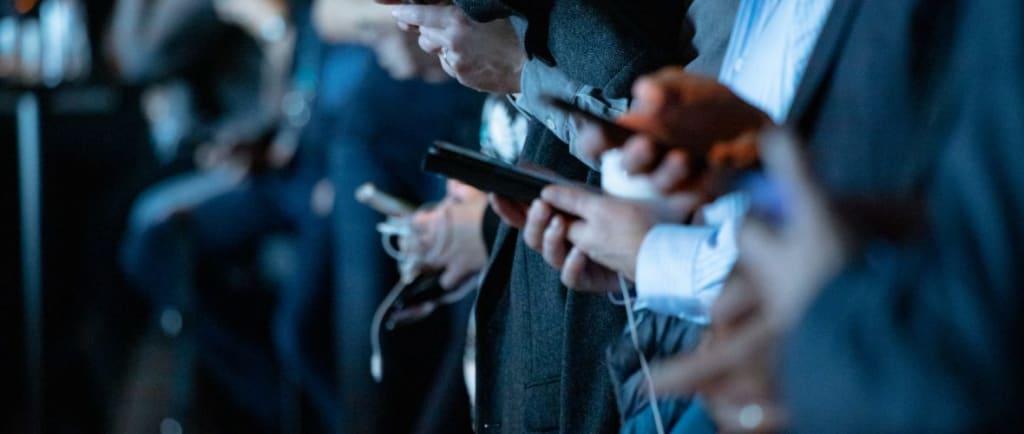
Social media has firmly established itself in our daily lives. We use it to stay in touch with friends and family, share our ideas and experiences, and stay up to date on the most recent events and fashion trends. Social media offers numerous advantages, but it also poses a threat to our relationships and mental health.
Our self-esteem is affected by social media, which is one of its biggest risks. Social media sites like Instagram and Facebook are flooded with pictures of flawless bodies, flawless houses, and flawless lifestyles. Comparing oneself to these photos causes users to feel inadequate, anxious, and depressed. Our hyper-focus on our beauty and social position as a result of this ongoing desire for approval and comparison can have a detrimental effect on our mental health.
Social networking also has the ability to foster irrational expectations for romantic relationships. Online, people frequently portray a carefully edited version of their lives, highlighting only their greatest experiences and accomplishments. Because of this, one may get the impression that everyone else is having a great existence and experience a false sense of reality. We may experience feelings of isolation, loneliness, and inadequacy when we contrast our actual lives with these idealised ones.
Our relationships can be significantly impacted by social media as well. According to studies, excessive social media use might reduce face-to-face interaction, which reduces closeness and emotional connection. Because couples may feel threatened by contact with ex-partners or other individuals online, social media may also foster envy and distrust in relationships.
Additionally, the continual barrage of information on social media may be debilitating and induce worry and anxiety. Social media algorithms are meant to keep users interested, encouraging an endless loop of scrolling and information consumption. We may experience burnout and exhaustion as a result of feeling like we are constantly "on" and never actually unplugging.
Social media has completely changed the way we interact with one another, giving us access to knowledge and communication like never before. This effective technique does, however, have a negative side. Social media is a double-edged sword that demands us to be careful with how we use it and aware of any possible risks, while also appreciating its ability to unite people and bring about positive change.
What can we do, then, to lessen the social media risks that are not well known? Here are a few advices:
1. Limit your usage of social media: Establish boundaries and restrictions on how frequently you log in. If you see that social media is having a detrimental impact on your mental health, think about taking a complete break from it.
2. Be conscious of your online interactions: Recognise the emotional and mental effects that social media has on you. Consider unfollowing or disabling certain accounts if you find that specific conversations or material are making you feel bad.
3. Put an emphasis on in-person interactions: Try to get in touch with friends and family in person. Intimacy and deeper ties may both be fostered via face-to-face conversation.
4. Engage in self-care: Look after your mental health by doing things you enjoy and find relaxing. This might lessen the detrimental effects that social media may have on your mental health.
We may take precautions to lessen the hazards that social media may have on our relationships and mental health. We may have a better relationship with social media by being conscientious about how we use it, setting limits, and giving real-life interactions a priority. We may safeguard our mental health and cultivate deep connections with the people in our life by doing this.

About the Creator
Honey Rajpoot
Connected to information.
Keep reading
More stories from Honey Rajpoot and writers in Humans and other communities.
Living as an Introvert
Introverts are often viewed as shy, quiet, and reserved. In a world that values extroversion, introverts may feel like they don't quite fit in. However, there is nothing wrong with being an introvert. In fact, introverts have many strengths that can make them successful in their personal and professional lives. In this article, we'll explore what it means to be an introvert and how introverts can embrace their unique qualities to live a fulfilling life.
By Honey Rajpoot3 years ago in Humans
Whiskey At Dusk
Guess the whiskey was more important to you in the end, wasn’t it? It was more than the well-being of your friends; more vital than showing up to the places you promised you would and could come to; more critical of a matter than fulfilling your damn responsibilities and getting the press off your back.
By Snarky Lisa3 days ago in Humans
The Line We Were Never Meant to Cross — Part 3
I woke up alone. That should have relieved me. Instead, panic clawed its way up my throat before my eyes were even fully open. The apartment felt wrong—too quiet, too empty, like something essential had been removed. Then I saw it. A note on the kitchen counter. Neat handwriting. His. Don’t move. I’ll be back soon. No explanation. No apology. Just certainty. I sat up slowly, heart pounding. The clock read 6:47 a.m. I didn’t remember falling asleep. Only his weight behind me. His voice low and commanding. The way he held me like escape wasn’t an option. I told myself I was not afraid. That was another lie. I moved anyway. Bare feet on cold tile, I crossed the apartment and checked the door. Locked. From the outside. My breath hitched. I rattled the handle once—softly. Then harder. Nothing. “You’ve got to be kidding me,” I whispered. The windows were sealed. The phone on the table beside the couch was not mine. Mine was gone. A chill slid down my spine. This wasn’t passion anymore. This was control. The sound of keys at the door made me spin around. Aarav stepped inside like this was the most normal morning in the world. Fresh clothes. Calm expression. Coffee cup in hand. “You locked me in,” I said, my voice sharper than I felt. He looked at me for a long moment. Studied me. “I kept you safe,” he replied. “From what?” I demanded. “From leaving,” he said simply. The honesty was worse than any excuse. “You don’t get to decide that,” I snapped. “You crossed a line.” He set the coffee down slowly, deliberately, like sudden movements might shatter something fragile between us. “I told you,” he said. “If you stayed, it wouldn’t be clean.” Anger flared—but beneath it was something darker. Something I didn’t want to name. “Let me go,” I said. He walked toward me. Not rushed. Not threatening. That was the terrifying part. “You could go,” he said quietly. “If you really wanted to.” I laughed, bitter. “The door was locked.” “And now it’s not.” He stepped aside. The door stood open behind him. My chest tightened. “You think I won’t leave?” I asked. “I think you won’t,” he said. “Because you already tried running once. And you came back.” I hated that he was right. I grabbed my jacket and walked past him anyway, heart racing, every step daring him to stop me. He didn’t. Not until my hand was on the doorframe. “You won’t find what you’re looking for out there,” he said softly. “You already know that.” I froze. Because I did know. I turned back slowly. “This isn’t love,” I said. “This is obsession.” His mouth curved slightly. “Those are often confused.” I should’ve walked out. Instead, I asked, “Why me?” That broke something in him. His control slipped—just for a second. His jaw tightened. His eyes darkened. “Because you don’t look away from the parts of me everyone else avoids,” he said. “Because you don’t try to fix me. Because you see me—and stay.” “You locked me in,” I whispered. “I wanted to see if you’d still choose me when you felt trapped,” he replied. “That’s twisted.” “Yes,” he agreed. “It is.” Silence stretched between us, heavy and suffocating. “You scare me,” I said finally. He stepped closer. Stopped just short of touching me. “Good,” he murmured. “Fear keeps you honest.” Something in me cracked. “You don’t get to own me,” I said. “I’m not yours to claim.” “No,” he said softly. “You’re not an object.” “Then what am I?” His voice dropped. “You’re my weakness.” That was worse. Days passed like that—tension wrapped around us like a tightening wire. He didn’t touch me unless I reached for him first. Didn’t stop me from leaving. Didn’t raise his voice. But he watched. Always watched. He knew when I was thinking about running. Knew when doubt crept in. He’d speak just enough to pull me back. “You feel it too,” he’d say. “You don’t belong to the safe version of life.” “You’d be bored without me.” And the worst part? He was right. One night, I asked him, “What happens if I leave?” He didn’t answer immediately. When he finally did, his voice was calm. Almost gentle. “Then I’ll let you go,” he said. “And I’ll destroy anyone who tries to replace me in your mind.” My blood went cold. “You don’t mean that.” He smiled faintly. “Try me.” That was the moment I understood. This wasn’t a love story with a happy ending. This was a descent. And I was already too deep to climb out. I didn’t leave. I stepped closer instead. And in his eyes, I saw victory.
By Rosalina Jane4 days ago in Humans


Comments
There are no comments for this story
Be the first to respond and start the conversation.