
The Hidden Dangers of Advising Youth to “Reach for the Stars”
Young people are more stressed and depressed than ever before


Zara was an elite archer who had been competing professionally for nearly five years. In 2017, she started experiencing a losing streak. She trained harder than ever before, but continued to fail. Zara spiraled downward into depression. She started seeing a therapist, who encouraged her to stop being so harsh on herself.
Zara was outraged. She wanted help, not pity! She wanted to get out of the psychological rut causing her losing streak. She wanted to start winning again.
But the problem was that Zara had completely lost her passion for archery. Her practice sessions were mechanical. She stopped hunting for sport. In the process of fixating on winning, she lost sight of everything that had caused her to fall in love with archery in the first place.
Zara was at a crossroads — either she could revive her passion for archery, or she could push herself to excel. Right now, she was doing neither.
Every one of us dreams of success. But unfortunately, our overly prosperous culture has redefined “success” to mean “in the top 99%.” We’re no longer content with being the best we can be. We want to be the best in the world.
Do you have 5,000 followers on Twitter? That’s so 2010. Are you a millionaire? Sorry, you’re nothing special. The US alone has more millionaires than Sweden has people.
When I was nine, my brother and I argued over who was more likely to become an astronaut (spoiler: neither of us made it). Back when NASA was selecting 8 from a pool of 6,000 applicants (a success rate of 0.1%), our parents just laughed and expected us to grow out of it. And we did.

But kids today are dreaming about becoming YouTube stars. Even though only 0.25% of YouTube channels reach the threshold for monetization, we insist this is an attainable goal. But still, nobody is content with a measly 1k subscribers. No matter how much we already have, we always want more. We’re chronically unhappy.
Poverty, trauma, and discrimination used to be the leading causes of mental health disorders in young people. But in 2018, the Robert Wood Johnson Foundation reported for the first time that affluent adolescents were experiencing as much psychological distress as their underprivileged counterparts.
“It is really important to take another look at what it means to achieve,” writes Dr. Robin Stern from the Yale Center for Emotional Intelligence, “People are constantly comparing their insides with other people’s outsides. That’s a huge danger, and [today’s youth are] growing up with that in this culture.”
Naturally, social media takes most of the blame. But psychologist Lucia Ciciolla argues that parents still have more influence over young people’s mental health than their peers. When parents push their children to excel, they are essentially teaching that external evaluators are more important than internal motivators. These youth have been trained to base their self-esteem purely on what their teachers, judges, and coaches say about them.
Adolescents who experience strong parental pressure will continue finding other external standards to validate themselves. They can’t practice an instrument and be satisfied with making progress unless they win a competition or upload a viral video. But now that social media enables us to compare ourselves against everyone in the world, the vast majority of young people now view themselves as failures.
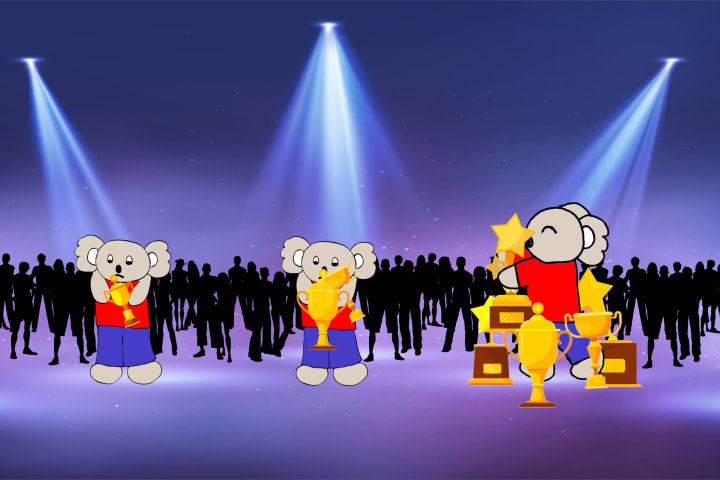
In Zara’s case, she refused to be satisfied until she had risen to become the best archer on the planet. She was no longer content with winning national tournaments. No matter how high she climbed, it was never enough.
On the other hand, youth with the best mental health have parents who encourage them to try new things just for the experience. Dr. Ciciolla advises parents to “promote affiliation and community” and stop caring about whether their children are the best at anything.
I used to look down at parents who say “It’s not about whether you win or lose — it’s how you play the game.” If you’re not going to win, what’s the point in competing? But as it turns out, these parents know something we don’t. Giving your children the freedom to choose whether they want to excel will encourage them to explore more possibilities. They will be healthier, more creative, and have better social skills.
Bill Gates, Mark Zuckerberg, and Steve Jobs all dropped out of university. These men were secure in their intellectual capabilities. They didn’t need diplomas to validate them. They were free to explore new possibilities and weren’t afraid of failure.

When Zara first started seeing a therapist, she hated the idea of forgiving herself for failing. She didn’t want to be herself. She wanted to be better. Even when she won a competition, the thrill associated with placing first was long gone. She took success for granted, but failure drove her into depression.
Finally, the therapist helped Zara understand how some tournaments are impossible to win. After trying her hardest, but still failing to place first, Zara had to be satisfied with her performance and accept that she wasn’t destined to become the world’s most elite archer.
“I know I am a good archer,” Zara told her therapist during their final session, “I do have a more relaxed attitude towards archery, which is benefiting my scores greatly and I can put everything negative that happens in the right perspective.”
Zara never made it to the Olympics, but she learned that it wasn’t worth sacrificing her mental health while trying to reach for the stars. She still wanted to excel, but she had to be content with how far she had already advanced.
Giving children the freedom to be themselves won’t necessarily make them become innovators who change the world. But relentlessly pushing them to excel will only make them chronically depressed. In extreme cases, parental pressure can even drive young people into drug and alcohol addiction.
When I was a teenager, I entered more competitions than I can remember. When I wrote an essay that won $5,000, I expected my parents to be proud of what I had accomplished. And they were proud — my mom cooked my favorite meal and then told me to sit down and write my next piece.
I wrote my $5,000 essay 22 years ago. Since then, I have never written another piece that has even come close to earning 10% of that amount. But I was blessed to have parents who truly believed that persistence is more important than success — if I had gotten hung up on my one outlier, I would have viewed everything that came afterward as a string of failures. I have learned to be satisfied with the knowledge that I have done my best, regardless of how other people perceive my work.
Instead of pushing our children to outperform their peers, we need to teach them the importance of never giving up. More importantly, we should set a good example for what it means to be internally motivated. We all need to stop letting teachers, employers, or social media followers determine our self-worth.
About the Creator
Keep reading
More stories from writers in Humans and other communities.
The Angry Man in Your House
"If you grow up with an angry man in your house, there will always be an angry man in your house" This statement has caused plenty of controversy online, people say its a statement that blames victims while also undermining those who break traumatic cycles to form health relationships... but if I'm honest now that I'm in my 30s it makes more sense to me than ever, and I'd argue that its not just about fathers and uncles.
By S. A. Crawford4 days ago in Humans
Omar Sachedina: Wife, Salary, Children, Nationality, Biography, Career & More
Omar Sachedina is a respected Canadian journalist and the Chief News Anchor and Senior Editor at CTV National News. Known for his professionalism, calm presence, and cultural depth, Sachedina has become one of the most trusted faces in Canadian broadcasting.
By Enoch Sagini6 days ago in Humans
Our Song
Evening has given way to night. Gently, I settle next to you on the comfortable, old love seat and reach for your hand. You snatch it away, again. It cuts me to the quick, but I hide the pain, understanding that the reaction is but part of your demented state. Since the accident, your presence here in our cozy home has been clouded by a haze I can't see. Nevertheless, I feel the frigidity of your expressions and it serves as an excruciating reminder of the immeasurable distance between us.
By Dana Crandell7 days ago in Fiction
I've Just Realized
The President doesn't understand music. There. It felt very good to write that; it's some thing I just realized today. Oh , yes; he plays it. He TRUMPets it in rallies and meetings, pumps it across the airwaves when he gathers up our minutes waiting for his late arrival.
By Judey Kalchik a day ago in Beat




Comments
There are no comments for this story
Be the first to respond and start the conversation.