
“The Hands, the Feet… They Had Melted”: Students Recall the Horror of Bangladesh Air Force Plane Crash in Dhaka
A routine school day turned into a living nightmare as a military aircraft slammed into a schoolyard—leaving behind trauma, destruction, and unanswered questions.
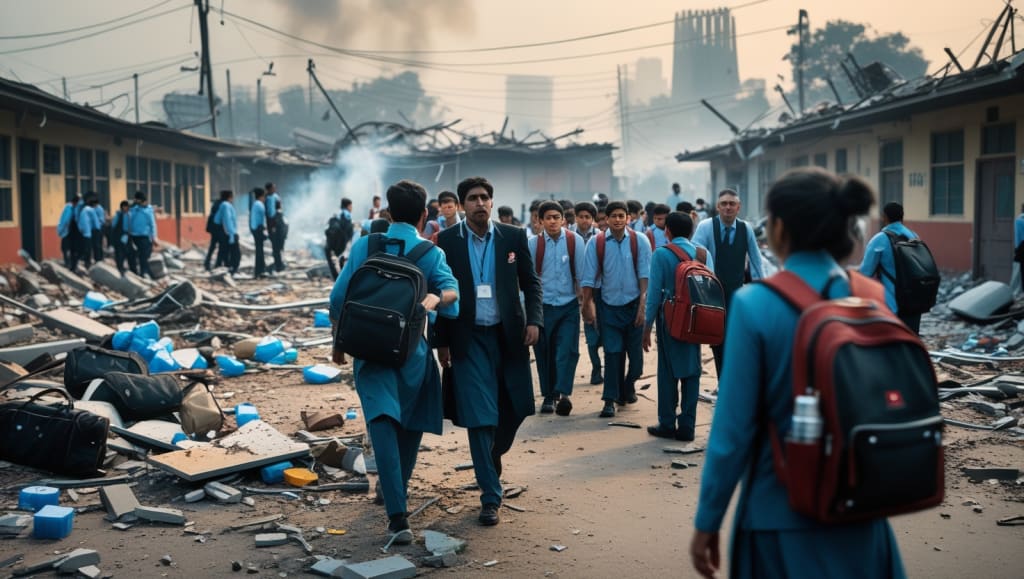
A Morning That Began with Laughter Ended in Screams
July 2025. What began as an ordinary morning for students at a school in Dhaka quickly turned into one of the darkest days they will ever remember.
Classrooms were buzzing. Children were preparing for morning assembly. Then came a sudden roar from above—followed by an earth-shaking crash, glass-shattering blasts, and within seconds, a ball of fire engulfed part of the schoolyard.
A Bangladesh Air Force training aircraft had lost control during a test flight and crashed directly into the school premises, killing at least seven people—including the pilots onboard and innocent bystanders. But for the children and teachers who survived, it was the sight—and smell—of what was left that may never leave them.
“The Hands… They Were Melted”
Sifat, a 14-year-old student, could hardly get the words out as local journalists surrounded him. “I saw smoke. I saw fire. And then... bodies. The hands… they had melted. So had the feet.”
The scene he described was one that no child should ever witness. Parts of the school courtyard were burned black, schoolbags lay in ashes, and several victims—possibly including maintenance staff and nearby residents—had suffered extreme burns. Some were trapped under the twisted wreckage of the plane, their bodies charred beyond recognition.
Many of the injured were rushed to the Dhaka Medical College Hospital and Burn and Plastic Surgery Unit, where doctors struggled to identify victims due to the condition of their bodies.
The psychological toll, however, is even more complex.
A Tragedy Rooted in the Sky
According to initial reports from the Bangladesh Air Force, the aircraft involved was a training jet that had encountered engine failure shortly after takeoff. Attempts to regain control failed, and the plane plummeted into the densely populated city block—clipping a residential rooftop before colliding with the school.
Eyewitnesses say they saw the plane spinning at an odd angle before it nose-dived into the school compound. Flames erupted within seconds.
“I heard the explosion from two blocks away,” said Rahman, a local shopkeeper. “By the time I got there, it was chaos—people running, children screaming, smoke everywhere.”
Questions Begin to Surface
As the school reels from the tragedy, a wave of anger and confusion is spreading across the community. Many are questioning why such military test flights are conducted so close to densely populated areas—especially schools and residential blocks.
Parents gathered outside the school gates the following day, some clutching photos of their missing children, others demanding answers.
“This was not an accident,” said one distraught father. “It was negligence. Our children should never have been this close to danger.”
Officials have promised a full investigation, but the public is demanding greater transparency and immediate safety reforms. Civil aviation experts, too, are calling for a review of air corridors and emergency landing protocols in urban centers.
The Faces Behind the Headlines
Tragedies like this one often get reduced to numbers: 7 dead, 15 injured, 1 plane lost. But behind those numbers are real stories.
- Nusrat, 11, loved to draw and had just won an art competition the previous week. She suffered burns on over 40% of her body.
- Mr. Jalil, 55, the school janitor, was cleaning the courtyard when the plane struck. He is missing, presumed dead.
- Afsan, 16, was filming a school project when he captured the final seconds before the crash—footage that is now with investigators.
- Headmistress Rupa Begum, who helped evacuate dozens of students, was injured by flying debris but remained on site until the last child was safe.
These are not faceless victims. They are part of a community that is grieving, angry, and shaken to the core.
The Mental Wounds Run Deep
Though many children escaped physical harm, the trauma may stay with them for life.
Psychologists and trauma counselors have already been dispatched to the school, offering grief support and PTSD intervention. But for students who saw their classmates injured or dead, healing will be a long road.
“I keep hearing the explosion in my head,” said one boy, just 12 years old. “And I keep seeing the hands.”
Experts say that early emotional support is critical in such situations. “Children process trauma differently,” explained Dr. Nafisa Anwar, a child psychologist in Dhaka. “They may not speak about it for weeks, but it resurfaces as anxiety, sleeplessness, even aggression.”
A City Grieves Together
Dhaka has faced its share of tragedies—fires, building collapses, floods. But there is something uniquely heartbreaking about a plane crash into a school. It feels like a breach of the one space meant to be sacred: a place of learning, of innocence, of hope.
Candlelight vigils have been held outside the school’s gates. Neighbors are bringing meals to grieving families. And in the heart of a city often hardened by survival, people are once again showing what it means to come together in sorrow.
Moving Forward, Demanding Accountability
There is no bringing back the lives lost. No erasing the memories etched into the minds of young students. But what the people of Dhaka—and of Bangladesh—can do now is demand better.
Better aviation safety standards. Better emergency response infrastructure. And better mental health support for survivors.
This tragedy must not be reduced to a news cycle moment. It should become a turning point—one that forces both the military and civilian leadership to reevaluate how we protect our citizens, especially our children.
Final Thoughts: Remembering the Unseen
In a world flooded with headlines and breaking news, this story may fade by next week. But for the children who saw melted hands and burning bodies, for the families burying loved ones this week, and for the community trying to rebuild, the impact will last a lifetime.
As the school reopens in a few weeks, it won’t just be about cleaning debris or repairing walls. It will be about rebuilding trust, restoring safety, and nurturing the fragile hearts of students who now know just how cruel reality can be.
We owe them more than thoughts and prayers.
We owe them change.
About the Creator
Keep reading
More stories from Shahjahan Kabir Khan and writers in Humans and other communities.
Could Cancer Drugs Be the Key to Fighting Alzheimer’s? New Research Offers Unexpected Hope
A Surprising Breakthrough in the Fight Against Alzheimer’s Alzheimer’s is one of the most dreaded terms in contemporary medicine. For countless families worldwide, this illness not only leads to memory issues but also brings emotional distress, confusion, and the painful gradual loss of a beloved individual. Even after years of investigation, options for treating Alzheimer’s are still scarce, and no genuine cure has been discovered.
By Shahjahan Kabir Khan6 months ago in Humans
Center Stage with Paul Stewart
*** I'm keen to republish the interviews I did for my series with Vocal creators. It's been a few years and I thought it might be nice to revisit these wonderful conversations. I'll be releasing them one at a time for a few weeks/months.
By Heather Hubler4 days ago in Interview




Comments
There are no comments for this story
Be the first to respond and start the conversation.