

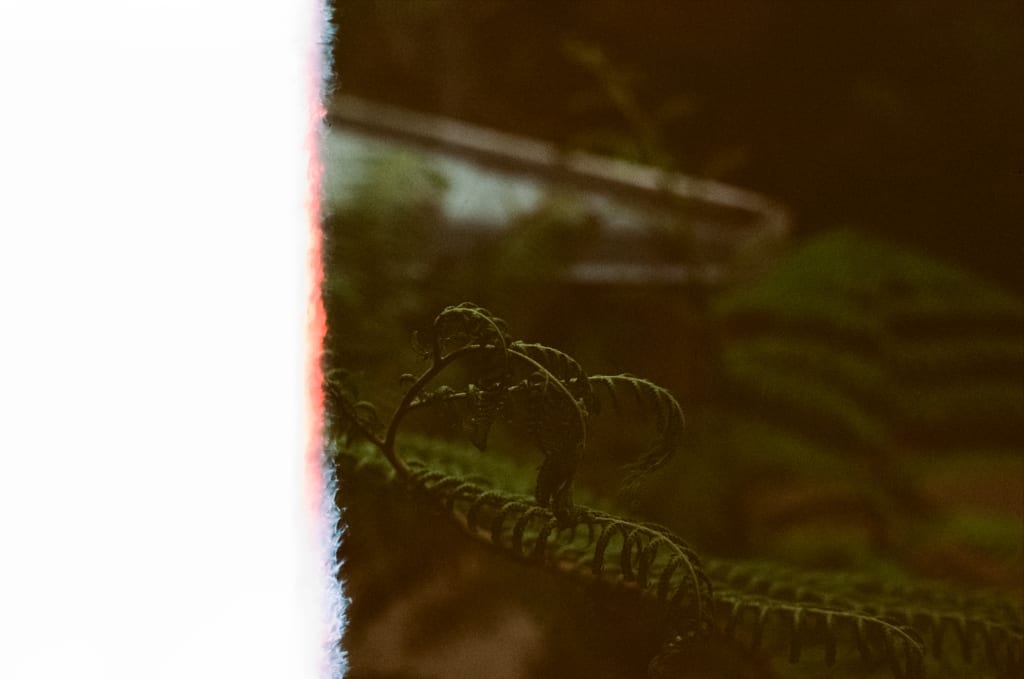
Gracie huffs as she strikes the dirt with her spade. She was a determined sort with a sharp sense of wrong and right, that’s partly why Bert valued her friendship so much. He watches her blonde ponytail fall over her shoulder as she lifts the spade again. Thud. Thud, thud. Thud. This time the spade slides in and she places her boot on its step and it sinks, submerging the blade. She turns around to face Bert.
“You can’t keep it, you know.” Her face is stern, a little sweaty.
“Can’t?”
“Shouldn’t.”
“But could.” Bert raises his eyebrows at her.
“It’s immoral, Bert.”
Gracie clearly thinks that ended the conversation because she snaps back around, gripping the spade’s handle with renewed force and uproots the soil. To Bert, Gracie lived an enviously simple life. She could decipher her emotions on anything in an instant it seemed. He, however, was trapped by a myriad of conflicting voices inside his head. He worried about missing opportunities. He even worried about opportunities he’d missed years ago. He thinks “if only I’d done this then I’d be there”, whereas Gracie thinks “I did that and now I’m here”. He can see that now.
“What will you do with it anyway?” she says.
“Huh?”
Gracie’s facing him again, leaning on the spade.
“If you keep it, what will you do with it?”
Bert looks at her standing in front of him. His rubs his thumbs over the cover of the little black notebook he’s holding in his lap.
“You mean what will I spend it on?” he says.
“Of course. That’s what it’s for isn’t it? That’s how everyone uses money.”
Bert smiles at Gracie’s mocking tone. If he’s going to convince her he should keep the money, he needs a good answer to that question.
“I don’t know.” Bad answer, Bert. “I mean, I could keep it for a while. Until I know what I want to use it for. I wouldn’t just go and spend it all at once or on one thing you know…” He feels his voice wavering and then tapering off.
For a moment Gracie says nothing. Bert feels deeply that he’s disappointed her. He so badly wanted to say something impressive, to have a grand, selfless idea of what to do with such a large sum of money.
“To be honest, if it was mine, I wouldn’t know either.”
“I just feel weird about all this,” he admits. “I think it’s mine. I want it to be mine. It is mine isn’t it?”
“You bought the desk.” Bert internally thanks her for her clear-sightedness. Yes, he had bought the desk.
Last week, Gracie mentioned there was a large desk in the charity shop on the main road. She’d seen it when her mum had driven her to the allotment. Bert had been looking for a new desk for a while. He didn’t want a regular one like everyone else. No. Gracie had asked him why. His eyebrows shot up. “Because”, he said. “Because that’s where miracles happen. It’s like, when you sit down at the perfect desk, everything seems easy.” Gracie thought about the sunlight sliding through the blinds and hitting the study desk. The bars of shadow crisp on the white surface. “No,” she said, “miracles happen outside. In the garden, in the soil where seeds grow.” Bert shrugged. “When I find the right one, I’ll know.”
They walked into the shop. It was full of junk; old boxes of dusty toys, piles of cassette tapes, disorganised chairs with crooked legs and rows of odd shaped cutlery. Bert smiled at the lady behind the counter. “I’d like to buy the wooden desk in the window,” he’d said. She looked mildly surprised.
“Do you want to look inside?” she asked.
“Yes please,” Gracie cut in before Bert could decline and buy an old desk full of spiders. The lady led them to the window display and moved a wobbly round table over to one side so they had some room. Bert ran his hand over the glazed wooden hood of the desk. Along the edge there were little boats with balsa white sails and dark oak boughs. “You lift the hood there,” the lady reached over and stuck her heavily ringed fingers into a small carved handle on the hood. She looked at Bert expectantly. He moved forward and pushed up the lid, as he did so, the desktop slid out further. Bert marvelled at the engineering for a moment before placing his palms on the blue felt tabletop.
“Belonged to a sea captain apparently” the lady interrupted his awe, “the material stopped things slipping and same with the hood of course. You know, in rough seas and turbulent waters. Really is a lovely specimen if you ask me. Wife came in and said the Captain died a while back, she just hadn’t wanted to let the desk go. It works fine but the drawer on the right is stuck. Couldn’t pry it open myself but maybe if you have a hair pin…” She kept talking and Bart stopped listening. This was the one, he thought. It was a keeper.
Bert’s dad brought his van to the store to help them get it home. He was sceptical of his son’s eccentric tastes but nevertheless carried one end up the stairs with Bert on the other. Gracie and Bert had tried endlessly to open the little drawer on the side. One afternoon Gracie brought a skewer she used to label the vegetables in the allotment and stuck it into the brass lock. The inside popped with a tock noise and the drawer fell with a release like it hadn’t been open for years. Bart half expected sea water to slosh out or a wild octopus with raging tentacles. That’s where he found the little black notebook and an old cigar box filled with the money.
He’d lie in bed for hours reading through the little black book, holding it close to his face as if his eyesight was poor. It had numerous rows of coordinates written in cursive ink, several scored through with scratchy lines that threatened to tear the page. He dreamt of a Captain scouring the seas for treasure, his desk in the great cabin with large windows spattered with sea spray. In the evenings the Captain would close the hood of his beautiful desk, his work done. Then, in the morning he’d push it open again and have great sparks of inspiration where golden coins and shining gems may hide in the endless facets of the ocean. He succeeded in all adventures across the great rolling blue blanket of water and each one started there at the desk with the notebook and a pen and a moment of inspiration of where to go next.
“You need to decide what you want to do Bert” Gracie says, “keep the money, keep the book. Maybe use it when you’re older and wiser and know what to do with it.”
“Yeah. I think you’re right. When I’m older I’ll know what to do, adults know what to do.” That’s it then, he thinks. The light is fading now, and the pair realise they’d been at the allotment all afternoon discussing the book and the money. They walk to the gate and then their separate ways home.
Bert would look back at this moment and laugh at his childish ignorance. He felt in some obscure way, in the allotment with Gracie that day, that he had said something foolish despite believing wholeheartedly that with age would come clarity. Bert kept the money in its cigar box in the desk drawer. In the many years that followed, he had moments of desperation yet could never bring himself to use it. He wrote in the little black book all the options he had and all the moments he could have used the money to help him out. However, every time his hand reached out for the drawer, something stopped him. It wasn’t the time. It wasn’t the moment for it. It wasn’t right. He didn’t have the clarity of mind, the consciousness or vision for the money that he had promised he would have when he spent it.
The little black book became full of missed moments of potential luxury. Even when he married Gracie, he couldn’t bring himself to buy a ring with the Captain’s money. Time passed and the pages in the book dwindled.
It cannot be said that miracles always happen at the perfect desk with a pen and a little black notebook, but Bert’s younger self had such a pure belief that this notion stayed with him throughout his adult life. And it was just a quiet moment of reflection, as he watched Gracie’s spade side down into the dirt of the vegetable patch that he decided what to do with the money. A greenhouse. He’d build a greenhouse for her. And she’d sit among the seedlings and the flowering plants, the sun striking the glass, and they’d continue to grow old and she’d continue to find an absolute happiness in fostering new life and sowing her seeds. He’d watched her since they were young digging and watering and he’d eaten the fruits of her labour.
And now, in the moments when he watches her with her plants, there is an absolute clarity to life. Most people, he thinks, looking at her silently pruning, spend their whole lives without ever really feeling so absolutely certain that they had made the right decision.
About the Creator
Keep reading
More stories from writers in Humans and other communities.
The CEO of Everything
They say "jack of all trades, master of none," but they forgot to mention the part where the jack of all trades is also the camera woman, the makeup artist, and the person currently yelling at a tangled Wii microphone cable in a her own bathroom while recording herself singing and trying to make it look realistic and professional. (As professional as you can make it with nothing but a cell phone camera and a mic that doesn't work)
By Sara Wilson5 days ago in Humans
Kyrsten Sinema
Kyrsten Sinema is an important American political leader. She worked for many years in the U.S. government and became known for being different from many others in politics. This article uses easy English and clear subtitles to help you understand who she is, where she came from, what she did, and what is happening now with her.
By Farhan Sayed7 days ago in Humans


Comments
There are no comments for this story
Be the first to respond and start the conversation.