

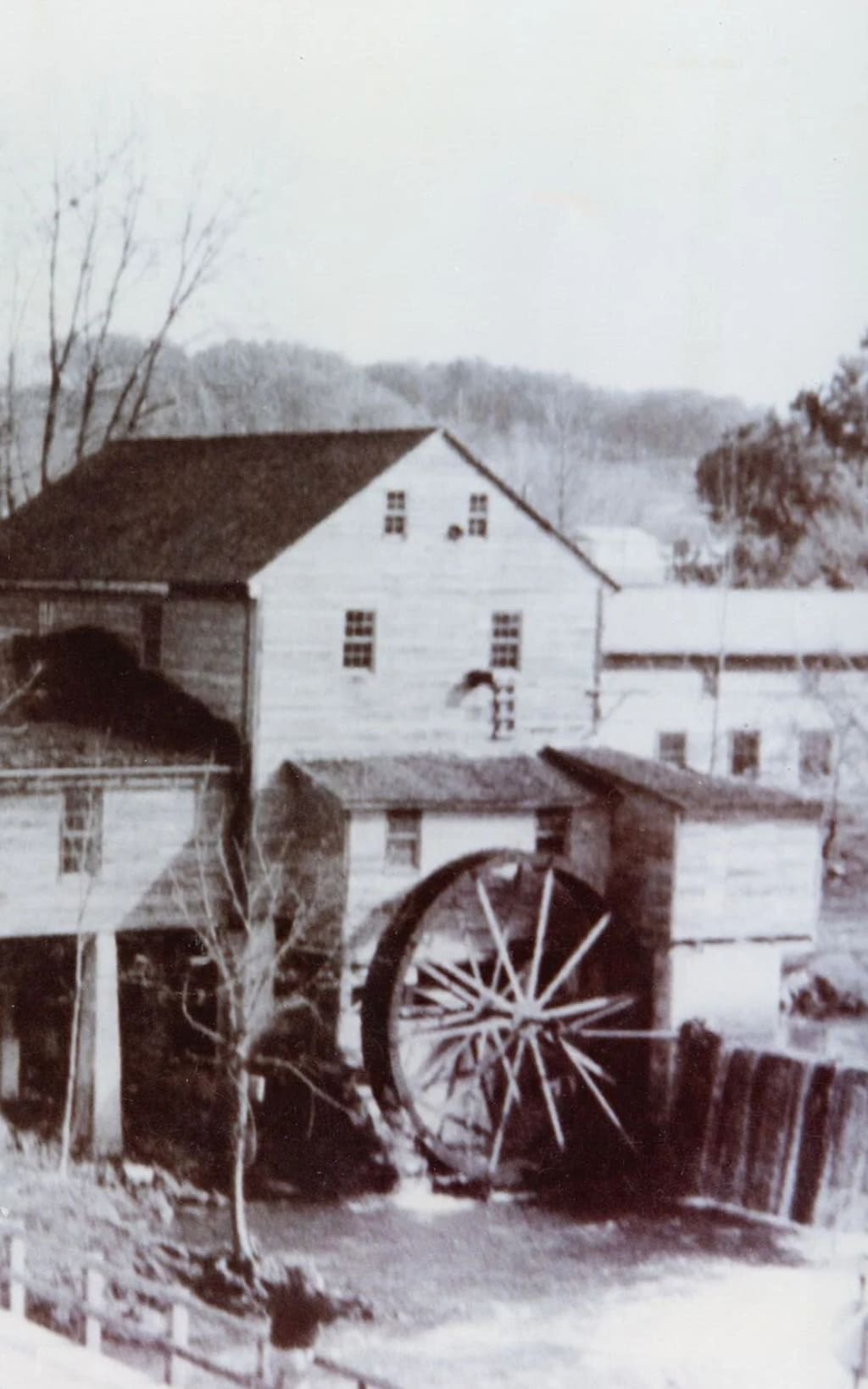
I learned about corn before I could read. Not from books, but from the hum of the gristmill at the edge of town, where the river bent like a snake around its foundations. The millstones turned slowly, grinding kernels into dust that smelled of sun and sweat and memory. A gristmill is a simple thing, or so it looks: two heavy stones, one above the other, spinning against each other to crush the corn. But simple does not mean unimportant. For centuries, gristmills were the heart of a Southern town. They ground the grain that fed families, that made cornbread and porridge and the sustenance of survival. They were places where women and men gathered, where news traveled faster than the river, where hands learned rhythm and patience and the art of making something from nothing.
Some old hand had cracked those kernels a hundred years ago, and the walls seemed to hold the memory. You could almost hear the echoes of hands moving in rhythm with the turning stone, hands that had labored from dawn to dusk, hands that had fed children who would grow to feed children of their own, hands that laughed quietly while the world spun madly outside. The mill was a pulse, a slow heartbeat beneath the town’s fast life, a reminder that some things could not be rushed.
Cornmeal is stubborn. It waits. It remembers. It remembers the dirt roads and the fields, the women who stood over cast iron skillets with flour on their hands and secrets in their smiles. It remembers the songs sung while cutting bacon, the small miracles of grease and fire. It teaches you that some things take time. Some things require heat. Some things demand patience.
Today, I stand with my own iron skillet, bacon grease sizzling and spitting like laughter at my heels, my batter ready to hit the hot surface. I think of the millstones, of the women who fed families without asking for glory, of the stubborn kernels that became the sustenance of Sundays and stolen breakfasts before sunrise. I drop the batter. It hisses. It curls and rises. A small miracle.
In that sizzle, I hear the past speaking. I hear it telling me that survival is often disguised as indulgence, that labor carries joy when it is done with hands and heart, that history is not only in books but in the smell of frying bacon and cornmeal dust in the air. I think of the women whose names I do not know, whose laughter and patience and fire are still in the kitchen, in the dust, in the sizzling pan.
The gristmill hums somewhere in my memory. The river bends the same way it did centuries ago. The dust is golden still, and the corn remembers. And so do I. I remember the millstones, the women, the iron skillets, the grease. I remember the ritual and the patience, the way labor becomes devotion, the way a child born into shadows can still find light in the simple act of cooking, of feeding, of keeping a small, stubborn miracle alive.
I scoop the hot cornmeal from the skillet, the edges crisping, the centers soft. I taste history. I taste survival. I taste joy disguised as work. And I smile because here I am, still standing, still cooking, still carrying the golden dust forward.
About the Creator
Taylor Ward
From a small town, I find joy and grace in my trauma and difficulties. My life, shaped by loss and adversity, fuels my creativity. Each piece written over period in my life, one unlike the last. These words sometimes my only emotion.
Keep reading
More stories from Taylor Ward and writers in Humans and other communities.
Island Girl Coping Mechanism For When It’s Too Damn Winter. Runner-Up in The Ritual of Winter Challenge.
Growing up without Icelandic temperatures shapes you into a different being. And this particular being put on a valiant front until climate change upped the ante in my current location with a well-timed sucker punch some years back that became standard.
By The Dani Writer25 days ago in Humans
Libra Woman and Aries Man Compatibility Score
The pairing of a Libra woman and an Aries man is one of the most classic and dynamic opposites-attract matches in astrology. Ruled by Venus and Mars respectively, this duo embodies the eternal dance between love and desire, harmony and action, diplomacy and courage. Their connection is rarely boring—often exciting, sometimes challenging, but usually transformative for both partners.
By Inspire and Fun2 days ago in Humans
'20/20'
"Do It Again" the track that would ultimately open the Beach Boys final album on Capitol Records which was released on February 10th 1969 had originally been released as a single in August of 1968. The track was the first of many post-Pet Sounds era throwbacks to the early Beach Boys sound which would become continually more cliched and eventually lead the Beach Boys to the level of self-parody they would eventually succumb to in the 1980s while their closest contemporaries The Beatles nearing the end of their run in 1969 would go on to be viewed as the most influential band of all time. However, the song itself is not bad on its surface, and it opens with a futuristic sounding (for 1969) drumbeat captured by then-Beach Boys engineer Stephen Desper using tape delays on the drums performed by Dennis Wilson and John Guerin. The song has been re-recorded numerous times over the years on various Beach Boys-related projects most notably the 2011 re-recording at Capitol studios featuring the five surviving Beach Boys at the time backed instrumentally by various members of both the Brian Wilson Band and Mike Loves touring "Beach Boys" to promote the then upcoming Beach Boys 50th Anniversary reunion tour in 2012. The hammering and power drill sound at the end of the song was an excerpt from a track called "Workshop" that was to be a part of the uncompleted "SMiLE" album.
By Sean Callaghan6 days ago in Beat



Comments
There are no comments for this story
Be the first to respond and start the conversation.