
“The Girl Who Spoke in Rain light”
She learned to cry beautifully — until one day, her tears stopped making sound.


The Girl Who Spoke in Rainlight
By [Ali Rehman]
There once was a girl who cried beautifully.
When she wept, her tears didn’t fall like water — they shimmered like melted glass, each drop catching light in a thousand quiet colors. The villagers said her sadness sang; that her sobs were symphonies, and her tears, rainlight.
Her name was Elara.
She lived at the edge of a small town, in a cottage that smelled of damp earth and lilies. People came from far away to see her cry. They said it was healing — that if you stood close enough, her sorrow would wash away your own.
So Elara cried.
At first, it was only when her heart hurt — when her mother fell ill, or when the stars wouldn’t appear through the smoke of winter. But soon, people began to ask for her tears. They offered her coins, gifts, and prayers. They brought her letters to read aloud, hoping her voice would make their grief beautiful too.
And Elara, kind as she was, never said no.
She learned to cry on command.
Every day, she’d sit by her window, the world waiting outside, and let her sadness spill into the light. Children gathered beneath the window to catch her tears in glass jars. Merchants bottled them, calling them “Rainlight Drops.” People sprinkled them on graves, or wore them as charms, believing they could ward off pain.
Elara became a legend — the girl whose sorrow could heal the broken.
But as her fame grew, her heart began to hollow.
Each tear felt less her own. Each sob sounded rehearsed. Her grief, once tender and true, had become a performance — a ritual stripped of meaning. The people didn’t notice the difference. They only saw the glow, not the girl behind it.
One evening, a boy came to her door.
He was quiet, dressed in gray, his eyes like storms. In his hands, he held nothing but a small, cracked mirror.
“My sister died,” he said softly. “They told me you could make it hurt less.”
Elara nodded and invited him in.
She sat by the window and began to cry. Her tears spilled down her face, glowing faintly in the candlelight. The boy watched, unmoving. The air filled with the soft hum of her grief.
When it was over, she wiped her eyes and smiled weakly.
“There,” she said. “It’s done.”
But the boy only looked down. His reflection flickered in the mirror, small and trembling.
“It’s beautiful,” he whispered, “but it doesn’t sound like pain.”
The words struck her harder than any blade.
When he left, Elara sat in the silence of her cottage, staring at her hands — the same hands that had carried others’ sorrows, shaped into light and sound.
That night, she tried to cry again.
But nothing came.
Her eyes burned, her chest ached, yet the tears would not fall. The world outside waited for the familiar melody of her sadness, but there was only stillness.
For the first time in her life, her sorrow made no sound.
Days passed. Then weeks. The villagers grew restless. They knocked on her door, begged for one more display, one more cascade of light. But Elara could only shake her head.
Her tears were gone.
The silence was unbearable. It wasn’t the peace of healing — it was the kind of silence that eats you alive from within. She felt as though she’d been emptied, as though her sadness had finally consumed all that made her human.
Until one morning, when rain fell for the first time in months.
It wasn’t her doing — just the sky remembering how to weep. The sound was soft, tender, and alive. Elara stepped outside and felt the droplets on her skin, cold and real. She lifted her face, whispering to the clouds:
“I gave them all my rainlight. What do I have left now?”
A voice — faint as wind — seemed to answer:
“Your silence.”
And she understood.
All those years, she had spoken in sadness so others could feel whole. But in doing so, she had forgotten how to listen to her own stillness — the quiet voice beneath the pain, waiting to be heard.
So Elara stopped performing. She stopped crying for the world.
She began walking instead — through the fields, along the streams, beneath skies that no longer asked for her sorrow. And wherever she went, she carried no tears, no glow, only peace.
The villagers missed her. Some said she’d lost her gift. Others whispered she’d been cursed. But a few — the ones who’d truly listened — swore that if you stood by her window at dawn, you could still see the faintest shimmer of rainlight drifting in the air.
Not from tears.
But from the way she smiled.
Years later, when children asked who she was, old storytellers would answer:
“She was the girl who spoke in rainlight — and when her tears stopped making sound, the world finally learned to hear the quiet.”
Moral:
True healing doesn’t come from how beautifully we cry, but from the silence that follows — the moment we learn to listen to ourselves, not just our pain.
About the Creator
Ali Rehman
please read my articles and share.
Thank you
Keep reading
More stories from Ali Rehman and writers in Humans and other communities.
“The Man Who Collected Goodbyes”
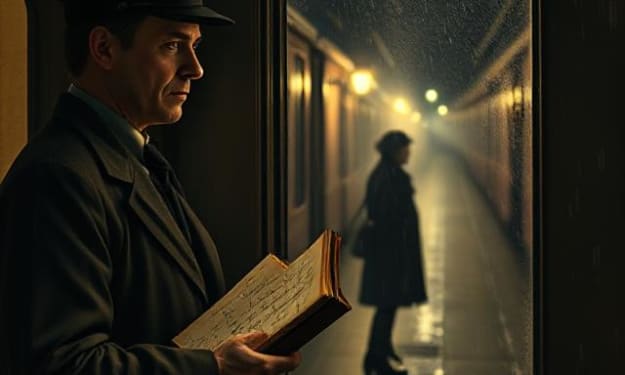
The Man Who Collected Goodbyes By [Ali Rehman] The rhythmic clatter of wheels against steel was a familiar sound to Henry, the train conductor of the old midnight line that cut through sleepy towns and bustling cities alike. Each night, as he paced the length of the train, collecting tickets and greeting passengers, Henry did something unusual—he collected goodbyes.
By Ali Rehman4 months ago in Humans
The Shift From Pisces to Aquarius: From Following to Connecting
Astrological ages describe long arcs of cultural development, each lasting roughly two thousand years. These eras are not defined by single events but by gradual changes in consciousness, values, and collective orientation. The transition from the Age of Pisces to the Age of Aquarius marks one of the most significant shifts in human history, not because of a change in the stars themselves, but because of the change in how humanity interprets meaning. The Piscean era emphasized devotion, sacrifice, and hierarchical spiritual authority. The Aquarian era emphasizes connection, shared intelligence, and the dissolution of hierarchy. This shift can be summarized in a simple contrast: in Pisces, the savior said “Follow me.” In Aquarius, the savior says “Connect.”
By Julie O'Hara - Author, Poet and Spiritual Warriora day ago in Humans


Comments
There are no comments for this story
Be the first to respond and start the conversation.