
The Girl on the Metro: How a Random Photo Turned Into the Internet’s Favorite Fairy Tale
A true story about a fake story — and what it reveals about us.
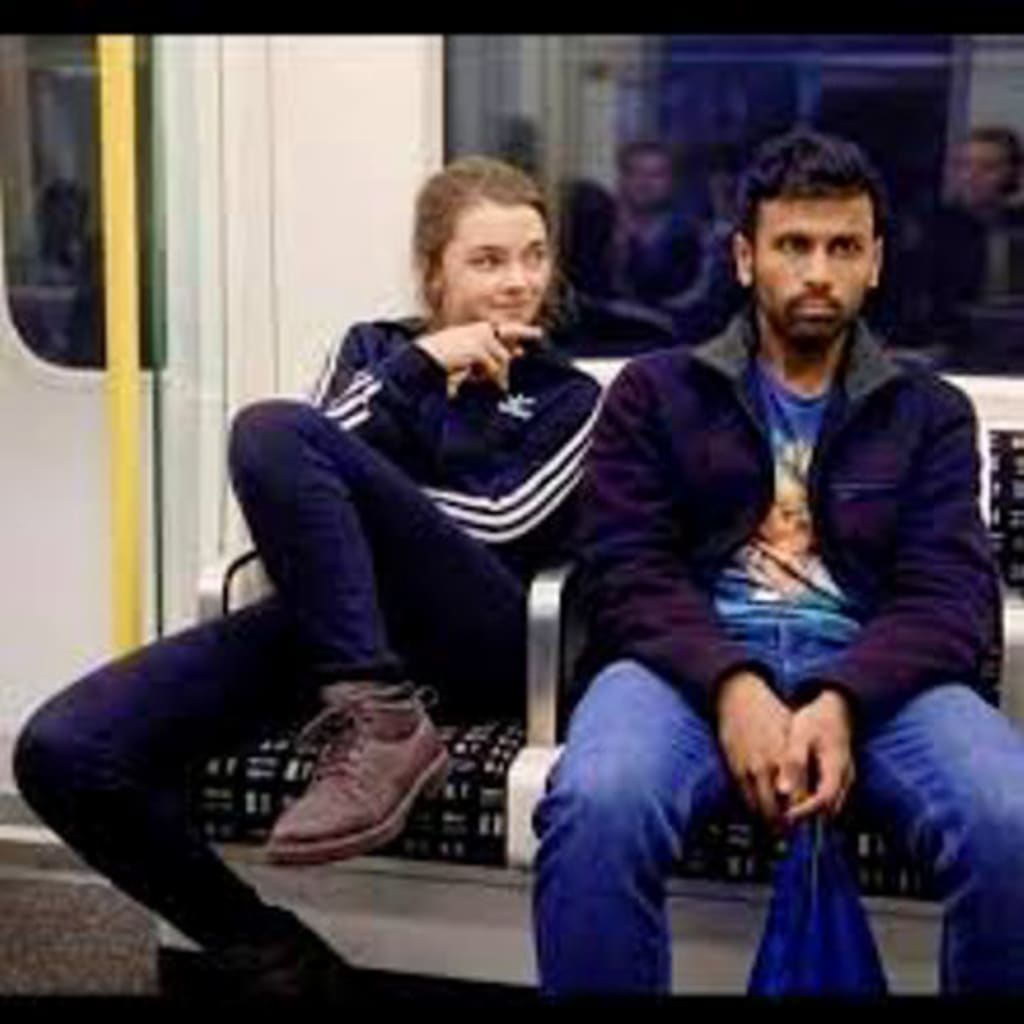
The metro car rattled softly as it cut through the grey morning of Berlin — a normal Tuesday, the kind no one remembers. Commuters stood hunched over their phones. A few stared out the window, letting the cold light wash over their faces. No one paid attention to the young woman sitting quietly near the door, a hood covering most of her hair, a backpack resting against her knees.
Her face was calm, almost too ordinary for anyone to notice.
Except the whole world would notice — days later, when the photos went viral.
But at that moment, on that metro, she was just Maisie Williams. Not Arya Stark. Not the warrior of Winterfell. Just a 20-something navigating public transportation like everyone else.
Across from her sat a young Indian man. Backpack, earbuds, tired eyes — the universal uniform of students and workers traveling between two parts of life. He didn’t look at her twice. Why would he? She looked like any other commuter.
Someone else on the train, however, did notice her. They snapped a couple of candid photos. Nothing dramatic. Nothing cinematic. Just two strangers sitting side by side.
The photos slept quietly on someone’s phone.
Until the internet woke them up.
THE VIRAL MYTH
A few weeks later, the images appeared online with a story attached:
“An Indian boy sat on a German metro unaware that the girl beside him was Maisie Williams, the Game of Thrones star…”
The narrative grew wings.
People added dramatic twists:
He was living illegally in Germany.
He didn’t know Hollywood celebrities.
She smiled at him but he ignored her.
He found out only after the picture went viral.
Nothing was true.
But the story felt good.
It felt shareable.
It felt like a modern fairy tale — the ordinary boy and the extraordinary girl crossing paths in a moment no one noticed.
That’s how fake stories work: they don’t spread because they’re accurate.
They spread because they satisfy something inside us.
WHY WE LOVED THE LIE
We live in a world full of noise, yet hungry for magic.
A superstar sitting next to a random guy?
A moment of equality?
A story where fame doesn’t matter, where life casually lets two extremely different worlds brush shoulders?
People don’t share facts.
People share feelings.
And this story made people feel:
surprised (She was on the metro like a normal person!)
amused (He didn’t recognize her!)
connected (Celebrities are just like us!)
The lie wasn’t harmful.
But it was revealing.
It showed how easily we build myths from moments we don’t understand.
THE REALITY BEHIND THE PHOTO
Maisie Williams was indeed in Germany.
Yes, the metro photos were real.
But the Indian boy?
Just another passenger.
Not illegal.
Not clueless.
Not part of a fairytale.
He didn’t share the moment.
He didn’t comment on it.
He didn’t even know the photo existed.
He was transformed into a character in a story written by the internet — a story he never asked to be in.
WHEN IMAGES BECOME STORIES
This is the power and danger of the digital age.
One picture + one imagination = a story the world believes.
How many other viral stories started the same way?
How many strangers have unknowingly become characters in fiction disguised as truth?
We scroll through feeds, laughing, reacting, believing — rarely questioning.
Sometimes the story is harmless.
Sometimes it isn’t.
But every time, it reminds us that the internet is not a mirror — it’s a canvas.
And anyone can paint on it.
THE MOMENT WE NEVER SAW
Let’s imagine, for a second, the real moment that happened on that metro:
Maisie sits quietly, headphones in.
The young man scrolls through messages, thinking about his work or studies.
The train stops.
Doors open.
One gets off.
A normal moment.
No viral story.
No plot twist.
Just two strangers sharing a space for a few minutes.
And maybe that’s the real beauty of it.
Life is not always extraordinary.
But our desire to make it extraordinary — that says something powerful about us.
CONCLUSION: THE TRUTH IS SOMETIMES LESS EXCITING… BUT MORE HUMAN
The internet wants fairy tales.
It wants moments of magic in the middle of ordinary days.
But the real story behind the viral Maisie Williams metro photo is simple:
A celebrity sat next to a stranger.
A stranger sat next to a celebrity.
Nobody noticed.
Nobody cared.
And that’s okay.
Sometimes reality doesn’t need decoration.
Sometimes it’s enough to know that the world is full of unnoticed moments — and each one could become a story, depending on who decides to tell it.
About the Creator
Island Girl Coping Mechanism For When It’s Too Damn Winter. Runner-Up in The Ritual of Winter Challenge.
Growing up without Icelandic temperatures shapes you into a different being. And this particular being put on a valiant front until climate change upped the ante in my current location with a well-timed sucker punch some years back that became standard.
By The Dani Writer25 days ago in Humans
Why Modern Love Feels So Intense — Yet Ends So Fast
Introduction: The Paradox of Modern Love Modern love feels powerful. Fast. Consuming. People fall for each other in weeks, sometimes days. Conversations feel electric. Eye contact feels loaded. Texts feel addictive. There’s chemistry, attraction, emotional openness, and an almost cinematic sense of connection.
By F. M. Rayaan3 days ago in Humans
A Failed Artist, A Disillusioned Poet, An Underpaid Game Show Host
I took my son and niece to Gori, a small town in Georgia where Joseph Stalin was born. They talked me into visiting the Stalin's Museum, the largest in the post-Soviet space. I had resisted going there because I just can't stand the monster and know enough about him, or so I thought.
By Lana V Lynx6 days ago in FYI




Comments
There are no comments for this story
Be the first to respond and start the conversation.