
"The Genetic Tapestry of Eye Colors: Ancestry, Evolution, and Unique Hues"
What color are my eyes and why?
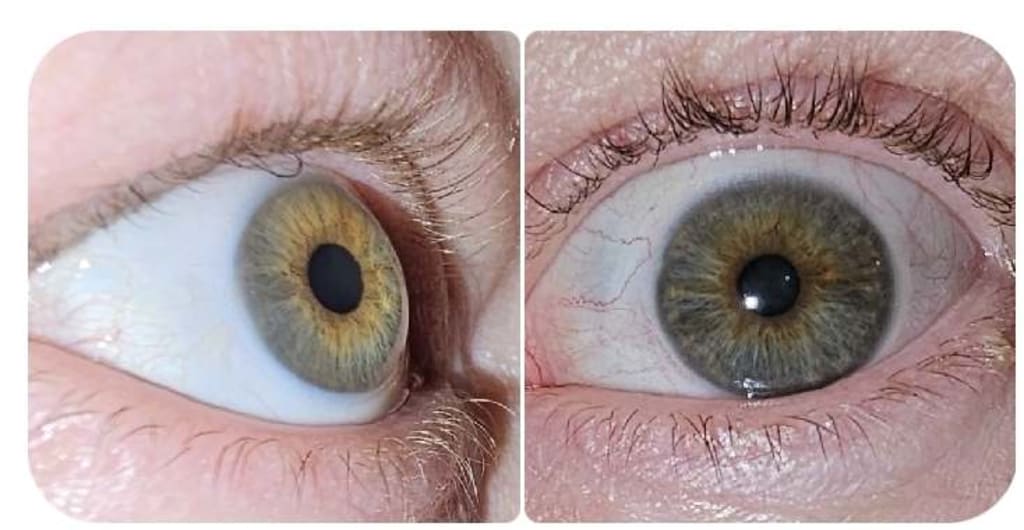
Eyes, often considered the windows to the soul, hold a captivating story within their depths. Beyond their expressive nature, eye colors serve as a fascinating canvas reflecting the intricate interplay of genetics, ancestry, and evolution. In this exploration, we delve into the world of eye colors, examining the unique combination of gold, green, and blue hues and unraveling the genetic tapestry that shapes our ocular identity.
Genetic Basis of Eye Colors:
The origins of eye colors are deeply embedded in our genetic makeup. All eye colors share a common foundation of brown melanin, incapable of refracting light. The distinctive variations arise from differences in the concentration and location of this melanin over the two layers of the iris. For instance, brown-eyed individuals have melanin on both layers, absorbing more light and causing the iris to appear brown. On the other hand, blue-eyed individuals lack melanin on the front layer, leading to Rayleigh scattering and the reflection of more blue light, making the eyes appear blue.
Ancestral Roots and Blue Eyes:
An astonishing revelation comes from recent research conducted at the University of Copenhagen, identifying a genetic mutation that originated six to ten thousand years ago. This mutation, impacting the OCA2 gene, essentially switched off the ability to produce brown eyes, leading to the creation of blue eyes. This genetic switch is shared by virtually all blue-eyed individuals worldwide. Your ancestry, predominantly from England and Northwestern Europe, aligns with this discovery, connecting you to a common ancestor who lived in the north-west part of the Black Sea region.
Evolutionary Significance of Eye Colors:
The prevalence of brown eyes in the majority of the global population, comprising up to 79%, is associated with the evolutionary advantage of increased melanin absorption and protection from the sun. Brown eyes provide a natural defense against the sun's harsh rays, akin to the protective benefits of darker skin. As we explore the genetic variations within brown-eyed individuals, ranging from a latte to almost black, the complexity of genetic diversity becomes apparent.
Cultural Perceptions and Historical Theories:
The cultural significance of eye color preferences and historical theories surrounding dominant and recessive genes adds depth to the narrative. Early theories, such as the dominant brown eye model, have given way to a more nuanced understanding involving 16 genes that determine eye color. The acknowledgment of the simplistic nature of these early theories enriches our comprehension of the intricate genetic factors influencing eye color.
The Rarity and Beauty of Green Eyes:
Green eyes, comprising only 2% of the global population, hold a unique allure. While they are not actually green but an unusual blend of light brown pigmentation, a yellowish lipochrome pigment, and reflective wavelengths, the reduced pigment in green eyes can lead to increased light sensitivity. Green eyes are often associated with Celtic or Germanic ancestry, adding a cultural and ancestral dimension to their rarity.
Amber, Hazel, and Other Rare Colors:
Amber eyes, often mistaken for hazel, have a copper or yellow-gold color with minimal green. Amber, along with hazel eyes, showcases the moderate amount of melanin concentrated in specific areas of the iris. Hazel eyes, a combination of green, gold, and brown coloring, vary among individuals, creating a spectrum from hazel green to hazel brown. These rare eye colors add a touch of uniqueness to the broader palette of ocular diversity.
Gray, Red, Violet, and Heterochromia:
Gray eyes, even rarer than red or violet, and heterochromia, characterized by two different colored eyes, further demonstrate the diversity within the realm of eye colors. The rarity of these colors adds an intriguing dimension to the genetic and evolutionary narrative, showcasing nature's propensity for creating unique and exceptional individuals.
Conclusion:
In the tapestry of eye colors, your unique combination of gold, green, and blue hues serves as a testament to the rich genetic heritage intertwined with your ancestry. The revelation of a common ancestor for blue-eyed individuals aligns with your Northwestern European roots, connecting you to a shared genetic history that spans thousands of years. As we unravel the complexities of eye colors, from their evolutionary advantages to cultural perceptions and rare hues, we gain a deeper appreciation for the diversity that makes each individual's eyes a truly one-of-a-kind masterpiece.
About the Creator
Keep reading
More stories from Alice L James and writers in Humans and other communities.
Unexplained Phenomenon in San Bernardino Mountains Sparks Community Concerns
In the serene San Bernardino Mountains, a community finds itself caught in the midst of an intriguing enigma. Mysterious lines in the sky and reported illnesses on the ground have left residents perplexed, giving rise to a wave of speculation and concern. While officials attribute the phenomenon to jet contrails and pollen, skepticism lingers among some residents who question if government weather experiments are at play.
By Alice L James2 years ago in Earth
Whiskey At Dusk
Guess the whiskey was more important to you in the end, wasn’t it? It was more than the well-being of your friends; more vital than showing up to the places you promised you would and could come to; more critical of a matter than fulfilling your damn responsibilities and getting the press off your back.
By Snarky Lisa8 days ago in Humans




Comments
There are no comments for this story
Be the first to respond and start the conversation.