
The Garden of Silence
Sometimes peace blooms in quiet moments, away from the world

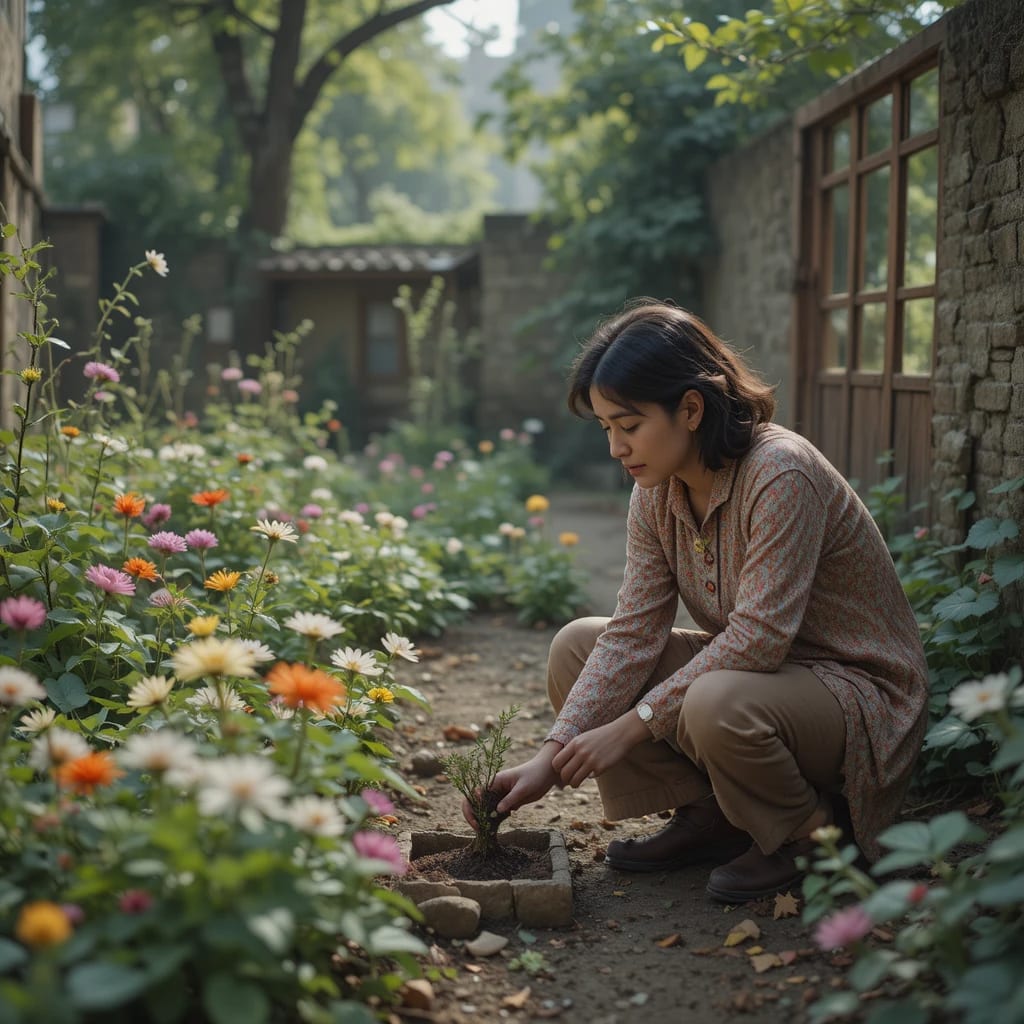
Zoya had always loved the city park behind her apartment.
It wasn’t famous or large — just a modest green space with a few benches, flowering shrubs, and an old fountain that had long stopped working.
But it was quiet. And in a city that never truly slept, quiet was rare.
Every evening after work, Zoya would walk to the park, clutching her handbag, the sounds of traffic fading behind her as she entered the tree-lined path. She didn’t read, didn’t check her phone — she simply watched the world move around her while she remained still.
Some evenings, the distant honking of cars would seem unbearable. Other nights, the soft chirping of sparrows and the scent of damp earth after rain would make her chest feel lighter than it had in months.
One evening, she noticed an elderly man kneeling near a neglected flowerbed at the far corner of the park.
His hands were careful, deliberate, planting small seeds into the damp soil. A paper bag of seeds lay beside him.
Zoya slowed her steps. Something about the quiet dedication in his movements drew her attention.
“Hello,” she said softly, stepping closer.
The man looked up, startled. “Oh… hello. Didn’t expect anyone at this hour,” he replied.
“I come here every evening,” Zoya said. “I like the quiet.”
The man smiled faintly. “So do I. That’s why I’m planting flowers. To bring a little peace back to this corner.”
She paused, watching him work. His movements were methodical, almost meditative. The flowers — marigolds, daisies, and small pansies — seemed to respond to his care.
Over the next few weeks, Zoya found herself returning earlier and staying longer.
Some days she simply watched him, soaking in the calm that radiated from his careful, deliberate movements.
Other days, she brought small snacks, sometimes water, occasionally helping him pull weeds or plant new seeds.
The man introduced himself as Hakim.
Once, he had been a teacher, he explained. Retired now, living alone, he found peace in tending to small things that the world often overlooked.
“The city is noisy,” Hakim said one afternoon as they planted tulips along the edge of the flowerbed. “It’s full of arguments, rushing, people who forget to notice life. But here… even small efforts can remind us that the world isn’t entirely chaotic. That peace exists, if we nurture it.”
Zoya listened, fascinated. She had never considered that peace could be created so deliberately, through patience and care.
Her own life had been full of stress: long shifts at the hospital, a small apartment with walls too thin, and relationships that were often rushed and fragmented.
Yet here, amidst the flowers and the soft soil, she felt something she hadn’t known in years — a deep, quiet calm.
She began sharing more than just her presence.
She told Hakim about her work, the children she treated, and the elderly patients who had nobody but her.
Hakim, in turn, shared stories from his own life — raising children, teaching students who had become doctors, lawyers, even teachers themselves.
Each story carried a lesson: about patience, humility, and the beauty of small, consistent actions.
Even the smallest gestures mattered.
Watering a flower. Plucking a weed. Offering a listening ear.
It was in these acts that both of them discovered the quiet rhythm of peace.
One particularly rainy evening, Zoya arrived to find the bench empty and the flowerbed neglected.
Hakim was gone, and she worried that he might not return.
But as she knelt to inspect the soil, she noticed the tiny sprouts breaking through the damp earth — his seeds had begun to grow on their own.
Tears came to her eyes. Somehow, even in his absence, he had left a mark — a living testament to the patience and care that cultivated peace.
From that day onward, Zoya began tending the garden herself.
She watered, weeded, and planted new seeds.
Every evening, she would sit on the oak-tree bench, the city’s chaos fading behind her, and feel the calm settle deep in her chest.
Weeks turned into months.
Neighbors began noticing the transformation.
Children stopped to touch the flowers, laughing and running through the garden.
Couples walked along the quiet paths, holding hands.
The once-neglected corner of the park had become a sanctuary — a testament to the power of small, deliberate acts of kindness.
Zoya noticed how the garden changed her own heart.
She had learned to slow down, to notice the small joys, to breathe and exist without rushing.
Peace wasn’t a grand moment. It wasn’t the absence of chaos. It was in these quiet, careful actions — the act of showing up, the act of nurturing life.
One day, a little girl approached her.
“Are you the lady who plants flowers here?” she asked.
Zoya smiled. “Yes, I am.”
The girl nodded solemnly. “I like this place. It feels… calm. I can think here.”
Zoya realized that the garden had not only changed her life but had begun to affect the lives of others.
Peace, she understood, was contagious.
Not in loud speeches or visible acts, but in quiet, persistent gestures that reminded people that life could be gentle, beautiful, and calm.
Years later, Zoya sat on the bench under the oak tree with her own children, watching them play among the blooms.
The garden had grown bigger and more vibrant, cared for by neighbors who had joined in over time.
The once-neglected corner was now a place of laughter, learning, and quiet reflection.
She thought of Hakim — wherever he was — and silently thanked him for teaching her the true meaning of peace.
And she knew this:
Peace does not always roar.
Peace does not always demand attention.
It grows slowly, quietly, in small acts of love and care, and blooms in the hearts of those who nurture it.
Even in the middle of a chaotic city, a simple garden, a quiet bench, and someone willing to care could create a world of calm.
And that, Zoya realized, was more than enough.
About the Creator
M.Farooq
Through every word, seeks to build bridges — one story, one voice, one moment of peace at a time.
Getting Serious About Comedy (Part I)
If I were asked to remark on my life and the childhood that paved some road leading me to this point, I would have to say something about all the funny people who surrounded me for the last 26,872 days (and counting). Somewhere along that road, I became a big fan of laughter and the comedy that spawns it – and, I mean not only my own laughter, but the laughter of others, some of which I have actually been responsible for inducing.
By John Oliver Smith5 days ago in Humor


Comments
There are no comments for this story
Be the first to respond and start the conversation.