
The Garden He Left Behind
Peace can bloom even from loss.

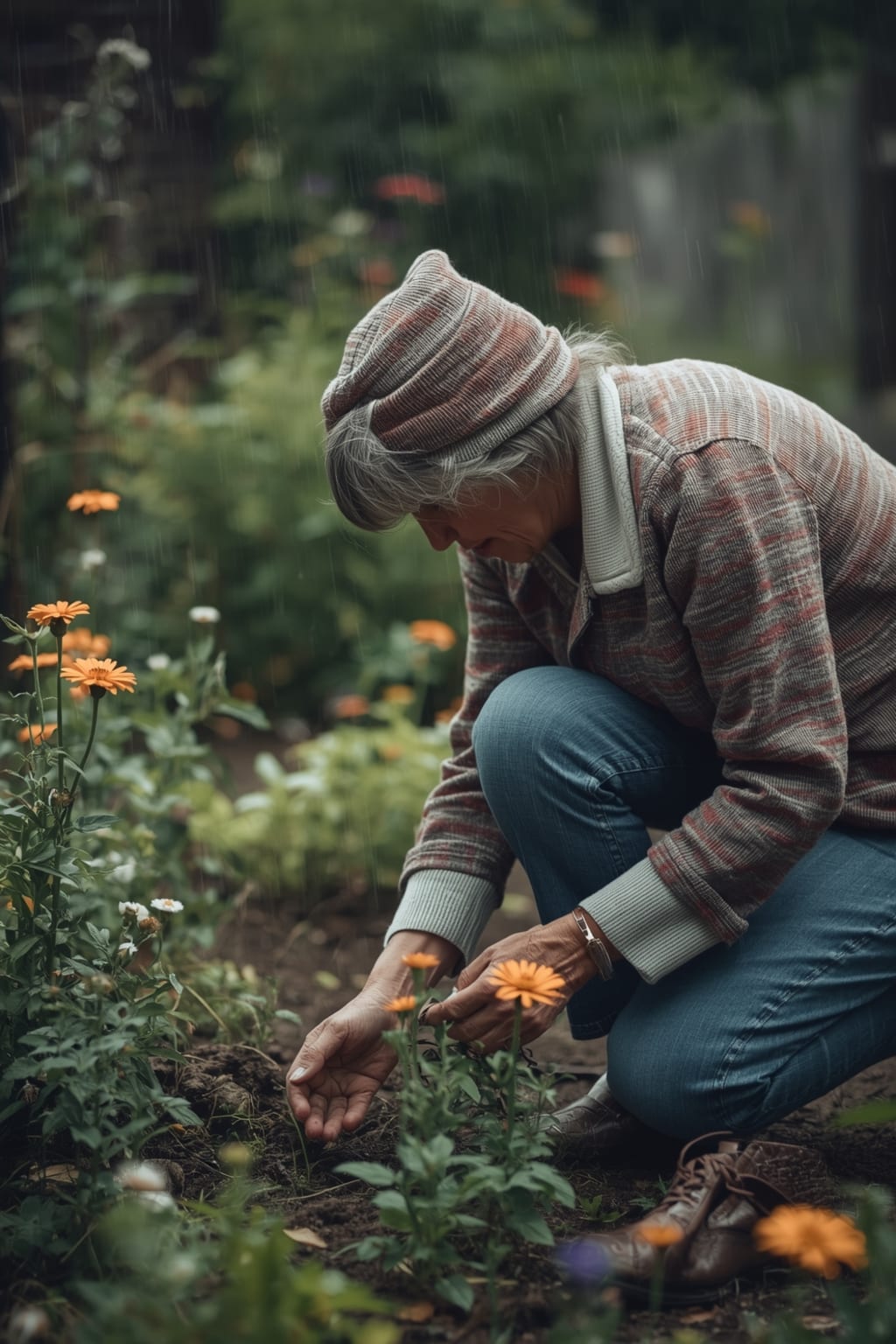
When Sadia’s husband, Faisal, passed away, the house didn’t just become empty — it became silent.
Not the soft, peaceful kind of silence that soothes the soul.
No.
It was the kind of silence that hums inside your chest and reminds you, every second, of what’s missing.
The fan still whirred. The clock still ticked.
But nothing felt alive.
For thirty-eight years, Faisal had been her rhythm.
He woke up before her, brewed the tea just the way she liked — not too strong, a hint of cardamom — and turned on his little radio to listen to the morning news.
Now, the radio sat untouched on the shelf.
The teapot was dry.
The mornings were too quiet.
The hardest part wasn’t sleeping alone, or eating alone — it was walking past the garden.
That garden had been Faisal’s heart.
He had planted every single flower himself.
He would spend hours kneeling by the soil, humming old ghazals, talking to his plants as if they were his friends.
“Plants listen,” he used to say, smiling. “You just have to speak kindly.”
Sadia would laugh at him, but secretly she loved watching him there — the sunlight on his face, the dirt on his hands, the contentment in his eyes.
After he died, she couldn’t bring herself to step into that garden again.
The flowers wilted.
The lemon tree drooped.
Even the air smelled stale, as if mourning with her.
Every time she glanced out the kitchen window, the sight of the decaying garden stabbed at her chest.
So, she stopped looking.
Months passed.
Her days blurred into each other — tea, prayer, silence, sleep.
Neighbours came for a while, bringing food and sympathy, but soon their visits stopped too.
Then one summer afternoon, her daughter came to visit — with her son, Ayaan, who was seven and full of questions.
He ran through the rooms, touching everything, as children do.
When he reached the back window, he gasped.
“Daadi! What happened to your garden?”
Sadia didn’t answer.
She just smiled faintly.
Ayaan pressed his face to the glass. “Did the flowers die because Nana isn’t here?”
Something in her chest broke.
That night, she couldn’t sleep. His small, innocent question echoed in her heart like a prayer unanswered.
By dawn, she found herself standing by the back door, barefoot, staring out at the garden Faisal had loved so much.
The soil was dry, the air heavy with dust.
The once-blooming jasmine vines were pale and weak.
The lemon tree leaned to one side, leaves curled.
But… beneath the decay, she saw something.
Tiny green shoots pushing through the cracks — fighting, reaching for light.
Her breath caught.
Even after all this neglect, something still wanted to live.
The next morning, she took a deep breath and stepped into the garden.
Her knees protested as she knelt by the soil, but she didn’t care.
She loosened the earth with her old hands, watered the roots, and whispered softly —
“Come back to life, my darlings. Come back.”
Each day, she returned.
She trimmed, watered, planted, hummed.
At first, it felt like work.
Then it began to feel like prayer.
Ayaan started helping too — splashing water everywhere, digging too deep, laughing too loud.
But she let him.
The garden had missed that laughter. So had she.
He’d ask, “Daadi, which flower did Nana plant?”
She’d smile. “All of them.”
Sometimes she told him stories — how Faisal once built a swing for her under the lemon tree, how he named every rose bush after a song she loved.
Ayaan would listen, eyes wide, as if meeting his grandfather for the first time through her words.
Weeks turned into months.
The garden began to breathe again.
The jasmine returned, spreading its scent through the warm evening air.
The roses lifted their heads proudly, like they remembered his care.
And one morning, she saw it — a single yellow lemon hanging from the tree.
Her heart skipped.
She plucked it gently and held it in her palms, tears filling her eyes.
“Faisal,” she whispered, her voice trembling, “you planted this… and I kept it alive.”
It wasn’t just the garden that had healed.
Something inside her had too.
Every evening after that, she sat beneath the lemon tree with her cup of tea.
Sometimes, Ayaan would sit beside her, watching the fireflies dance.
Sometimes, she sat alone — but not lonely anymore.
The garden wasn’t a place of sorrow now.
It was a reminder — that love doesn’t die when a person does.
It grows in new ways — in soil, in memory, in the quiet strength of those who keep tending it.
That spring, when the garden burst into color, her daughter came again.
She stood at the back door, amazed. “Ammi… it’s beautiful. You brought it all back.”
Sadia smiled. “No,” she said softly. “He did. I just helped it grow again.”
Ayaan came running, holding a rose in his hand. “Daadi! Look! The flowers are smiling again!”
She laughed, her heart warm, and kissed his forehead.
“Yes, beta,” she whispered. “They finally are.”
And as she looked around at the garden — blooming, alive, peaceful — she realized that grief had not disappeared.
It had simply changed shape.
Peace hadn’t replaced the pain.
It had grown around it — like vines around an old, broken wall.
And in that balance, between what was lost and what still remained, Sadia found her peace
About the Creator
M.Farooq
Through every word, seeks to build bridges — one story, one voice, one moment of peace at a time.
Why Living in New York City Feels Like Running a Marathon With No Finish Line
The first thing you learn about New York City is that nobody is actually relaxed here. Everyone is in motion—power-walking through subway tunnels, squeezing onto packed trains, and typing emails while standing in line for coffee. The city doesn’t rest, and eventually you stop resting too.
By Mustak Eman3 days ago in Humans


Comments
There are no comments for this story
Be the first to respond and start the conversation.