
The Future of AI: How Artificial Intelligence is Transforming Our World
From daily conveniences to groundbreaking innovations, AI is reshaping every aspect of our lives.
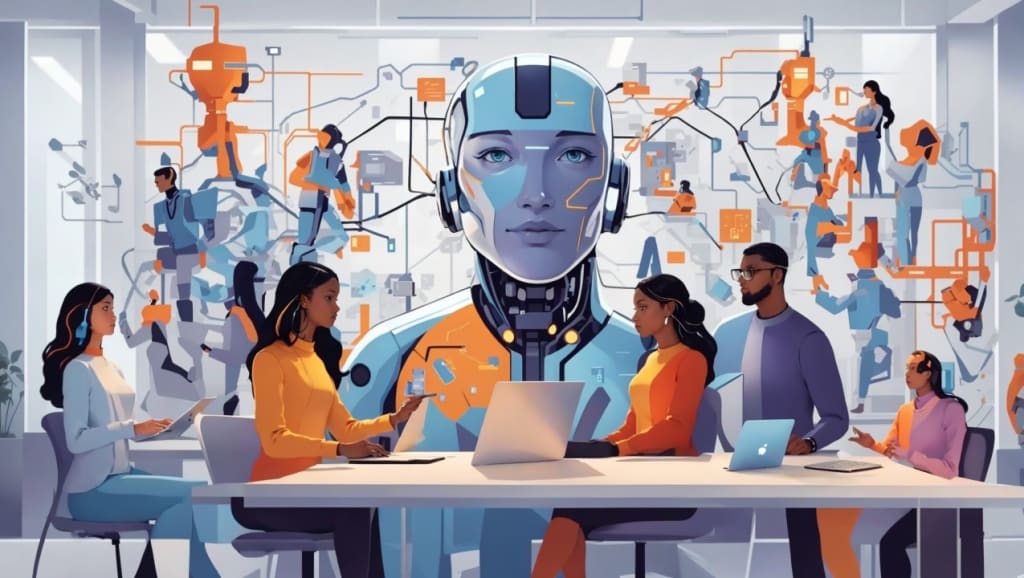
Artificial Intelligence (AI) has rapidly evolved from a futuristic concept into a reality that permeates our everyday lives. From the moment we wake up to the time we go to bed, AI plays a significant role in enhancing our daily experiences. But what does the future hold for AI? How will it continue to transform various industries and our way of living?
1. AI in Healthcare: Revolutionizing Patient Care
AI is making significant strides in the healthcare sector. From predictive diagnostics to personalized treatment plans, AI algorithms can analyze vast amounts of data to identify patterns that humans might miss. This leads to early detection of diseases like cancer, more accurate diagnoses, and improved patient outcomes. For instance, AI-powered imaging systems can detect abnormalities in medical scans far earlier than human radiologists, potentially saving countless lives through early intervention.
Furthermore, AI is being used to develop innovative treatment plans tailored to individual patients. By analyzing genetic information and medical histories, AI can suggest personalized therapies that are more effective and have fewer side effects. This level of customization was unimaginable just a few years ago.
2. Smart Cities: AI-Driven Urban Planning
As urban populations grow, the need for efficient city management becomes crucial. AI can optimize traffic flow, reduce energy consumption, and enhance public safety. Smart city initiatives around the world are leveraging AI to create more sustainable and livable environments for their residents. For example, cities like Singapore and Barcelona have implemented AI systems to manage traffic congestion, leading to smoother commutes and reduced emissions.
AI is also being used to monitor and manage utilities, ensuring that resources like water and electricity are used efficiently. By predicting usage patterns, AI can help cities avoid shortages and reduce waste. Public safety is another area where AI is making a difference. Surveillance systems equipped with AI can detect unusual activities and alert authorities in real-time, helping to prevent crimes before they happen.
3. AI in Education: Personalized Learning Experiences
Education is another field experiencing a paradigm shift thanks to AI. Intelligent tutoring systems can tailor lessons to individual student needs, ensuring a personalized learning experience. AI can also assist teachers by automating administrative tasks, allowing them to focus more on student engagement. For example, AI can grade assignments and exams, freeing up teachers' time to provide more personalized feedback to students.
Moreover, AI-driven educational platforms can adapt to each student's learning style and pace. This means that students who need extra help in certain areas can receive targeted support, while those who excel can move ahead without being held back. This personalized approach can significantly improve learning outcomes and ensure that no student is left behind.
4. The Workforce of the Future: AI and Employment
The integration of AI in the workplace is both exciting and challenging. While AI can automate repetitive tasks, it also creates new job opportunities that require advanced technical skills. The future workforce will need to adapt to these changes by acquiring new competencies and embracing lifelong learning. Industries such as manufacturing, finance, and customer service are already seeing the benefits of AI automation, from increased efficiency to reduced costs.
However, this shift also means that workers need to reskill and upskill to stay relevant. Governments and educational institutions must play a role in facilitating this transition by providing access to training programs and resources. Companies, too, have a responsibility to support their employees through this transformation, offering opportunities for professional development and career growth.
5. Ethical Considerations: Navigating AI's Impact on Society
As AI continues to advance, it raises important ethical questions. How do we ensure AI is used responsibly? What measures can we take to prevent bias and protect privacy? Addressing these concerns is essential for building trust and ensuring that AI benefits everyone. For instance, AI systems can inadvertently perpetuate biases present in their training data, leading to unfair outcomes in areas like hiring, lending, and law enforcement.
To mitigate these risks, developers must prioritize transparency and accountability in AI systems. This includes auditing algorithms for bias, ensuring data privacy, and establishing clear guidelines for AI use. Policymakers also have a role to play in regulating AI and setting standards that protect individuals' rights without stifling innovation.
Conclusion
The future of AI is full of possibilities. As we continue to innovate and integrate AI into various aspects of our lives, it is crucial to consider the ethical implications and strive for a balanced approach. By doing so, we can harness the power of AI to create a better, more efficient, and more inclusive world.
AI's potential to revolutionize industries and improve our daily lives is immense. From healthcare and education to urban planning and the workforce, AI is already making a significant impact. However, with great power comes great responsibility. As we move forward, it is essential to address the ethical challenges and ensure that AI is developed and used in ways that benefit all of humanity.
About the Creator
Keep reading
More stories from SAM WEI HUNG and writers in Humans and other communities.
Discover the World's Hidden Gems: The Top Travel Destinations You Can't Miss
Traveling opens up a world of opportunities, allowing us to experience diverse cultures, stunning landscapes, and unique adventures. Whether you're an avid traveler or planning your next big trip, these countries offer some of the most incredible and unforgettable experiences. Here are the top travel destinations that should be on every traveler's bucket list.
By SAM WEI HUNG2 years ago in Fiction
My First Time Skiing and I Got Lost, Alone, in the French Alps
Looking back, I can trace some of my life’s biggest adventures to a simple action from my sister. She’d introduced me to Tommy (a very long time ago), a colleague of hers, who had overshared his penchant for Italian-looking women, and I ticked that box.
By Chantal Christie Weissabout 18 hours ago in Humans
Liza Fromer: Husband, Net Worth, Biography, Age, Children & More
Liza Fromer is a well-known Canadian television and radio personality recognized for her work in broadcasting and lifestyle programming. Over the years, she has become a familiar face on Canadian television, particularly as a co-host on morning shows and as a host on health and lifestyle programs.
By Enoch Sagini3 days ago in Humans



Comments
There are no comments for this story
Be the first to respond and start the conversation.