
The Friend Who Taught Me to Walk Away
A tribute to someone who modeled self-respect instead of self-sacrifice.


The Friend Who Taught Me to Walk Away
By Hasnain Shah
A tribute to someone who modeled self-respect instead of self-sacrifice
I used to think love meant staying—no matter what. Staying through hurt, through misunderstanding, through the kind of silence that hangs like a question nobody wants to answer. I believed loyalty was proven by endurance. That if I could just hold on long enough, people would see my worth.
Then I met Maya.
Maya didn’t talk about boundaries the way social media posts do. She didn’t make speeches about “cutting off toxic people” or “choosing peace.” She simply lived differently. There was a quietness to her confidence that I noticed before I even knew what it was.
The first time I saw her say “no” without apologizing, I almost gasped.
We were both volunteering for a community event, and someone had asked her to stay late for cleanup. She smiled, said, “Sorry, I can’t. I already gave my time today,” and left. That was it. No guilt, no explanations, no desperate attempts to be liked.
Meanwhile, I stayed behind, dragging chairs and folding tables, exhausted but smiling anyway because I thought that’s what good people did.
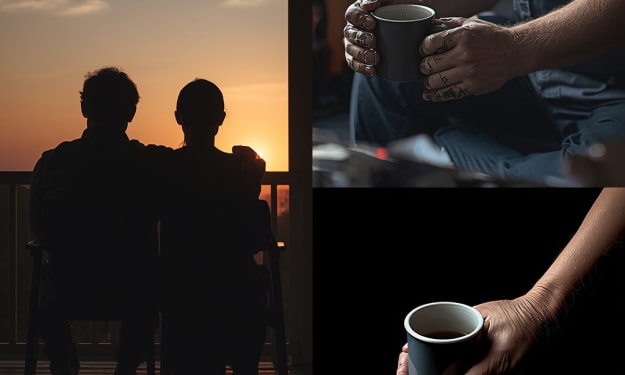
Later, over coffee, I asked her how she could just leave like that.
She tilted her head. “Because I didn’t want to stay.”
It sounded so simple. But to me, it was revolutionary.
Maya and I became close over the next few months. We bonded over books, bad coffee, and our mutual love of early morning walks before the city woke up. She had this calm energy that drew people in—not because she tried to please them, but because she didn’t.
When she cared, it was intentional. When she didn’t, she didn’t fake it.
I, on the other hand, had a long history of bending myself into shapes that fit other people’s needs. I over-explained, over-promised, over-stayed. I believed love was something you proved through exhaustion.
One night, after another draining argument with my boyfriend—where I had once again swallowed my frustration to keep the peace—I called Maya.
“I don’t know what to do,” I confessed. “He keeps saying I’m too sensitive. Maybe I am.”
She was quiet for a while, then said softly, “You’re not too sensitive. You’re just trying to be loved by someone who doesn’t listen.”
It was the gentlest truth I’d ever heard.
The end of that relationship was the beginning of my education in walking away.
I didn’t leave immediately. Change rarely happens in a single, cinematic moment. It happens slowly—through dozens of quiet realizations. Like how often I felt smaller after our conversations. How my laughter had become rarer. How I’d started editing myself before I spoke.
One afternoon, Maya and I sat at a park bench, the kind that creaks when you shift your weight. She watched me fidget with my coffee cup.
“You already know what you need to do,” she said.
I sighed. “It just feels like giving up.”
She smiled sadly. “Sometimes, walking away isn’t giving up. It’s choosing yourself.”
The words stayed with me long after the coffee went cold.
When I finally ended things, it wasn’t dramatic. There were no slammed doors or tearful speeches. Just a quiet conversation where I finally said, “I can’t do this anymore.”
And for the first time, I didn’t chase after an apology or a change of heart. I just left.
I cried later, of course. Loss always hurts, even when it’s necessary. But beneath the sadness was something new—a flicker of peace. The kind that grows when you stop betraying yourself.
Maya and I drifted apart over the years, as friends often do. Different cities, different jobs, different rhythms of life. But I carry her lessons everywhere I go.
I think of her when I say no to something that doesn’t align with me.
I think of her when I stop explaining my choices to people who never cared to understand them.
I think of her when I choose silence over justification, distance over resentment.
She taught me that love is not proven by suffering. That kindness loses its power when it costs your dignity. That sometimes, the bravest thing you can do is simply turn around and walk away.
If I ever see her again, I’ll thank her—not for saving me, but for showing me I didn’t need saving. I just needed permission to stop trying so hard to be understood by people committed to misunderstanding me.
And if she smiles that small, knowing smile of hers, I’ll smile back. Because thanks to her, I finally understand:
Walking away isn’t about who you leave behind.
It’s about who you finally decide to become.
About the Creator
Hasnain Shah
"I write about the little things that shape our big moments—stories that inspire, spark curiosity, and sometimes just make you smile. If you’re here, you probably love words as much as I do—so welcome, and let’s explore together."
Keep reading
More stories from Hasnain Shah and writers in Humans and other communities.
Geology of the Soul: Scars, Mines, and the Scent of Freedom
As a geologist, I spent my life studying rocks, the ancient layers of the earth, and the immense, unseen force with which nature shapes the world. I know how mountains are formed through violent collisions and how rivers carve valleys over millennia. But I learned the hardest, most profound geology on my own skin. I learned that the most valuable crystals are never found resting easily on the surface; they are formed deep in the dark, under a crushing pressure that would turn an ordinary stone to dust.
By Magma Star3 days ago in Humans


Comments
There are no comments for this story
Be the first to respond and start the conversation.