
“The Forgotten Straightforward Man”
“A tale of dignity, poverty, and the silence of a neighborhood”


No one knew exactly when Master Ilyas came to this neighborhood or when he rented the small room, but everyone knew he was a refugee from Ambala because he spoke the dialect of that region.
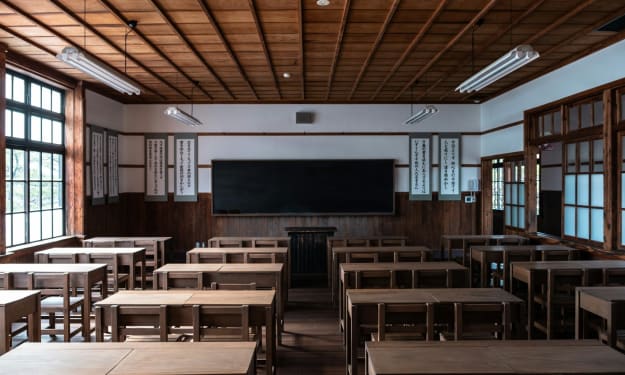
Master Ilyas lived in a rented room. The boys of the neighborhood would come to him to learn counting, numbers, and writing on the board. He had a quail and a rooster. The quails were kept in cages, but the rooster always stood a little distance from his door. Master Ilyas had fixed a brass ring on one of the rooster’s legs, tied a strong string to it, and nailed the other end of the string to the threshold of his room.
The people of Mohsin’s neighborhood respected Master Ilyas. Whenever they passed by his door, they greeted him with “Assalamu Alaikum.” Master Ji seemed to do some other work too, but no one really knew what it was. Perhaps he worked as a clerk in the vegetable market, or maybe in a dyeing factory, or in some distant neighborhood. His life was a mystery, but everyone knew that he survived on a meager income.
In truth, Master Sahib was a very straightforward man. He did not know how to keep pace with the times. His appearance was such that it did not attract sympathy, and his speech was so plain that people never believed him. He never lied, never manipulated, never exaggerated, never boasted, and never frightened anyone. His honesty was so blunt and uncompromising that people found it uncomfortable. He seemed less like a man and more like a burden on the world. Because of this, he had no friends. The people of the neighborhood respected him only from a distance, with greetings and formal kindness.
One winter evening, the landlord came and scolded Master Ilyas harshly. He threatened that if the rent of the last six months—one hundred and eighty rupees—was not paid within three days, he would throw his belongings out. Master Ji was terrified, because he had only fifty rupees, tied in a thread in his pocket. The landlord angrily threw the money on the ground, in front of the rooster, and said:
“Go away! I don’t want this. Bring me the full one hundred and eighty!”
When the landlord left, Master Ilyas picked up the money and put it in his waistcoat pocket. He sat on his small cot, grief-stricken. For the first time, he felt such sorrow that it tied his chest, yet no tears came to his eyes.
As promised, the landlord soon picked up his belongings and threw them out. He placed Master Sahib’s cot under the transformer and piled the rest of his things nearby. Then, locking the room with a new Chinese lock, he rode away on his scooter.
The next morning, Master Ilyas went to Sheikh Karim Nawaz’s mansion and asked him for a loan of two hundred rupees. Sheikh Sahib, however, dismissed him as a good but foolish man. Later, he went to Ismail Bajaz’s shop and reduced his request to one hundred and fifty rupees, but Ismail too apologized. Master Sahib went from place to place, but in those days of inflation, no one had anything to lend.
On the eighth night of sleeping under the transformer, Master Ilyas went to a homeopathic doctor. After checking him, the doctor said, “Master Sahib, you have pneumonia. I can give you some medicine, but you should also see a proper doctor.”
Master Ji left the clinic, drank a glass of hot milk from Jabbar Halwai’s shop, and again asked him for a loan of two hundred rupees. Jabbar, knowing no one would lend to such a poor and helpless man, laughed. It was a rare laugh for Jabbar, but to him the request seemed absurd.
For three days in a row, Master Ilyas sat on his small cot with his head covered by a blanket. When neighbors passed by, they greeted him:
“Why, Master, the sun is setting?”
And he would reply in a muffled voice, “Yes, it was a little cold.”
On the fourth day, at the time of the Fajr call to prayer, Master Ilyas quietly passed away. The entire neighborhood of Mohsin Mohalla was stunned. By breakfast, silence and grief wrapped the streets. A bowl of kangani was given to his quails, and a bowl of flour to his rooster.
Sheikh Karim Nawaz came out of his mansion and sat under the transformer. Soon, people gathered. Two hundred rupees were sent with Saeed and Bilal to arrange the grave. Three hundred rupees were given to Babu Jalal to buy camphor, rose water, and flowers for the burial. Jabbar Halwai even brought a piece of fresh sweet for the mourners. Together, the people of Mohsin Mohalla collected eight hundred and eleven rupees for Master Sahib’s funeral.
---
Moral of the Story:
Society often forgets the most honest and straightforward people while they live, yet remembers them with respect only after they are gone. True kindness is not in showing respect at the grave, but in standing by the needy while they are alive.
About the Creator
Ihtisham Ulhaq
“I turn life’s struggles into stories and choices into lessons—writing to inspire, motivate, and remind you that every decision shapes destiny.”
Keep reading
More stories from Ihtisham Ulhaq and writers in Humans and other communities.
"My failure to freedom :my journey'
Freedom. It’s a word we all dream about, fight for, and chase. For me, freedom was the sweetest taste of life — the moment when I felt I was finally in charge of my own destiny. I was young, ambitious, and filled with fire. I no longer wanted to be tied down by rules, expectations, or the voices of others telling me what I should or should not do.
By Ihtisham Ulhaq5 months ago in Humans
Easin' into the Season
The Holiday Season is upon us. Thanksgiving is barely out of the way, and the shops have transitioned from Black Friday sales right into Christmas sales. The local radio stations have been playing carols for about the same length of time. Neighborhood lighting competitions are well underway. Its a typical December here in the good ol' USA.
By Dana Crandellabout a month ago in Humans
“The Correction: When God Awakens the Ones Who Fell Behind”
There comes a moment in every soul’s long journey when the story it has been telling itself begins to unravel, not because the story was wrong, but because it was too small. For lifetimes, perhaps thousands of them, you may have imagined yourself as spiritually gifted, spiritually advanced, spiritually chosen — someone whose sensitivity or intuition or mystical experiences set you apart from others. You may have believed that your insights were evidence of elevation, that your suffering was evidence of depth, that your longing was evidence of destiny. But what if the truth is far more humbling than that? What if the very sense of “specialness” you have carried is not a sign of spiritual mastery but a sign of spiritual immaturity? What if the Creator has not been lifting you up but shaking you awake? What if your awakening is not a crown but a correction?
By Julie O'Hara - Author, Poet and Spiritual Warriorabout 8 hours ago in Humans
The steps to losing a child
Step One: Lose a child. Not what anyone wants to happen and nothing you can do to change it, but you can go through steps to becoming happy again. You can go through steps to loving again. You can go through steps to become a new you because after losing a child you will never be the same person you once were.
By Tabitha Hinkley3 days ago in Fiction



Comments
There are no comments for this story
Be the first to respond and start the conversation.