
The Evolutionary Journey of the Brain and Its Protective Head
Why your brain is in your head

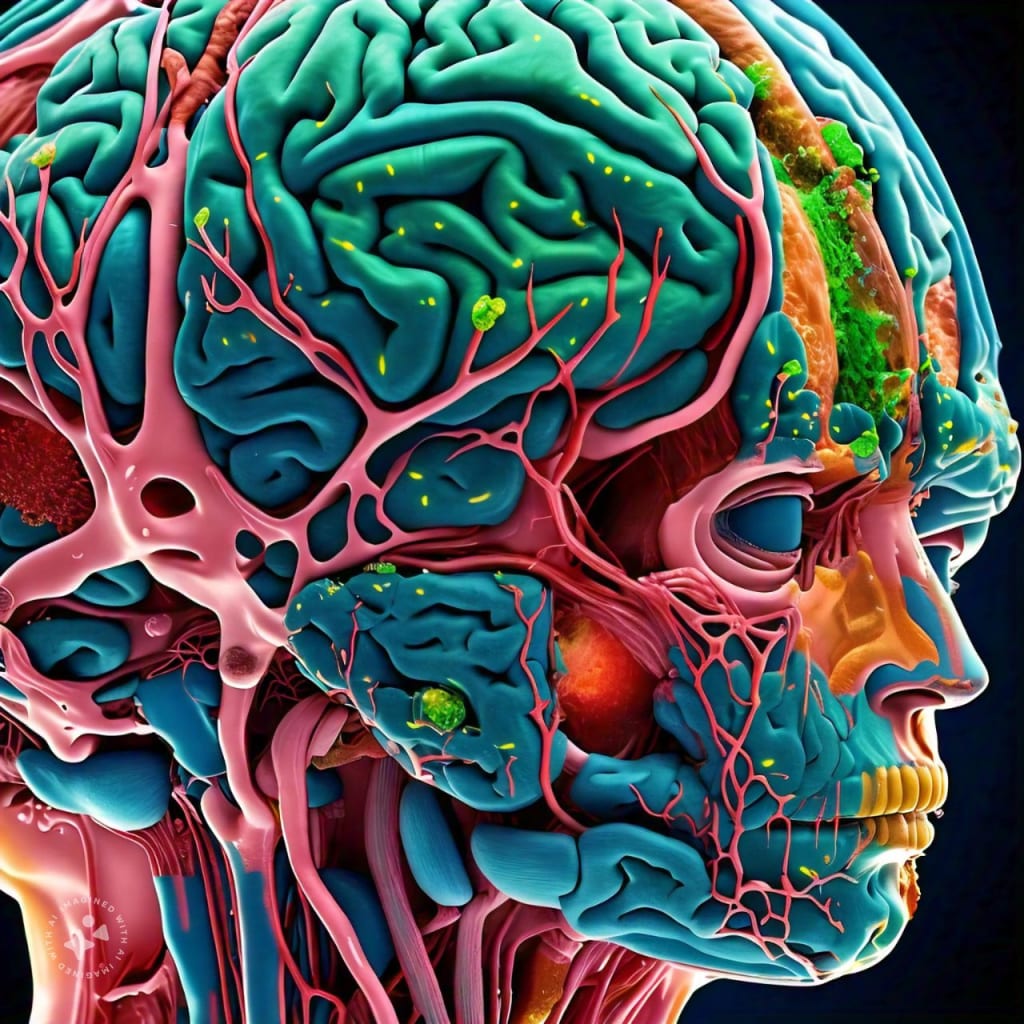
In the animal kingdom, brains are typically nestled within heads, yet the seemingly fragile nature of this arrangement might seem surprising given the brain's critical role. You might wonder why evolution opted to enclose such a vital organ in what appears to be a thin, vulnerable shell. To explore this intriguing question, we need to embark on a journey through evolutionary history, beginning with the earliest creatures and progressing to the complex beings we see today.
The Origins of Bilateral Symmetry
The story begins around 550 million years ago, when the very first animals with bilateral symmetry emerged. Unlike their radial-symmetry counterparts, such as jellyfish, which have a simpler two-dimensional structure, bilateral animals introduced a new dimension to their bodies. They developed a front and back, or anterior and posterior ends, which allowed for greater complexity and organization. This shift laid the foundation for the development of more intricate body plans.
Bilateral symmetry was not merely a cosmetic change. It fundamentally altered how animals evolved. With this new structure, animals could develop specialized sensory organs and more sophisticated nervous systems. This was an evolutionary game-changer, setting the stage for the eventual development of brains.
Hox Genes: The Architects of Complexity
At the core of this evolutionary transformation are Hox genes, the genetic architects responsible for organizing an animal’s body plan. These genes dictate the layout of the body, from head to tail, ensuring that each part ends up in the right place. Hox genes are clustered on chromosomes in the same order as the body segments they control, a design that has been conserved across a vast range of species—from nematodes to humans.
Early animals had simple nerve cords running along their bodies but lacked a central nervous system or brain. Over time, as organisms evolved more complex structures, these simple nerve cords began to specialize, eventually leading to the development of more elaborate nervous systems and brains.
The Rise of Sensory Systems and Early Brains
The evolution of eyes was crucial in the development of brains. Early animals that could sense their environment better, particularly around their feeding ends, benefited from having clusters of nerves in these regions. This clustering marked the beginning of what we recognize as a brain. As animals evolved, their sensory organs became increasingly sophisticated, driving the need for more advanced brain structures to process the incoming information.
The Advent of Craniates and Protective Skulls
As animals continued to evolve, a new group known as craniates emerged. These animals developed protective skulls, initially made of cartilage and later of bone. The advent of bony skulls provided a shield for the brain, protecting it from external threats and contributing to more effective predatory and defensive behaviors. This evolutionary development also led to the diversification of body parts, including fins and limbs, which helped early vertebrates adapt to various environments.
Evolutionary Constraints and Variations
Once the basic body plan of vertebrates was established—brain inside a skull, near the sensory organs—it proved highly successful. Evolution, therefore, worked with this fundamental design, leading to a vast array of vertebrate forms, from dinosaurs to dogs. The underlying theme is that while evolution produces a wide variety of life forms, many share a similar basic structure due to the constraints and advantages of their ancestral designs.
The Modern Legacy
Today, the fundamental layout established by early vertebrates—brain enclosed in a skull, located at the sensory end of the body—remains prevalent. This design has been incredibly successful across a diverse range of species. Evolution, akin to a creative chef working with a limited set of ingredients, has produced an array of complex life forms from these basic components.
The organization of our bodies, including the placement of our brains, reflects a long history of evolutionary adaptation and innovation. While it may seem odd that such a crucial organ is encased in what appears to be a fragile structure, this arrangement has proven to be remarkably effective. Understanding these evolutionary processes not only illuminates the history of our species but also highlights the intricate interplay between form and function in the animal kingdom.
For a deeper dive into how our brains develop and function, check out BrainCraft and explore how these fascinating organs grow and work. Stay curious, and keep exploring the incredible world of evolutionary biology!
Explore More
If you're intrigued by how evolutionary processes shape our bodies, be sure to check out the rest of our three-part series on the evolution of body systems. Each video delves into different aspects of why our bodies are organized the way they are. If you enjoyed this exploration, visit BrainCraft for more insightful content on brain development and function
About the Creator
Keep reading
More stories from Mercia Wippenaar Davids and writers in Humans and other communities.
Why are we warm blooded?
Hey everyone! Joe here, diving into the fascinating world of body temperatures and why being warm-blooded is such a big deal. Today, we’re exploring one of nature’s most intriguing paradoxes: Why do some animals, like us humans, go through so much effort just to stay warm from the inside?
By Mercia Wippenaar Davids2 years ago in Humans
Jesse Jackson: The Voice That Refused to Be Silenced
Long before Jesse Jackson stood on national stages, long before he electrified crowds with the thunder of his voice, he was a boy standing on the wrong side of a segregated street—watching a world that told him he did not belong. That early contradiction, the distance between who he was and who he was told he could be, became the fire that shaped one of the most influential civil rights leaders of the 20th century.
By Haroon Pasha6 days ago in Humans



Comments (1)
Excellent piece