
The Efficiency Paradox: When Life Management Apps Steal Your Life
Optimizing Every Minute, While Missing the Moment Entirely
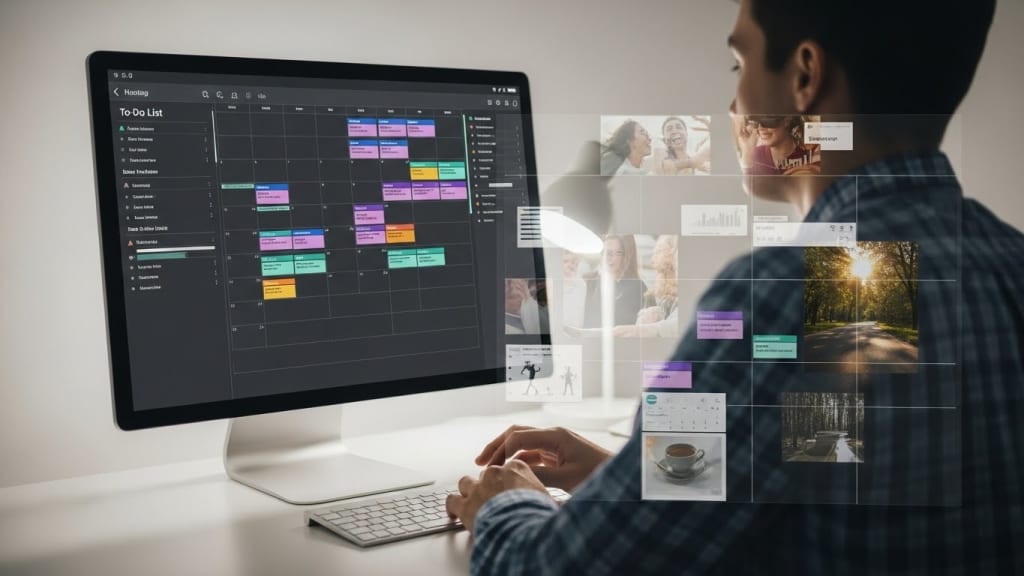
We are in the golden age of optimization. There is an app to manage our sleep, our water intake, our meditation minutes, our workout splits, and our creative projects. Our days are no longer simply lived; they are architected. We break our ambitions into quarterly goals, our goals into weekly sprints, and our sprints into daily tasks, each neatly slotted into a digital calendar that glows with the satisfying promise of total control. We pursue the holy grail of peak productivity, the flawless execution of a personal business plan called "My Best Life." But in this relentless pursuit of an optimized existence, we have stumbled into a cruel paradox: we are so busy managing our lives that we have forgotten how to live them. We are trading the rich, textured, and unscripted experience of being for the sterile, data-driven performance of doing.
The promise is one of freedom. Systemize the mundane, the thinking goes, and you will liberate mental space for what truly matters. Yet, for many, the system itself becomes the thing that matters. The focus subtly shifts from the experience of a morning run (the feel of the air, the rhythm of breath) to logging the run (tracking the pace, the heart rate zone, the calories burned, and sharing the map). The deep satisfaction of reading a book is secondary to updating the "Books Read This Year" counter on a profile. We become data points of our own existence, collecting metrics on our happiness, health, and hobbies, while the visceral, qualitative feeling of those activities slips through our fingers. We are tasting the menu, not the meal.
This hyper-scheduled life creates a phenomenon of continuous partial presence. Every moment has a shadow agenda. You are having dinner with a friend, but a part of your brain is mentally ticking off the "social connection" box on your wellness chart and noting the time, aware that your optimized sleep schedule requires you to be in bed in 87 minutes. You are on a hike, but you are framing the perfect shot for your "outdoor time" post, your attention divided between the grandeur of nature and the angle of your phone. Nothing is allowed to be just itself. Every activity must be justified, measured, and often, documented for the record. The constant self-surveillance murders spontaneity—the unplanned detour, the long, meandering conversation, the decision to just sit and stare at the clouds—because it doesn't contribute to a Key Performance Indicator.
Furthermore, these systems inculcate a tyrannical mindset of relentless self-improvement. There is no room for simply being enough. The fitness tracker shames you for not closing all three rings. The language app guilt-trips you about your 47-day streak in peril. The project management tool highlights your overdue tasks in angry red. The unspoken message is constant: you are a project to be fixed, a machine to be fine-tuned, and you are perpetually behind. This transforms natural human rhythms—days of high energy and days of necessary lethargy, periods of focus and periods of fallow incubation—into personal failures. The need for rest, for play without purpose, for pure, inefficient being, becomes a glitch in the system to be eliminated, rather than an essential part of the human operating system.
The greatest cost is the theft of absorption—the state of being so lost in an experience that time and self-consciousness dissolve. This is where joy lives: in the flow of crafting something without a deadline, in getting so lost in a conversation you forget to check your phone, in the lazy, aimless afternoon that leaves no digital trace. Our management apps, by their very nature, keep us in the role of the administrator, the assessor, the auditor. We are forever outside the experience, managing it, and thus we are never fully inside it.
To reclaim your life from the life-management system requires a deliberate embrace of inefficiency. It means sometimes going for a walk without a tracker, letting your body—not a graph—tell you how it felt. It involves scheduling blocks of "Unscheduled Time" and defending them as fiercely as a business meeting. It means reading a book and not adding it to a list, cooking a meal without photographing it, having a day with no objective other than to wander.
True living is not about maximizing output. It's about deepening input. It’s about the quality of your attention, not the quantity of your accomplishments. The most profound moments of a human life—falling in love, feeling awe, experiencing grief, sharing a belly laugh—are not optimizable. They are messy, inefficient, and data-resistant. They happen in the gaps between the calendar blocks, in the time we waste beautifully, in the moments we forget to measure. Sometimes, the most productive thing you can do is to shut down the dashboard, close the apps, and step into the unscripted, unmanaged, gloriously inefficient mess of your one wild and precious life. Let the to-do list wait. The moment won't.
About the Creator
HAADI
Dark Side Of Our Society
My First Time Skiing and I Got Lost, Alone, in the French Alps
Looking back, I can trace some of my life’s biggest adventures to a simple action from my sister. She’d introduced me to Tommy (a very long time ago), a colleague of hers, who had overshared his penchant for Italian-looking women, and I ticked that box.
By Chantal Christie Weissa day ago in Humans
Modern Singles Navigate Dating Apps Challenges With Emotional Intelligence Successfully
In the fast-paced world of online dating, emotional intelligence (EI) has become a critical skill for modern singles. EI involves recognizing, understanding, and managing one’s own emotions while empathizing with others. Dating apps, while convenient, often strip away the natural cues of face-to-face interactions, leaving room for misunderstandings and misinterpretations. By applying emotional intelligence, singles can better interpret messages, profile nuances, and conversation tones, leading to more meaningful connections. Recognizing emotional signals in written communication allows users to respond thoughtfully rather than react impulsively, improving relationship outcomes.
By Willian James7 days ago in Humans


Comments
There are no comments for this story
Be the first to respond and start the conversation.