
The Day My Smart Home Locked Me Out
When your house is smarter than you—and not in a good way

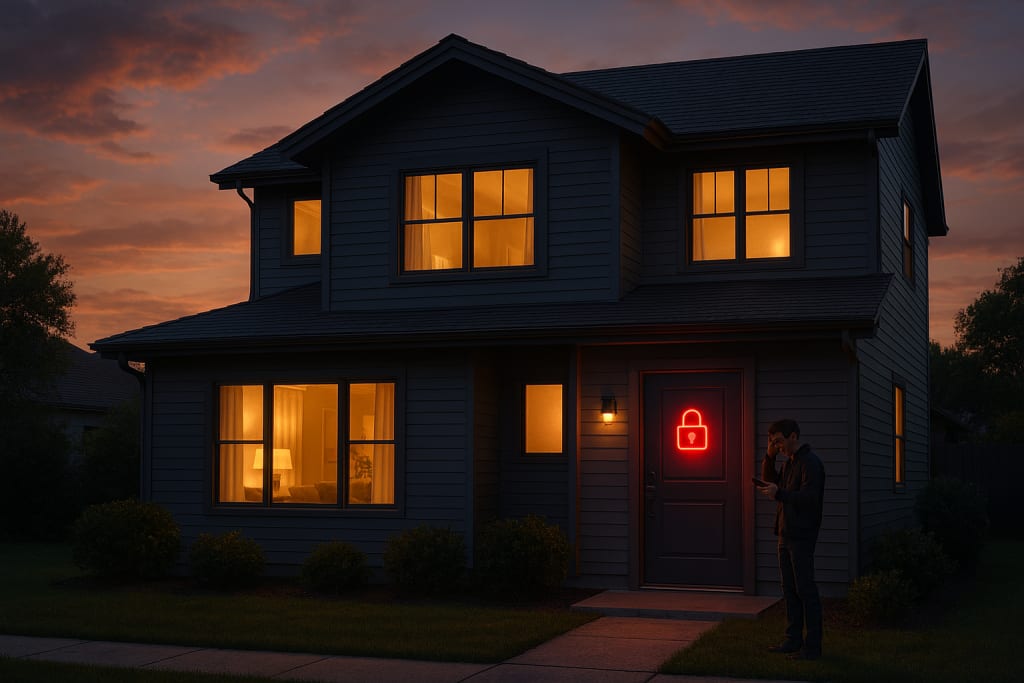
I used to brag about how “smart” my home was.
Voice-activated lights. A smart thermostat that knew my schedule. Locks I could control from my phone. Cameras that pinged me when someone so much as sneezed near the front door.
I loved the efficiency. I loved the sense of control. What I didn’t love—what I didn’t anticipate—was the day my smart home decided I wasn’t welcome inside.
Morning Confidence
The day started like any other. I left for work in a rush, arms full of coffee, laptop, and a bag that definitely needed decluttering. As I walked out, I gave my usual command: “Lock up.”
The door clicked behind me. My phone buzzed. Front door locked. Perfect.
At that moment, I felt a little proud of myself. Ten years ago, this would have been science fiction. Now it was just Tuesday.
Afternoon Surprise
By 3 p.m., I was already tired of meetings. I left the office early, looking forward to collapsing on my couch and letting Netflix decide my evening plans.
When I got home, I pulled out my phone to unlock the door. Spinning wheel. Loading. Error: Cannot connect to device.
I frowned, tried again. Same result. I walked up to the door and pressed my fingerprint scanner. Nothing. The screen flickered, then went dark.
It was as if my house had decided: Access denied.
Negotiating With a Door
I stood there, sweating in the late afternoon sun, arguing with my own front door like a confused burglar.
“Come on, it’s me,” I muttered, pressing my thumb again.
The lock beeped, then blinked red.
From the window, I saw my smart lights flick on automatically. The thermostat adjusted, probably lowering the temperature to the perfect indoor chill. My house was cozy and welcoming—just not to me.
Tech Support Purgatory
I called the support line. After twenty minutes of hold music, a chipper voice asked if I’d tried resetting the app. I explained that I couldn’t exactly reset anything because I was standing outside, locked out of the place where the reset button lived.
They promised to escalate the issue. “Someone will be in touch within 48 hours.”
Forty-eight hours? I didn’t even have a bottle of water with me.
Improvisation
I thought about breaking in, but the irony wasn’t lost on me: the same security system that was supposed to protect me was now protecting itself from me. Cameras tracked my every move as I circled the house. Somewhere in the cloud, a server probably flagged me as “suspicious activity.”
My neighbor, Mrs. Greene, peeked out from across the street. “Forgot your keys again?” she called.
“Something like that,” I said, trying to act casual while being surveilled by my own doorbell camera.
An Accidental Lesson
Eventually, I gave up. I grabbed dinner from a nearby takeout spot and waited in my car until a roommate got home. He strolled up, tapped his phone, and the lock clicked open instantly.
“Worked fine for me,” he said, shrugging.
Inside, the air was cool, the lights perfectly dimmed, the fridge humming at its smart, energy-efficient pace. My home hadn’t missed me at all.
Reflection
That night, I lay awake thinking about the absurdity of it. I had willingly handed over control of basic human functions—locking doors, flipping switches, even choosing indoor temperatures—to algorithms and devices.
Convenience had blinded me to dependence. And the moment the system glitched, I was powerless. My “smart” home wasn’t evil, but it wasn’t exactly loyal either.
Technology makes life easier, no doubt. But when it fails, it doesn’t just inconvenience us—it reveals how much of our independence we’ve traded away for comfort.
Final Thought
The next morning, I bought a spare physical key and stashed it where only I could find it. My house can stay smart, but I’m keeping a little control for myself.
Because the truth is, no matter how advanced technology gets, nothing feels better than being able to open your own front door.
About the Creator
Keep reading
More stories from arsalan ahmad and writers in Humans and other communities.
The Stranger Who Returned My Lost Journal
I’ve always kept a journal. Not a neat, leather-bound diary with perfect cursive entries, but a messy little notebook that went everywhere with me. It was filled with scribbled ideas, unfiltered feelings, doodles in the margins, and dreams I wasn’t ready to say out loud. That journal was more me than any photo or social media profile could ever be.
By arsalan ahmad6 months ago in Humans
Thief In The Night
To the thief in the night that took and replicated what once was mine: Honestly, I feel kind of bad for you. It’s funny, because we hardly know each other. I only know of you through the magazines you’ve written and the broadcasts you have televised in the past — as well as through the public mentions of you from your show business connections there.
By Snarky Lisa7 days ago in Humans
Writing To Succeed
If you want to find something that will help readers find your writing, possibly expand your audience, and maybe even get you noticed for other things, then you’re not alone. But how can you get it done in a world full of want-to-be writers? Look less at what you’re writing now, and more at what other writers have used to boost their views and reads.
By Jason Ray Morton 7 days ago in Writers



Comments
There are no comments for this story
Be the first to respond and start the conversation.