
The Day I Stopped Waiting for Closure
That was the day I stopped waiting for closure. And, without realizing it, that was also the day I finally found it.

There wasn’t a grand moment. No thunder, no cinematic music swelling in the background. Just me, sitting at the edge of my bed, phone in hand, realizing that the silence I’d been waiting to end was, in fact, the answer I had refused to hear.
For months after the breakup, I told myself that one day he’d reach out. Maybe to apologize. Maybe to explain. Maybe to tell me that what we had wasn’t as disposable as his sudden absence made it seem. I replayed our final conversation over and over again, editing my words in my mind like I could rewrite the ending if I just found the right version of myself to blame.
That’s what waiting for closure really is—a quiet form of self-punishment disguised as hope.
Every morning, I checked my phone like it held my freedom. Every night, I told myself that healing could wait one more day, just in case he finally gave me the permission slip to move on. My friends tried to convince me otherwise. “You don’t need him to tell you it’s over,” they’d say. But what they didn’t understand was that I didn’t want to know it was over. I wanted to understand why. I wanted my pain to have a neat explanation, a reason that made it all make sense.
But heartbreak rarely offers logic—it just offers time.
The shift began quietly, almost imperceptibly. It was a Sunday morning, months later, when I found one of his old T-shirts in the back of my dresser drawer. I held it up to my face, half-expecting it to still smell like him. It didn’t. It smelled like laundry detergent and dust. The absence of his scent startled me more than anything. It felt like proof that the world had continued turning without my consent.
So I folded it, gently, and put it in a donation bag. That small act felt like tearing off a bandage that had already lost its stick.
That afternoon, I walked to my favorite café alone. I used to avoid that place because we’d gone there together once, and I’d convinced myself the tables still remembered us. But the sunlight streaming through the window didn’t feel nostalgic anymore—it felt new. I ordered my coffee, sat down, and for the first time, didn’t imagine him sitting across from me.
That’s when it hit me: closure isn’t something you get from someone else’s words. It’s the moment you stop needing them.
I had been waiting for him to give me something he never had—emotional accountability. I had been trying to find healing in the same place that had hurt me. And when you really think about it, that’s like standing in the rain and wondering why you’re still wet.
Closure, I realized, isn’t a door someone else closes for you. It’s the one you walk through on your own, even if your hands are shaking.
The weeks that followed were not instantly peaceful. Healing isn’t linear; it’s messy, uneven, and sometimes cruel. Some days I felt proud of myself, and others I still wanted to scroll back through our messages just to feel something familiar. But each time I resisted the urge to reach out, I reclaimed a little more of myself.
I started journaling again. Not to analyze the past, but to understand the present. I wrote about my mornings, my fears, the small joys I’d ignored while waiting for someone else to define my worth. I wrote about how strange it felt to smile at strangers again, and how good it felt to finally sleep without replaying conversations in my head.
Months later, when his name finally appeared on my phone again, I didn’t feel the rush of adrenaline I used to. I felt calm. I didn’t even open the message right away. I poured myself a glass of water, fed the cat, and sat down on the couch. When I finally read his words—an apology, vague and too late—they didn’t land the way they once would have. They didn’t shatter me, or heal me. They just… existed.
Because by then, closure wasn’t something he could give me anymore. I had already found it in the quiet moments: in my own laughter returning, in forgiving myself for staying too long, in realizing that peace isn’t found in the past but in the decision to stop living there.
That was the day I stopped waiting for closure.
And, without realizing it, that was also the day I finally found it.
About the Creator
The Algorithm of Grief
The quiet in Mina’s apartment wasn't merely the absence of sound; it was the echoing void left by Sam’s vibrant, restless presence. It had been eight months since the accident, and every morning, the silence still tasted like ash. Sam had been a man of constant, low-level noise: humming while he made coffee, the frantic typing on his mechanical keyboard, the thump-thump-thump of his heart against her back at night. Now, there was just the synthetic, white-noise hum of the city filtering through the glass.
By Aman Khan5 months ago in Motivation
A Historic Declaration
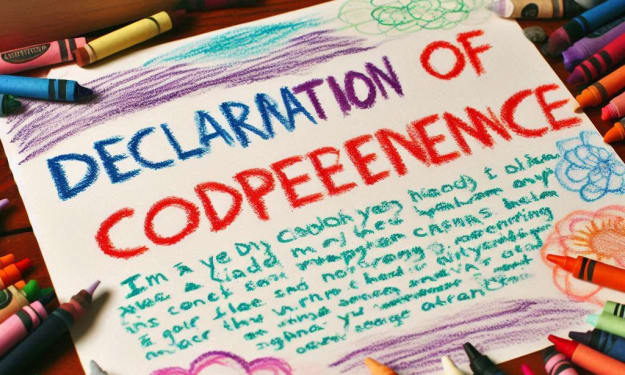
We the People of the Husbands of the United States of America, in Order to form a more perfect Union, and I mean you...with me...establish Justice, insure domestic Tranquility, provide for the common defence, promote the general Welfare, and secure the Blessings of Liberty to ourselves, after Puberty, do ordain and establish this Declaration of Co-Dependence.
By Gerard DiLeo7 days ago in Humans
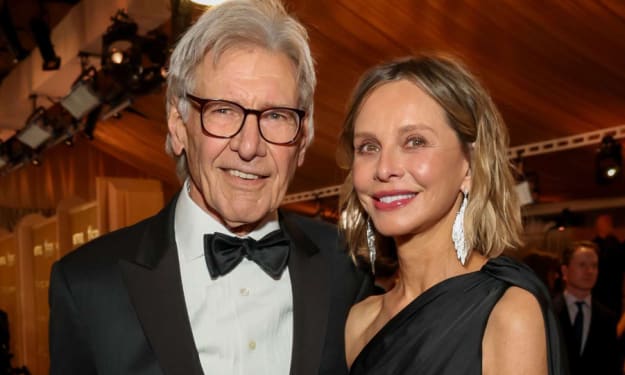
Harrison Ford and Calista Flockhart: Love, Age, Explained
Harrison Ford and Calista Flockhart continue to inspire fans with their strong relationship. Discover Harrison Ford age, net worth, marriage insights, and how the legendary actor keeps his love life private.
By Vincent Otiriabout 15 hours ago in Humans
Review of 'Man on the Run'
My wife and I saw Man on the Run, a nearly 2-hour documentary on Amazon Prime, about Wings, Paul McCartney's group that flew around the world from shortly after The Beatles broke up in early 1970 to shortly after John Lennon was murdered at the end of 1980, making a Beatles reunion forever impossible.
By Paul Levinson5 days ago in Beat


Comments
There are no comments for this story
Be the first to respond and start the conversation.