
The Benefits of Wearing a Hijab
Hijab a challenging matter for Muslims
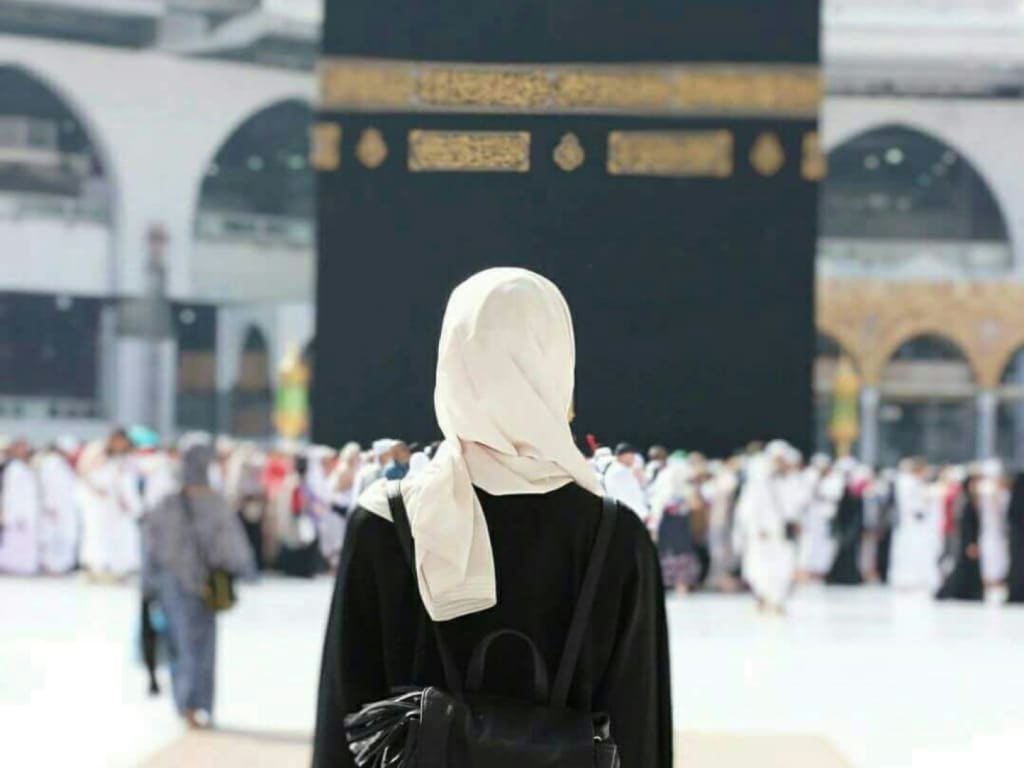
Here is an article on The Benefits of Wearing a Hijab offered by our travel agency with the best and cheap Hajj Packages from the UK. Hijab is a challenging matter for Muslims and non-Muslims alike in the face of growing Islamophobia. It has been the topic of several discussions. For those unfamiliar with the term, Hijab refers to a veil worn by Muslim women in front of males who are not family members. In general, the phrase refers to any head, face, or body covering worn in accordance with Islamic modesty requirements.
The significance of the Hijab in a Muslim woman's life is determined by the reasons for wearing it. The reasons for wearing it, on the other hand, might range from religious to social and personal preferences. It has been incorrectly labeled as a form of oppression for Muslim women who are forced to do so by their husbands.
Hijab from The Perspective of History:
Most people today identify hijab solely with Islam and Muslims. Head coverings and modest body clothing, on the other hand, preceded Islam. Jewish, Hindu, Sikh, Jains, and Christian women have all worn headscarves at some time in their lives. Many Christian Bedouin tribes and Hindu desert tribes in India still wear head coverings. Surprisingly, feminists and neo-modernists have never criticized their practice as repressive or incompatible with women's rights.
Covering one's head is only a way of achieving modesty in clothing. For many women, wearing a hijab is a personal decision rather than a religious obligation. There are ladies who cover their heads all of the time, those who cover for a limited period of time, and those who do not cover their heads at all. Overages, women have worn numerous forms of hijab. They can be of any religious affiliation, including Islam.
The Hijab, Identity of a Muslim Woman
In the modern era, Hijab has become more popular as a result of escalating anti-Muslim sentiment. Muslim women in the United Kingdom proudly wear the hijab to express their Muslim identity. While the majority of the British community accepts it, there are still hate comments and attacks on Hijabi women every now and then. It has caused discontent among both Hijabi and non-Hijabi women.
Is the Hijab Required in Islam?
On this subject, Muslim religious scholars have been ambiguous. There has never been a unified definition of hijab or kinds of hijab. Muslim scholars have differed on the extent to which head or body covering is required. Traditional hijabs worn across the world have also had cultural and regional differences. The most widely agreed-upon agreement for the reasons to wear Hijab is found in Surah Al-Ahzab.
Translation
Tell your wives and daughters, as well as the ladies of the believers, to lower a piece of their jilbabs over themselves, O Prophet. That way, they will be identified and will not be harmed. Allah is Forgiving and Merciful forever.
Jilbab is translated as Khimar or headscarf in the classic Arabic dictionary. In this verse from Surah Al-Ahzab, believing women are asked to cover their heads in order to be identified as Muslim women and to be protected. Existing consumers for Arab women at the time of the revelation of this scripture were required to cover their heads and tie their scarves behind their necks. This exposed their chests, necks, and ears.
The Islamic hijab, on the other hand, requires that the head be covered and the material be draped over the neck and breast. The illustration below might help you understand what different types of hijab can represent.
About the Creator
Keep reading
More stories from writers in Humans and other communities.
When True Love Never Questions Your Soul
“And she’s going to learn that this life will hit you, hard, in the face, wait for you to get back up, just so it can kick you in the stomach but getting the wind knocked out of you is the only way to remind your lungs how much they like the taste of air.” — Sarah Kay’s Poem — If I Should Have a Daughter
By Chantal Christie Weiss5 days ago in Humans
The Hidden Valentine part three
Some nights are never meant to be remembered. They carve themselves into the mind, replaying without mercy, resurfacing when you least expect them. They become the dividing line between who you were—and who you are forced to become.
By Ahmed aldeabella4 days ago in Humans
The Pride Flag and the Diversion
For nearly a decade, the LGBTQIA Pride Flag rippled in the wind at Christopher Park, a kaleidoscope of color staked into the soil of America’s first national monument to LGBTQIA+ liberation. That flag came down this week. Federal officials, citing new guidance from the Trump Administration, silently lowered the rainbow flag from its pole across the street from the Stonewall Inn. The birthplace of the modern gay rights movement now flies only the United States flag.
By Tim Carmichaela day ago in Pride
If You Write A Book, Don’t Tell Anyone
There are days when I’m grateful Amazon doesn’t tell me specifically who has bought my book and who hasn’t. If they did, I would be heartbroken when I read the list and noticed all the important names in my life were not on my list of customers.
By Ellen Frances5 days ago in Writers



Comments
There are no comments for this story
Be the first to respond and start the conversation.