
The Bench by the Window
A touching story of an unlikely friendship that healed two lonely hearts.

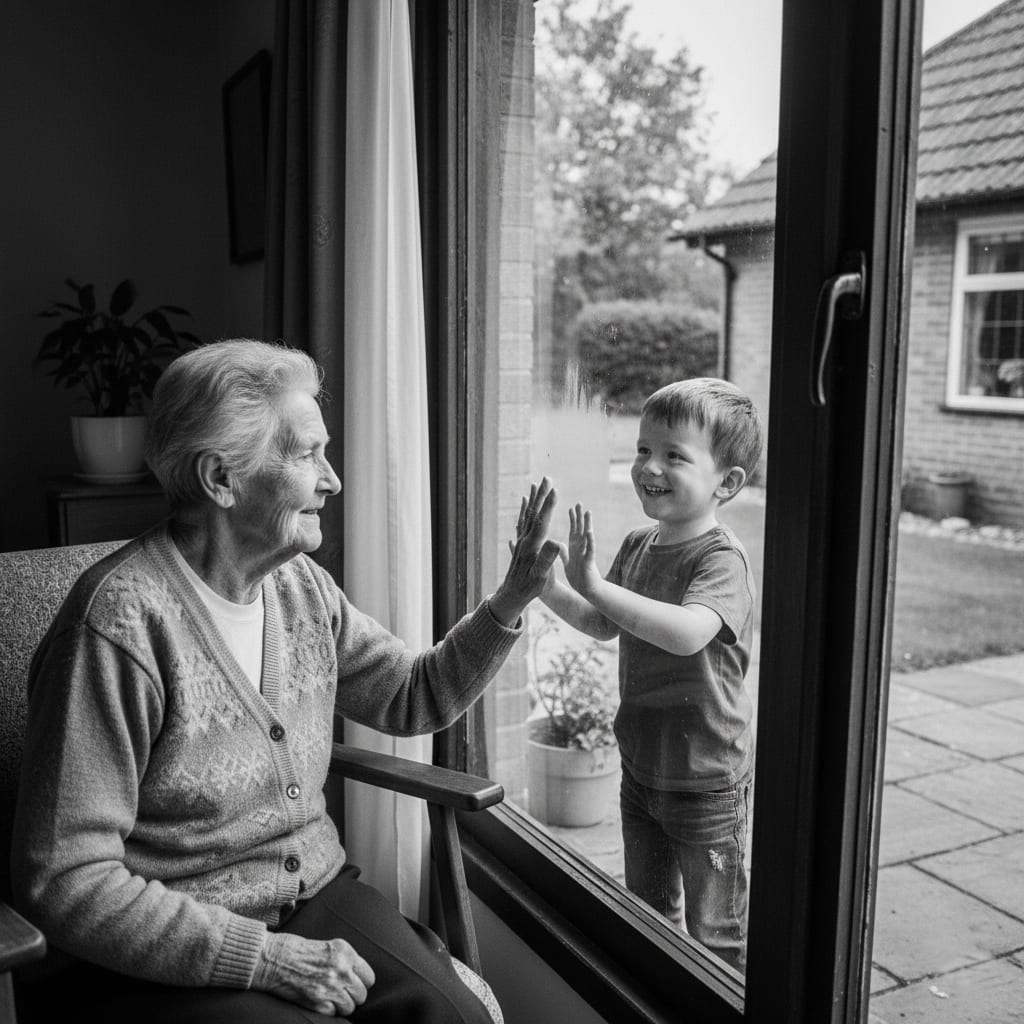
When Emily moved into the nursing home, she didn’t bring much with her. A small suitcase with three cardigans, a few framed photographs, and an old jewelry box that rattled when carried. That was all.
She wasn’t bitter about it. Life had simply folded her into this place, where the hallways always smelled faintly of oatmeal and disinfectant. She liked to sit by the window in the common room, watching people come and go. There was a wooden bench just outside, and sometimes families sat there laughing with their loved ones. Emily had no visitors.
It had been years since her husband passed, and her only daughter lived across the country, too busy with work and children of her own. Emily never complained. She just sat at the window, knitting scarves that nobody asked for.
One gray November afternoon, a boy appeared on the bench outside. He looked about twelve, skinny with messy hair and a backpack that seemed too heavy for him. He wasn’t visiting anyone—he just sat there, staring at his shoes.
Emily tapped on the glass. The boy looked up, startled. She lifted her hand in a small wave. Slowly, he waved back.
The next day, he was there again. And the next. Sometimes with a sandwich, sometimes with nothing at all. Emily began to wait for him, knitting by the window until he appeared. They developed a silent ritual: she’d wave, he’d smile, and sometimes he’d hold up a piece of paper with a word scribbled on it—“HI” or “COLD?” or once, simply, “MATH :(”.
She responded in kind, scribbling on napkins and pressing them to the glass: “HELLO” or “BRRR” or “YOU’LL DO FINE.”
After a week, she asked the nurse if she could sit outside. The nurse hesitated but agreed, wrapping Emily in a blanket and wheeling her to the bench. The boy looked surprised to see her up close.
“You’re real,” he said, grinning.
“I hope so,” Emily laughed. “Or else I’ve been knitting for ghosts.”
His name was Daniel. His mom worked two jobs at the diner down the street, and he didn’t like going home to an empty apartment. The bench had become his waiting place—safe, quiet, out of the way.
From then on, Emily and Daniel met every afternoon. He’d tell her about school, about the bullies who mocked his shoes, about the science project he was too nervous to present. She told him about the time she and her husband danced in the rain on their wedding night, about the years she spent as a teacher, about the daughter she missed but refused to guilt.
They became each other’s anchor: the lonely boy and the forgotten woman.
One snowy day in December, Daniel showed up with a small gift bag. Inside was a pair of fuzzy socks and a chocolate bar. “For you,” he mumbled.
Emily blinked back tears. She hadn’t received a Christmas gift in years. She handed him a neatly folded scarf she had knitted—blue, his favorite color.
Winter passed into spring. Daniel grew taller, his voice beginning to change. Emily grew frailer, her hands slower with the needles. But still, they met at the bench.

Then one day, Daniel didn’t come.
Emily waited by the window, then by the bench, but he never showed. The next day, nothing. And the next. She told herself he was just busy, but worry gnawed at her chest.
After a week, she asked the nurse if she could borrow the phone. With shaky hands, she dialed the number Daniel had once written down in case of “emergencies.”
A tired voice answered. “Hello?”
“This is Emily,” she said gently. “From the nursing home. I’m a friend of Daniel’s.”
There was a pause. Then the woman sighed. “He’s here. Do you want to talk to him?”
Daniel’s voice came on, quiet. “I’m sorry. I didn’t mean to stop coming. Mom said I shouldn’t bother you anymore. That you’re… old. That you have your own problems.”
Emily closed her eyes, fighting tears. “Daniel, listen to me. You are never a bother. Not once. You’re the brightest part of my days.”
There was silence, then a choked sob. “I miss you.”
“I miss you too, dear. Come tomorrow. Bring your homework. We’ll work on it together.”
The next afternoon, Daniel was there. And the next. And the next.
Years later, when Emily passed quietly in her sleep, the staff found a stack of notebooks in her room. Inside were letters she had written to Daniel—advice, encouragement, stories she hadn’t yet told. At the funeral, Daniel, now a young man, stood and spoke through trembling lips.
“She wasn’t my grandmother by blood,” he said, “but she gave me the kind of love that saves a kid. Every scarf I own is hers. Every time I sit on a bench, I’ll think of her. And I’ll never forget that even when the world makes you feel invisible, kindness has a way of finding you.”
When he stepped down, he placed a single blue scarf on her casket.
And for just a moment, it felt like Emily was sitting by the window again, watching, smiling, waiting for the boy on the bench.

About the Creator
Asghar ali awan
I'm Asghar ali awan
"Senior storyteller passionate about crafting timeless tales with powerful morals. Every story I create carries a deep lesson, inspiring readers to reflect and grow ,I strive to leave a lasting impact through words".
Keep reading
More stories from Asghar ali awan and writers in Humans and other communities.
The Promise That Lasted Until the Final Breath
There is a kind of love that doesn’t make noise, that doesn’t show itself in grand ceremonies or fireworks. It’s a quiet love—the strong hand resting on your back, the soft voice you hear in the silence of the night, the presence we often take for granted until one day we realize it was everything. That was the love my father had for my mother, and the love she carried for him in return.
By Asghar ali awan4 months ago in Humans
Why Living in New York City Feels Like Running a Marathon With No Finish Line
The first thing you learn about New York City is that nobody is actually relaxed here. Everyone is in motion—power-walking through subway tunnels, squeezing onto packed trains, and typing emails while standing in line for coffee. The city doesn’t rest, and eventually you stop resting too.
By Mustak Eman3 days ago in Humans


Comments
There are no comments for this story
Be the first to respond and start the conversation.