
The AI Revolution Unveiled
How Emerging Technologies Are Captivating Audiences in 2025
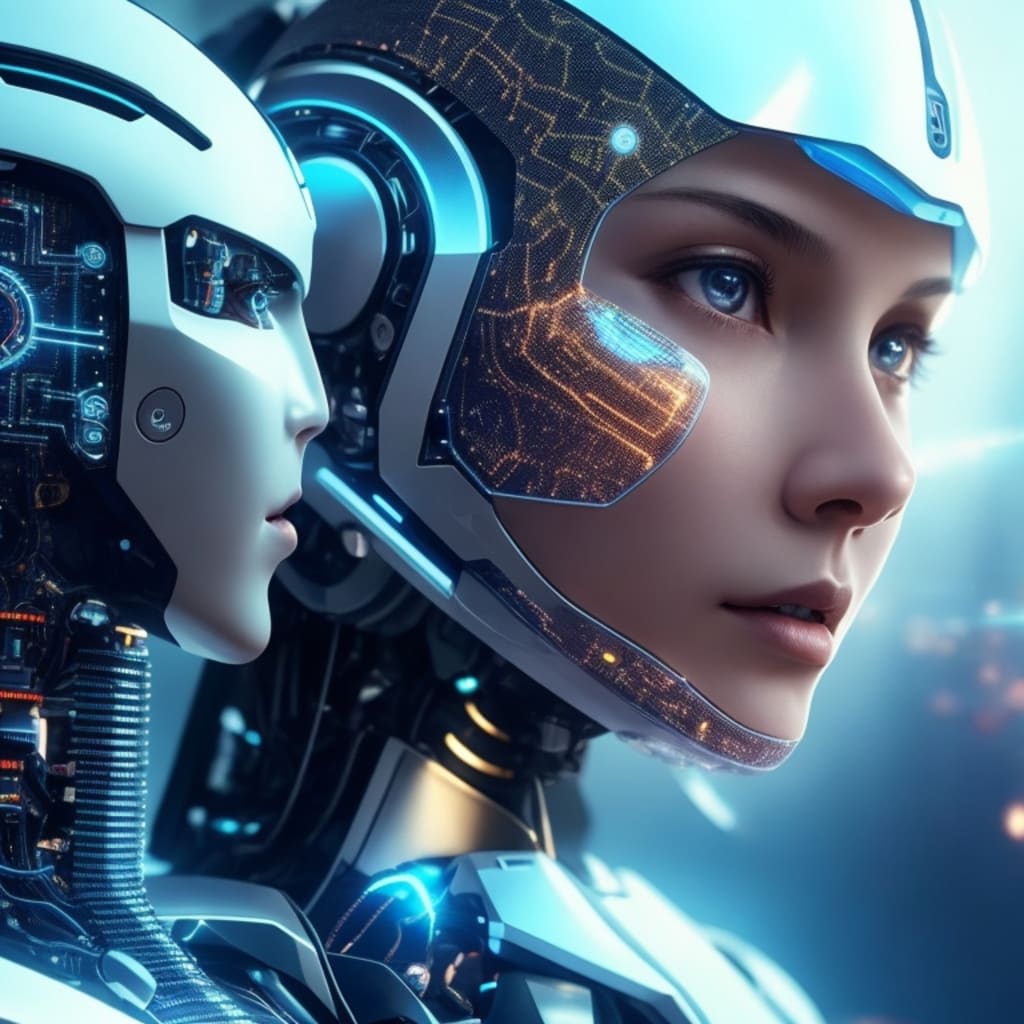
In 2025, Artificial Intelligence and frontier technologies have become top-of-mind, dominating headlines, investment portfolios, corporate boardrooms, classrooms, and living rooms around the world. With over $56 billion poured into generative AI platforms in the past year alone, interest in what was once a niche field has now officially hit a fever pitch. Such record-breaking investments are not merely numbers—they are the lifeblood of a technological revolution transforming the way people learn, work, create, communicate, and govern.
Generative AI, once the subject of science fiction fantasy and startup hype, is now a mainstay of modern business practice. Surveys suggest that nearly two out of three companies worldwide have incorporated AI into at least one aspect of their business, from customer service chatbots and automated marketing campaigns to research and development uses that can generate simulations or design prototypes at will. The rate of adoption is staggering: in a single year, the number of businesses using AI tools effectively doubled. And driving that adoption is not novelty only but measurable efficiency—businesses that leverage AI report radically accelerated workflows, reduced operational costs, and in some cases, productivity increases as high as 50%.
This revolution in AI is not limited to the boardroom. Some of the most profound change has been in education. AI tutors, powered by large language models and adaptive learning systems, are now individualizing learning at a scale that was previously unimagined. These systems analyze student performance data in real time and modify lessons to fit the individual learning style, pace, and aptitude of each student. In an average classroom, this would require the attention of several teachers per student. Now, thanks to AI, this kind of hyper-personalized help isn't just a prospect—it's the new reality. Students in rural and underserved areas now have access to high-quality, personalized learning that bridges the equity gap, giving them a more level chance to succeed in a world where digital literacy is becoming ever more critical.
The healthcare sector, too, is being swiftly transformed. AI-powered diagnostic systems can read X-rays, MRIs, and CT scans in seconds, picking up on anomalies that would take human specialists hours—if not days—to diagnose. These systems don't replace doctors but supplement their ability for quicker, more accurate diagnoses. Patients get treated earlier, and hospitals see reduced costs and wait times. AI is even helping to develop treatment plans by combing through massive databases of medical records, identifying patterns, and suggesting personalized therapies. In short, AI is not just saving time—it's saving lives.
The creative arts, once a quintessentially human endeavor, have also been revolutionized. Generative models can now compose music, write movie scripts, create artwork, and even direct animated videos. Such tools have democratized creativity, and today anyone with a computer can try their hand at artistic creation without professional training. A teenager can compose a symphony in minutes. An entrepreneur can develop brand visuals overnight. A writer with writer's block can request an AI to help brainstorm plots. Social media is filled with AI-generated memes, art challenges, and videos that go viral in a few hours. This content is not only entertaining—it's spawning entire new subcultures based on the intersection of human creativity and machine intelligence.
Behind much of this AI-driven surge is digitally native Generation Z, also known as the "Transformer Generation." These young professionals have grown up with technological advancements and are now among the most prolific users of AI tools. Reports suggest that nearly 80% of Gen Z workers use AI to handle over half their workloads—from presentations and data analysis to coding and customer interactions. They even use AI for advice on mental wellness, career growth, and creative interests. This exposure to AI has begotten an explosion of user-generated content celebrating or condemning the technology—memes, reaction videos, prompt tutorials—all of which fuel the public discourse and drive further interest and adoption.
But the rapid ascendance of AI has not been without concern. Ethical and environmental issues loom large. Training massive AI models requires enormous computational resources, and data centers draw vast amounts of electricity, contributing significantly to carbon emissions. As awareness of climate change intensifies, the AI industry is under growing pressure to find greener, more efficient ways to scale. Leading companies are investing heavily in clean energy solutions and optimization techniques to reduce AI’s environmental footprint. Meanwhile, ethicists and lawmakers are catching up with the technology. Privacy, algorithmic bias, misinformation, and the future of jobs are among the issues under discussion. Different territories have attempted different strategies to regulation—some imposing strict guidelines, others adopting a wait-and-see policy—but the global lack of a unified AI policy means many issues remain unclear.
In the midst of all this, a new type of digital strategy has emerged: Answer Engine Optimization (AEO). Unlike traditional SEO, which attempts to get content ranked on search engines through keywords and backlinks, AEO entails developing content that directly responds to users' questions in a voice assistant, AI chatbot, and other automated system-friendly manner. That means presenting well-groomed, well-organized, orderly answers—often in the form of Q&A sessions, bullet points, or bold subheadings—that machines can readily parse. For content creators, AEO is a significant development. Articles optimized in this way have a better chance of being part of search results or being used by AI assistants to provide voice or text answers to users' queries. It's a shift from writing for humans to writing for humans and machines.
In a way, AI has been the most powerful, versatile, and cross-industry tech of the decade. It powers business applications, medicine, education, art, law, transportation, and entertainment. It's backstage in the tools we all use every day, and center-stage in the conversations shaping our tomorrow. The convergence of massive investment, wide usage, technical innovations, and cultural relevance renders AI & Emerging Tech the default topic for anyone wanting to make sense of the now and forecast the tomorrow.
For writers, educators, entrepreneurs, and creators, there's no shortage of inspiration in this topic. Step-by-step guides, trend stories, ethics opinion-pieces, op-eds, interactive tutorials, and industry case studies all have a place in the AI conversation. And by using the concepts of AEO—bitesized recaps, structured takeaways, jargon-free language—creators can ensure their content isn't just enlightening, but also discoverable in an age of smart search.
About the Creator
How to Organize and Revolt
Stop. We all know you're not going to do anything. You like the system that sells you the savory bits to suck on. You like that seamless, curated, personalized hunger. The single click. The feed that knows your mood before you do. Seven scrolls of like and lack, and the therapy app that finds you on a Tuesday with a single thought.
By Nicky Frankly3 days ago in Humans
Flower Bloom 369
FLOWER Bloom 2/25/26 Wednesday By Mariann Carroll Karen had been with Tony for 7 years. Tony started acting strangely after her surgery. He would mow the lawn in the rain and be on his cellphone. He started pushing Karen away. Tony came clean about seeing someone. Karen moved out two months later. Karen moved in with a friend. She felt betrayed.
By Mariann Carroll4 days ago in Fiction




Comments (1)
Great