
Telomere
Telomeres are like genetic bodyguards found at the ends of our chromosomes. They shield chromosomes from damage and ensure orderly cell division. However, each time a cell divides, these guards get a bit shorter. Over time, this shortening is linked to aging and age-related illnesses. Think of telomeres as the protective tips on shoelaces that keep your genetic information intact.
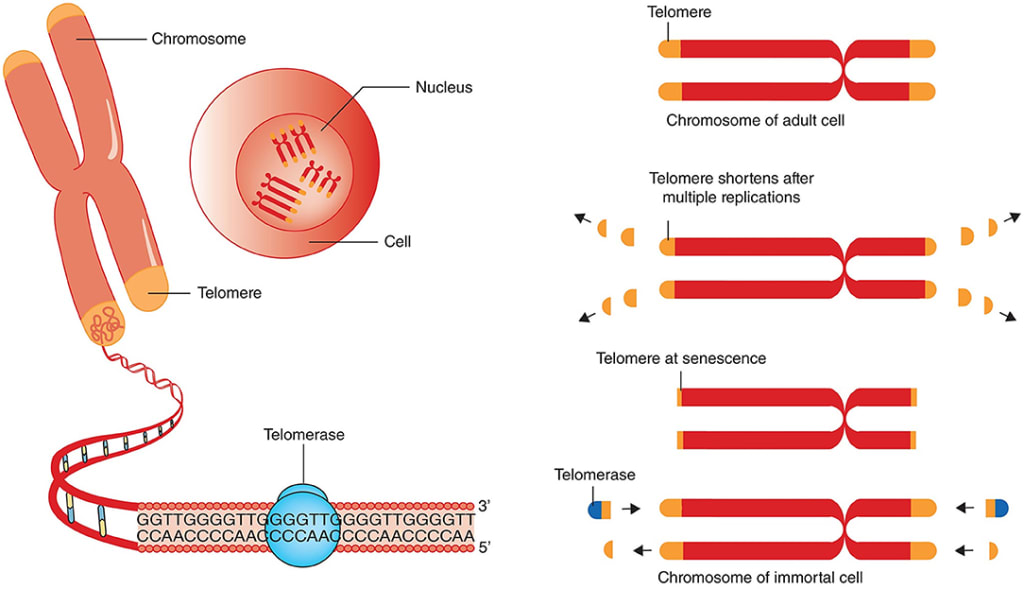
"You might be curious why I'm discussing telomeres?'' Telomeres play a pivotal role in our overall well-being.
Telomeres are like genetic bodyguards found at the ends of our chromosomes. They shield chromosomes from damage and ensure orderly cell division. However, each time a cell divides, these guards get a bit shorter. Over time, this shortening is linked to aging and age-related illnesses. Think of telomeres as the protective tips on shoelaces that keep your genetic information intact.
Structure
Telomeres play a crucial role in safeguarding the integrity of our genetic material. Comprising repetitive DNA sequences, typically the TTAGGG sequence in humans, and a complex of specialized proteins, telomeres serve as the protective bookends at the termini of our chromosomes. This arrangement prevents chromosomes from eroding or fusing with neighboring chromosomes through a phenomenon known as end-to-end fusion. As cells undergo division, their telomeres naturally shorten, acting as a cellular clock or "aging clock." Once telomeres reach a critically short length, cells may enter a state of senescence or trigger apoptosis, contributing to the aging process and potentially preventing the formation of cancerous cells. Telomere maintenance, therefore, is of great interest in both understanding cellular aging and exploring potential therapies to combat age-related diseases and cancer.
Function
Telomeres serve as the vigilant guardians of our genetic heritage during the complex process of cell division. Their fundamental function can be likened to protective bookends that shield the vital genetic information within our chromosomes. As cells replicate, the DNA within these chromosomes naturally unravels and replicates incompletely, risking damage and the potential fusion of chromosome ends, which could lead to genetic instability and cell malfunction. However, telomeres step in to prevent these issues. They ensure that the essential DNA sequences at the ends of our chromosomes are preserved, and they act as a buffer zone, allowing for multiple rounds of cell division without compromising the core genetic material. This role not only contributes to maintaining the stability of our genetic code but also plays a critical role in cellular aging, cancer prevention, and the overall health of our bodies.
Cell Division
Cell division is a dynamic process where telomeres play a pivotal role in the cellular clockwork. With each round of cell division, the telomeres progressively diminish in length. This phenomenon occurs because the mechanism of DNA replication is unable to faithfully copy the very tip of a chromosome, leading to a gradual loss of genetic material at the chromosome ends. Over the course of numerous cell divisions, this repetitive shortening of telomeres acts as a biological countdown, eventually reaching a critically short length. When telomeres become too abbreviated, cells may enter a state of senescence or trigger programmed cell death, safeguarding against genomic instability and the potential development of cancerous cells. This process is intrinsically linked to the aging of cells and organisms, making telomere length maintenance a focal point of research in understanding the aging process and exploring potential avenues for anti-aging interventions.
Aging
Aging is intricately tied to the phenomenon of telomere shortening, marking a fundamental aspect of cellular aging. As the cumulative effects of cell divisions gradually whittle away telomere length, cells ultimately reach a critical juncture where their telomeres become severely shortened. At this point, cells often enter a state of senescence, where they cease to divide or function optimally. This process has profound implications for the aging of our tissues and organs. With fewer active and functional cells, our bodily systems gradually deteriorate over time, leading to the well-known signs of aging, such as reduced tissue repair, diminished organ function, and increased susceptibility to age-related diseases. The connection between telomere shortening and aging underscores the significance of telomere maintenance in understanding and potentially mitigating the aging process, making it a compelling area of research for advancing our knowledge of longevity and healthspan.
Disease
Shortened telomeres bear significant implications for human health, as they are intricately intertwined with various age-related diseases. Research has firmly established connections between critically short telomeres and conditions such as cardiovascular disease, where cellular dysfunction contributes to arterial aging and plaque formation. Moreover, telomere attrition has been associated with diabetes, as impaired cellular regeneration in pancreatic tissues affects insulin production. Additionally, certain cancers, like lung and pancreatic cancer, often exhibit telomere shortening, promoting genetic instability and tumorigenesis. Beyond the disease itself, shorter telomeres have been correlated with increased mortality rates, indicating their role as a biological marker of overall health and longevity. The link between telomere length and age-related diseases underscores the importance of understanding and potentially modulating telomere maintenance as a strategy to mitigate the risk and impact of these conditions in our aging population.
Lifestyle Factors
Indeed, lifestyle factors exert a significant influence on telomere length. Chronic stress, for instance, can stimulate the release of stress hormones, which in turn accelerates the shortening of telomeres. Poor dietary choices, particularly those high in processed foods and sugars, are associated with inflammation and oxidative stress, further contributing to telomere attrition. Sedentary habits compound these effects, as regular physical activity has been linked to the preservation of telomere length, likely due to its role in reducing oxidative stress and inflammation. Smoking, a known contributor to oxidative damage, also hastens telomere shortening. Conversely, adopting a health-conscious lifestyle that includes a balanced diet rich in antioxidants, regular exercise, and avoidance of smoking can help mitigate telomere erosion, promoting cellular health and potentially extending overall longevity. These lifestyle choices underscore the importance of proactive health measures in safeguarding our genetic integrity and well-being.
About the Creator
Keep reading
More stories from Moussa Abass and writers in Humans and other communities.
Believers Enjoy a 7-Year Longer Lifespan: The Power of Faith
Introduction The connection between spirituality and well-being has been the subject of extensive research over the last few decades. A wealth of studies has explored the relationship between faith in God and its impact on overall health and personal development. This discussion will delve into the findings of these studies, highlighting the potential benefits of believing in God, including spiritual fulfillment, emotional support during challenging times, and the development of a moral compass. These insights shed light on the profound ways in which faith can influence and enhance one's well-being, offering a deeper understanding of the significance of spirituality in our lives.
By Moussa Abass2 years ago in Longevity
Why I No Longer Sell on Amazon
When I published my first book in 2011, I used Lulu. At the time, it was one of the few print-on-demand options that allowed authors to retain control over content, pricing, and distribution. Over the years, I explored other publishing routes, including limited digital placement on Amazon Kindle, but I remained consistent with Lulu for physical books. As of this writing, I am still evaluating whether those remaining Kindle titles will stay available.
By Dr. Mozelle Martin | Ink Profiler2 days ago in Humans




Comments
There are no comments for this story
Be the first to respond and start the conversation.