
Telegram founder says he'll pay IVF costs for women using his $perm
Ivf

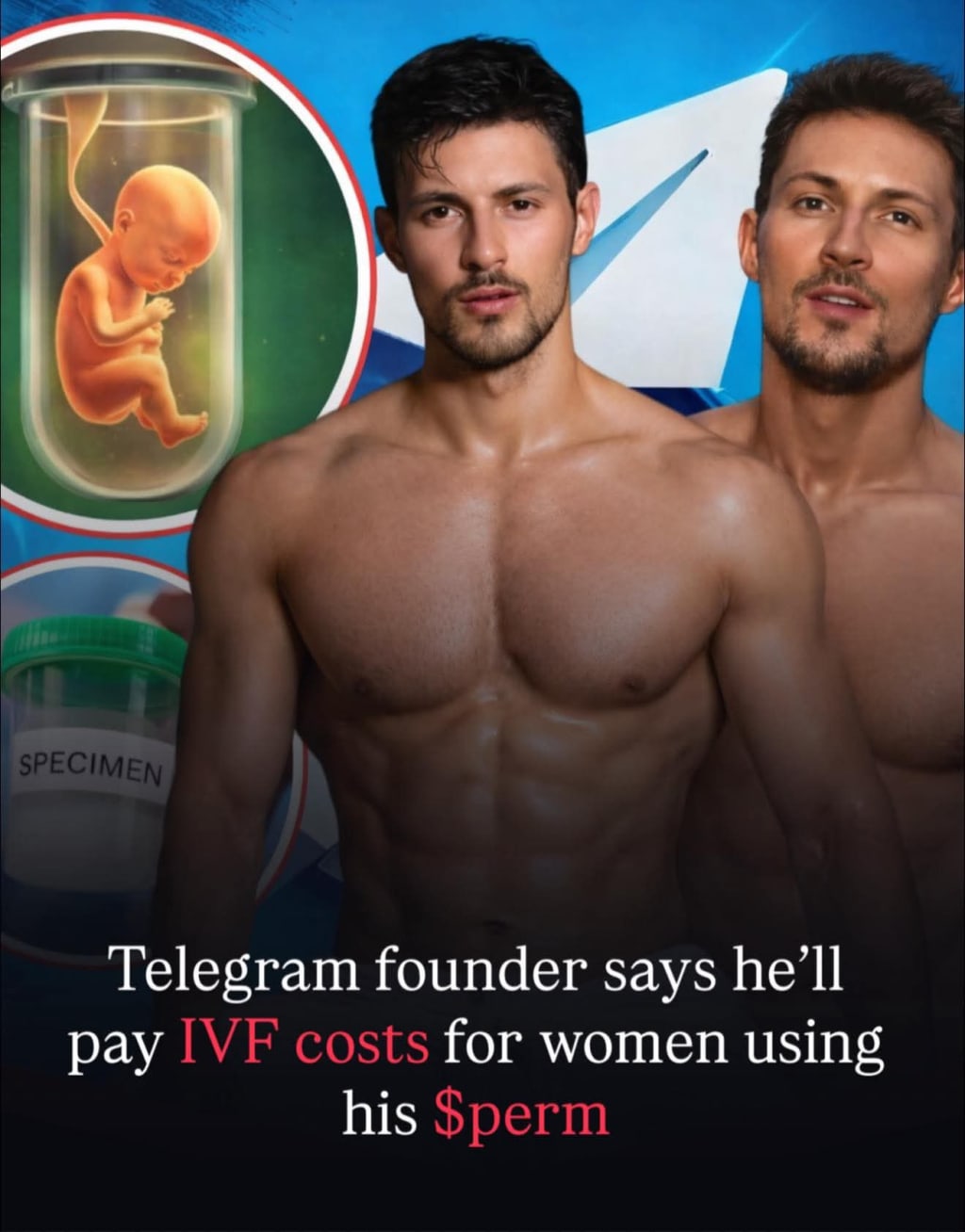
Pavel Durov, the Russian-born billionaire tech entrepreneur best known as the founder and CEO of the messaging platform Telegram, has once again made global headlines — but this time for a highly unconventional personal initiative that blends reproductive technology, philanthropy, and controversy.
In late December 2025, Durov publicly announced that he would fully cover the in vitro fertilization (IVF) treatment costs for women under the age of 37 who choose to conceive using his donated sperm. The offer, which has been widely reported by international news outlets, places Durov at the center of what might be one of the most unusual high-profile reproductive campaigns in recent memory. �
A Billionaire with an Unconventional Vision
At age 41, Durov is already an atypical figure in the world of tech founders. He founded Telegram in 2013, after earlier creating Russia’s VK social network, and has since maintained total ownership of the encrypted messaging app, which counts more than a billion active users. Industry observers often characterize him as fiercely independent, private, and contrarian — traits that have extended beyond technology into his personal life. �
But it is Durov’s role as a sperm donor and reproductive philanthropist that has recently caught the world’s attention. According to multiple news accounts, Durov claims to have fathered more than 100 biological children through sperm donation over the past decade, in addition to six children from previous personal relationships. �
Durov began donating sperm in 2010, initially to help a friend with fertility challenges. Fertility specialists later encouraged him to continue, saying there was a shortage of high-quality donor material — particularly material from healthy, well-educated men. Over the years, his genetic material has been stored in fertility clinics across at least a dozen countries, contributing to what some describe as a global donor network. �
The IVF Funding Offer
The latest development — pledging to pay for IVF costs for women who want to use his sperm — appears to be an extension of this long-standing commitment. Under the terms reported, women under 37 who are medically eligible can undergo IVF procedures without paying the often steep costs typically associated with assisted reproduction. Although Durov no longer donates new sperm directly, samples from previous donations stored at Moscow’s AltraVita Clinic are being used. �
The decision to set an age limit appears to reflect standard fertility guidelines and seeks to balance accessibility with medical feasibility. Some reports also note that eligibility criteria include being unmarried, to avoid certain legal complications. �
Motivations: Civic Duty or Something More?
When asked to explain his motivations, Durov has described what he’s doing in terms of social responsibility and demographic concern. He has publicly linked global declines in fertility rates to factors such as environmental pollution, stressed lifestyles, and what he calls a shortage of high-quality sperm donors. In interviews and posts, Durov framed his actions as a way of helping address these issues and overcoming financial barriers that prevent many women from accessing IVF. �
This framing — of donating not just his genetic material but also the financial means to use it — positions Durov as far more than a passive donor. He casts himself as a participant in a broader solution to what he sees as a reproductive challenge facing modern societies. Supporters argue that his money could help families who struggle with infertility, reducing the economic barriers many hopeful parents face. �
Inheritance and Legacy
Perhaps even more striking is Durov’s public promise that all of his biological children will inherit a share of his personal fortune — estimated at around $17 billion — provided they can establish a genetic link to him. While he has said that inheritance may not be accessible until decades after his death, the pledge reframes sperm donation from a merely biological act to a long-term economic commitment to his offspring. �
Such a stance breaks with the traditional legal separation of sperm donation from personal responsibility or inheritance rights in many jurisdictions. Offering equal share in his estate to hundreds of biological children — many of whom may never know each other — raises novel questions about family, genetics, wealth, and legacy.
Public Reaction: Support, Skepticism, and Ethical Debate
Public response to Durov’s announcement has been highly polarized. Some observers see his actions as philanthropic, helping women who want to become mothers but are deterred by the high cost of IVF. Others have raised ethical, legal, and social questions about the implications of one individual becoming the biological parent to potentially hundreds of children around the world.
Critics worry about issues ranging from power dynamics and consent, to genetic diversity and the potential for inadvertent relationships among half-siblings. The intersection of vast personal wealth with reproductive choice — particularly when linked to future financial legacy — has fueled intense debate about where charity ends and undue influence begins. �
Looking Ahead
As news of Durov’s offer continues to spread, it is likely to spark further discussion among ethicists, reproductive health professionals, and the general public. Whether his unique blend of philanthropy, personal ideology, and reproductive activism will have any lasting impact beyond headlines remains to be seen. For now, however, Pavel Durov’s pledge to pay IVF costs for women using his sperm remains one of the most unusual and talked-about intersections of technology, wealth, and human reproduction in recent memory.
About the Creator
Island Girl Coping Mechanism For When It’s Too Damn Winter. Runner-Up in The Ritual of Winter Challenge.
Growing up without Icelandic temperatures shapes you into a different being. And this particular being put on a valiant front until climate change upped the ante in my current location with a well-timed sucker punch some years back that became standard.
By The Dani Writer25 days ago in Humans
A Failed Artist, A Disillusioned Poet, An Underpaid Game Show Host
I took my son and niece to Gori, a small town in Georgia where Joseph Stalin was born. They talked me into visiting the Stalin's Museum, the largest in the post-Soviet space. I had resisted going there because I just can't stand the monster and know enough about him, or so I thought.
By Lana V Lynx6 days ago in FYI




Comments
There are no comments for this story
Be the first to respond and start the conversation.