
Submarine
Submarine implosion and other possible accidents and sea pressure
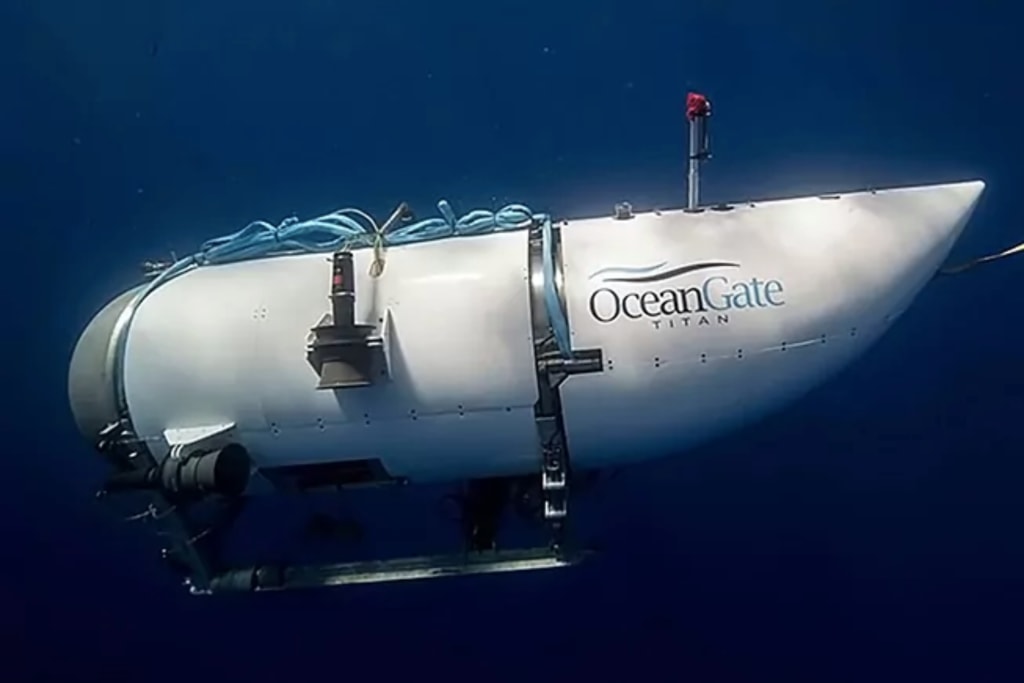
A submarine implosion refers to the collapse or failure of a submarine's hull due to extreme external pressure when submerged at great depths.
Submarines are designed to withstand the pressure exerted by the water at different depths. However, if a submarine descends beyond its crush depth, which is the maximum depth it can safely operate, the external pressure can become overwhelming. At this point, the submarine's hull may collapse inward, leading to an implosion.
The implosion of a submarine can have catastrophic consequences, as the collapse of the hull can cause structural damage, breach the submarine's compartments, and result in the loss of the vessel and the lives of the crew onboard.
To prevent implosions, submarines are designed with materials and structures capable of withstanding the pressures encountered at their intended operating depths. Extensive testing and engineering calculations are conducted to ensure the submarines can operate safely within specified depth limits.
It's worth noting that modern submarines are equipped with advanced technology and safety features to monitor and prevent the submarine from descending beyond its safe operating limits. This includes sophisticated depth sensors, alarms, and systems that help maintain the integrity of the hull and ensure the safety of the crew.
Submarine accidents refer to incidents or events involving submarines that result in damage, loss of life, or other negative consequences. While submarines are designed with safety features and undergo extensive testing, accidents can still occur due to various factors such as human error, mechanical failures, environmental conditions, or hostile actions. Here are a few examples of submarine accidents:
1. Collisions: Submarines can collide with other vessels, underwater obstacles, or the seabed. Collisions can lead to damage to the submarine's hull, systems, or periscopes and may cause injuries or fatalities. One notable collision was the USS Greeneville and Ehime Maru incident in 2001, where the USS Greeneville (a US Navy submarine) collided with a Japanese fishing training ship, resulting in the sinking of the Japanese vessel and the loss of lives.
2. Fires: Fires onboard submarines can be extremely dangerous due to the confined space and limited escape routes. Fires may occur due to electrical malfunctions, fuel leaks, or other sources. They can cause damage to equipment, threaten the crew's safety, and potentially lead to the loss of the submarine. An example is the Kursk submarine disaster in 2000, where an explosion and subsequent fire caused the sinking of the Russian submarine, resulting in the loss of the entire crew.
3. Submersion accidents: Submarines require careful management of ballast and buoyancy systems to control their depth. Malfunctions or errors in these systems can lead to uncontrolled submersion or rapid ascent, causing stress on the submarine's structure and potential damage. For example, in 2005, the Russian submarine AS-28 became entangled in fishing nets and was stranded on the seafloor. The crew was eventually rescued, but the incident highlighted the risks of submersion accidents.
4. Equipment failures: Submarines rely on various complex systems and machinery, including propulsion systems, navigation equipment, and life support systems. Failures in critical components or systems can jeopardize the safety and operational capability of the submarine. Regular maintenance and inspections are conducted to mitigate the risk of equipment failures, but unforeseen malfunctions can still occur.
It's important to note that submarine accidents are relatively rare, and submarine crews undergo extensive training to prevent and respond to emergencies. Safety measures, protocols, and advanced technology continue to be developed and implemented to minimize the occurrence of accidents and enhance the safety of submarine operations.
Underwater sea pressure, also known as hydrostatic pressure or water pressure, refers to the force exerted by the weight of water at a given depth in the ocean or any other body of water. As you descend deeper into the water, the pressure increases due to the increasing weight of the water above.
The magnitude of underwater sea pressure can be quite significant, and it is typically measured in units such as pounds per square inch (psi) or pascals (Pa). The pressure at a specific depth is determined by the density of the water and the acceleration due to gravity.
At the surface of the ocean, the pressure is approximately equal to atmospheric pressure, which is around 14.7 psi or 101,325 Pa. For every 33 feet (10 meters) of descent, the pressure increases by approximately 14.7 psi or 101,325 Pa. This relationship is known as the hydrostatic pressure gradient.
At great depths, such as in the deep ocean trenches, the pressure can reach immense levels. For example, at the bottom of the Mariana Trench, the deepest part of the world's oceans, the pressure exceeds 1,000 times atmospheric pressure or about 16,000 psi (110,000,000 Pa). Such extreme pressures pose significant challenges and risks for human exploration and the design of equipment and structures.
Submarines are designed to withstand and operate under high-pressure conditions. They are constructed with strong hulls that can resist the forces exerted by the surrounding water. The crew compartments inside submarines are pressurized to maintain a livable environment for the crew at various depths.
Understanding and managing underwater sea pressure is crucial in various fields, including oceanography, deep-sea exploration, and submarine engineering. Scientists and engineers use specialized instruments, such as depth sensors and pressure gauges, to measure and study the pressure changes in different underwater environments.
About the Creator
Keep reading
More stories from Roman Reigns and writers in Humans and other communities.
Earth Creation
The creation of the Earth is a topic that has been explored and theorized about by various scientific and religious perspectives. From a scientific standpoint, the prevailing theory is that the Earth was formed approximately 4.5 billion years ago through a process known as accretion. This process involved the aggregation of dust, gas, and other materials in a disk around the young Sun, eventually leading to the formation of planets, including Earth.
By Roman Reigns3 years ago in Earth
Whiskey At Dusk
Guess the whiskey was more important to you in the end, wasn’t it? It was more than the well-being of your friends; more vital than showing up to the places you promised you would and could come to; more critical of a matter than fulfilling your damn responsibilities and getting the press off your back.
By Snarky Lisa4 days ago in Humans
Missing Brit Tourist, 23, Found Dead on Beauty-Spot Beach After Tripping Off Cliff
A 23-year-old British tourist was tragically found dead on a picturesque tourist beach after reportedly tripping and falling off a cliff, local authorities have confirmed. The young woman had been reported missing several days earlier, sparking search efforts from both emergency services and volunteers in the area.
By Aarif Lashariabout 6 hours ago in Humans


Comments
There are no comments for this story
Be the first to respond and start the conversation.