
Stranded in the Sky: The Unbreakable Spirit of the Andes Survivors
How 16 ordinary young men turned 72 days of unimaginable horror into one of the greatest stories of human resilience ever told

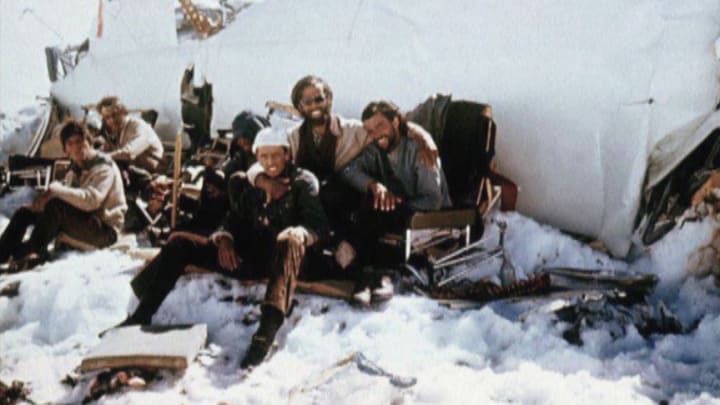
Imagine this: You're flipping through a dusty old album on a quiet Sunday, the kind where the house is too still and your mind wanders. Suddenly, a photo hits you like a punch. A bunch of young guys, bundled in whatever rags they've got, standing in blinding snow, arms slung around each other, smiling like they've just scored the winning try. But right in the middle of the frame-there's a human spine. Clean. White. Stark against the whiteout. Your stomach drops. These aren't props. These are the remains of their friends. And those smiles? They're not fake. They're the smiles of people who've stared death down and somehow kept breathing.
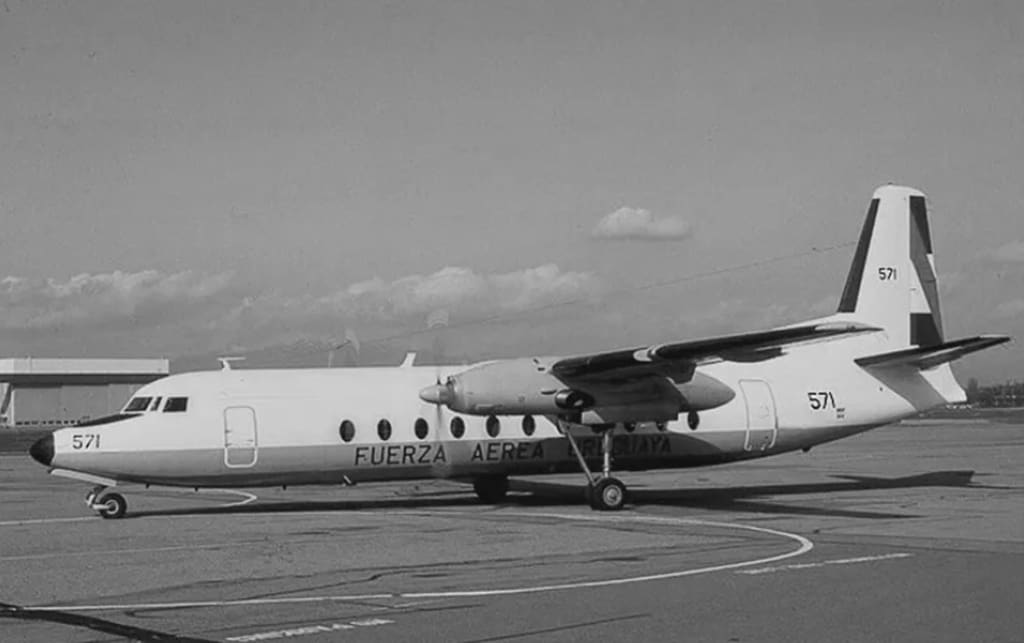
That picture was taken in late 1972, high in the Andes, by survivors of Uruguayan Air Force Flight 571. You’ve probably heard the basics: rugby team, plane crash, 72 days of hell, the cannibalism. But the headlines never quite capture the slow, grinding reality of it. The way hope flickered like a dying candle, then flared back up. The quiet conversations in the dark fuselage. The way ordinary kids-barely out of their teens-became something extraordinary.
Let me take you back to the beginning, because the story starts with so much ordinary joy.
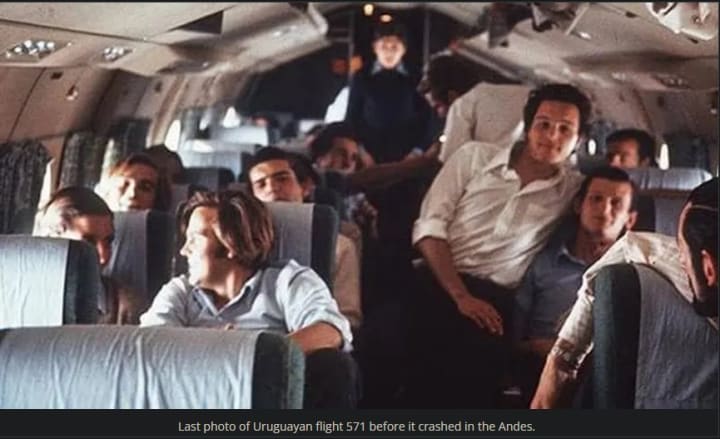
It was October 1972. A group of young men from Montevideo’s Old Christians rugby club-mostly in their early twenties-chartered a Fairchild plane to fly to Santiago, Chile, for a friendly match. They were loud, laughing, passing around wine and singing rugby songs. Some brought girlfriends or family. Nando Parrado had his mother Eugenia and sister Susana along. Marcelo Pérez, the team captain, was there with his fiancée. It felt like an adventure, not a farewell.
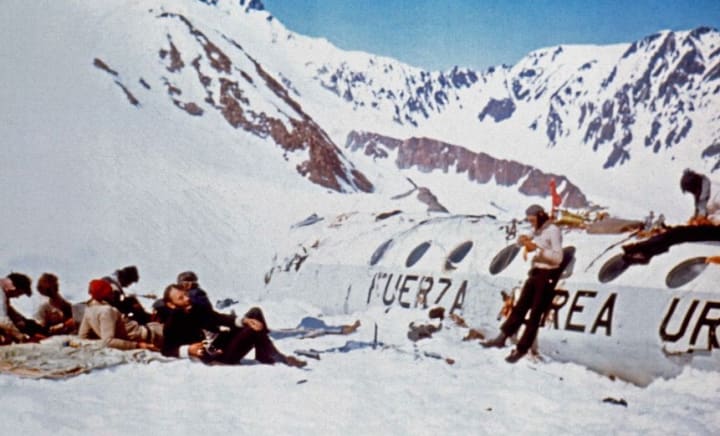
They left Montevideo on the 12th, but bad weather forced an overnight stop in Mendoza, Argentina. The next morning-Friday the 13th-they took off again around 2 p.m. The pilots, confident, flew the usual route over the Andes. But the co-pilot miscalculated. He thought they’d cleared the mountains and started descending too early. At 3:34 p.m., the plane slammed into a ridge at over 200 mph. Wings torn off. Tail ripped away. The fuselage slid down a glacier for hundreds of meters like a runaway sled from hell, finally grinding to a halt in a snow bowl at about 12,000 feet.
Twelve people died on impact, including both pilots and several passengers thrown out. The rest-33 of them-crawled out into the freezing air. Broken bones. Skull fractures. Nando Parrado was in a coma for days, his head split open. His mother and sister were badly hurt. The cold hit immediately-temperatures plunging to -30°C at night. No coats, no real food beyond a handful of chocolate bars, some wine, a few tins of mussels, and biscuits.
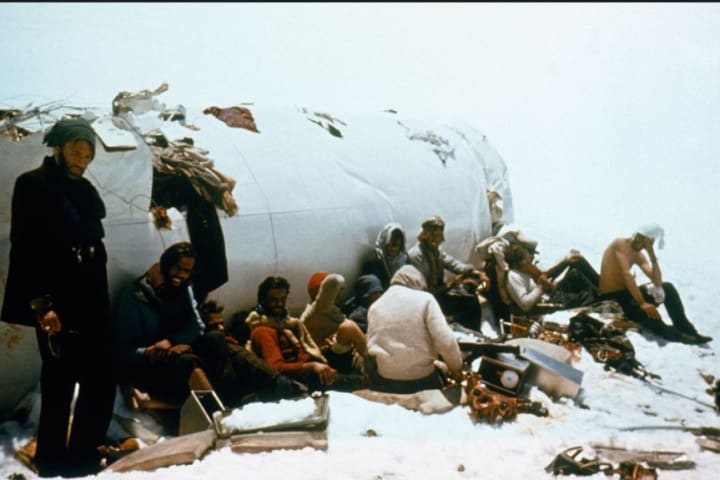
They huddled in the broken fuselage, stuffing holes with luggage, using seat cushions as blankets. Medical students Roberto Canessa and Gustavo Zerbino became the makeshift doctors. They pulled a metal rod out of one guy’s stomach with pliers and stitched him up with thread from a sewing kit. They melted snow for water using aluminum foil to catch sunlight. Every night they prayed the rosary together, clinging to faith like a lifeline.
But the food vanished fast. By day ten, they were down to nothing. The search planes flew over a couple of times-once so close they could hear the engines-but the white fuselage blended perfectly with the snow. Invisible. Then, on day eleven, they caught the radio broadcast: the search had been called off. No survivors expected. That moment... God. Roy Harley, the one who’d been fiddling with the radio, just broke down. “They’ve given up on us,” he said. And in that silence, the weight settled on them all.
They talked about it for days. Cried. Argued. Prayed. Some said no, never. Others whispered that if one of them died, the rest could use the body. Finally, Roberto Canessaq-uiet, determined-said he’d go first. He did it in front of everyone, to show it wasn’t madness. No one judged. They just... survived.
Then came the avalanche. Day seventeen. A wall of snow roared down the mountain and buried the fuselage. Eight more died-suffocated, crushed. Marcelo Pérez, the captain, gone. Liliana Methol, who’d been like a mother to them all, gone. The survivors dug a tunnel out with their bare hands, emerging into another blizzard that lasted days. Underground, in the dark, they ate what they had to. Raw. Cold. No fire. Just survival.
They kept going. They built things out of desperation. Skin socks from human leather to protect frostbitten feet. A sleeping bag from insulation ripped from the tail section, stitched together with wire. They sent out small expeditions-climbing ridges, hoping to see green valleys. Nothing but more white.
Days turned into weeks. Infections set in. Gangrene. One by one, more slipped away: Arturo Nogueira, Rafael Echavarren, Numa Turcatti-the last one, who’d refused to eat much because it tore him up inside. By early December, only sixteen were left.
That’s when Nando Parrado said enough. He’d lost his mother, his sister, his best friends. But he hadn’t lost hope. “If we stay here, we die,” he told them. “If we go, maybe we die trying. But at least we try.” Roberto Canessa and Antonio Vizintín joined him. They crafted gear, rationed the last scraps, and on December 12, set off west.
The climb was brutal. They scaled a 15,000-foot ridge-higher than they’d ever imagined-using steps kicked into the ice. At the top, they saw... endless mountains. No roads. No green. Just more Andes. Vizintín turned back to save supplies for the others. Parrado and Canessa kept going. Down the other side. Following a stream. Eating the last of their dried meat. Hallucinating from exhaustion and altitude. Ten days of walking. Their shoes falling apart. Feet black with frostbite.
Finally, on December 20, they stumbled into a valley. Two Chilean horsemen-arriero Sergio Catalán and his son-spotted them. Catalán threw them bread across a river. “We’re from a plane crash,” Parrado shouted. “We need help.” Catalán rode ten hours to get word out. Helicopters came.
The first rescues happened on the 22nd and 23rd. Fourteen more were airlifted out. Sixteen in total made it home.
Looking back now, what gets me isn’t just the horror. It’s the humanity that shone through it. The way they sang songs to keep spirits up. The way they shared every last crumb. The way they forgave themselves afterward. Roberto Canessa became a cardiologist-saving hearts because he’d learned what it means to keep one beating. Nando Parrado speaks about it still, saying the mountain taught him that life is a gift you fight for.
And that photo-the one with the spine and the smiles? It’s not about death. It’s about life refusing to quit.
We all face our own mountains sometimes. Not always literal ones. But moments when everything seems lost. When the search gets called off. When hope feels like a joke. These guys showed us that even then, you can choose to keep walking. To keep believing. To turn the unthinkable into something that saves you.
So I have to ask... what would you do? In that fuselage, in the dark, with nothing left but each other... would you find the strength to keep going? Because they did. And somehow, that makes the rest of us feel a little less alone.
About the Creator
KWAO LEARNER WINFRED
History is my passion. Ever since I was a child, I've been fascinated by the stories of the past. I eagerly soaked up tales of ancient civilizations, heroic adventures.
https://waynefredlearner47.wixsite.com/my-site-3
Keep reading
More stories from KWAO LEARNER WINFRED and writers in Humans and other communities.
That Time the CIA Hid a Book About the End of the World... And Why It Still Gives Me Chills
You ever stumble across something online late at night that just... stops you in your tracks? I remember it was a rainy Tuesday, scrolling through YouTube recommendations-y'know, the kind that suck you in when you should be sleeping-and bam, this video pops up. Titled something about a CIA-classified book on pole shifts and mass extinctions. I clicked, half-expecting some tinfoil-hat conspiracy rant. But nope. What unfolded was this wild tale of a forgotten engineer, Chan Thomas, and his 1966 book that basically predicts the apocalypse. And get this: the CIA snatched it up before most folks could even crack it open. Why? That's the question that hooked me, and honestly, it's been nagging at me ever since.
By KWAO LEARNER WINFREDabout a month ago in Humans
The CEO of Everything
They say "jack of all trades, master of none," but they forgot to mention the part where the jack of all trades is also the camera woman, the makeup artist, and the person currently yelling at a tangled Wii microphone cable in a her own bathroom while recording herself singing and trying to make it look realistic and professional. (As professional as you can make it with nothing but a cell phone camera and a mic that doesn't work)
By Sara Wilson7 days ago in Humans
Valentine’s Day Gift Ideas For Her She’ll Truly Love
Valentine's Day is an opportunity to express affection in a thoughtful, genuine way. We believe that the best presents reflect her personality, lifestyle, and what makes her feel seen. This article provides Valentine's Day gift ideas for her that are personal, lasting, and meaningful. Each suggestion has been selected to help you offer with confidence and intention.
By Bloom Boldly3 days ago in Humans




Comments
There are no comments for this story
Be the first to respond and start the conversation.