

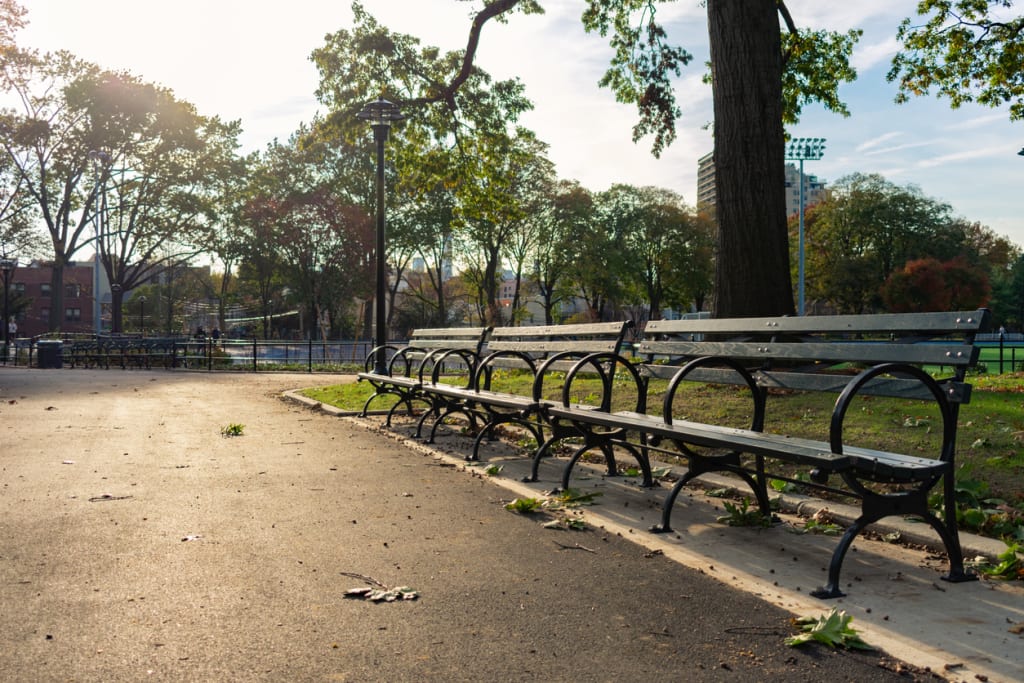
New York, in 1965, was all about the hustle. Tom Barclay and his friend Joe Egan were stuck in hot debate over that very notion when the city abruptly went black. Not your average nightscape dark like a nearby streetlight burning out or clouds momentarily eclipsing the moon; but pitch dark, as if the earth had been swallowed by a black hole. The only light visible from their usual bench in Midtown Park was the burning orange tip of Joe’s umpteenth cigarette that Tom was presently focused on.
“I’m just saying, Joe, it’s not what you know but who you know that matters. No museum will ever hire the likes of me, Mister Helpless-Curator-Wannabe, unless I know someone inside.”
“Go to the address I gave you,” Joe replied. “She’s a real looker too. Maybe she’ll like you enough to take pity and go out with you.” They both chuckled at Tom’s misfortune knowing that Irish Joe was the best wingman a guy could ever ask for but at the end of the night the wingman couldn’t drive in two pilot seats, could he!
Tom, entranced, leaning into the conversation, stared down at the tips of his over-polished shoes. You never knew when you might come across someone important, so he dressed for the job he wanted rather than the one he didn’t have; and that was when he noticed it: the darkness.
“Joe.” Tom looked up and around with alarm. “What the-…”
“-This ain’t right.” Joe whispered; his voice gravelly. “I gotta run. Ma’s alone.”
No time for explanations, the men jumped up and Joe ran with a wave over his back at Tom. That was the moment when Tom knew, when he felt in his gut, that he wasn’t going home to Queen’s. Something propelled him toward the address that Joe had given him, so he ran, on raw instinct. It was time for him to pilot.
One-twenty-five east fiftieth became his mantra as he hurried along the streets with cars honking and sirens blaring as if it were the apocalypse, which was basically how New York behaved with or without a major power outage. A small crowd had gathered in front of the building. Tom sidled up to the front where the doorman was yelling above the din. He quickly surmised: no elevators working and too many lazy rich folks who won’t take the stairs. The young woman beside him jostled her shopping bags.
“Sorry,” she said quietly.
There was something nice about her that Tom noticed right away. She wasn’t frazzled like the rest. “No problem. Do you live here?” He asked.
She craned her neck back like a graceful swan and looked up to the top of the building, pointing with her chin for Tom’s benefit. He laughed softly. “I see,” he shook his head, never able to pass on chivalry, which Joe called a downfall. “You’re too nice. Gals like a bad boy once in a while.”
“I’ll help. Come on, pass me those groceries. “How many flights?” Tom asked.
“Twenty-two,” the woman grinned as her eyes bore deeply into Tom’s. He liked her. She seemed playful and confident yet calm. She passed two bags to Tom and kept one for herself as they jostled their way through residents mingling and grumbling to one another.
“You’re sure you don’t mind?” the woman asked. “It’s a long climb.”
“Climbing’s my middle name,” Tom replied with a smirk, still aligned with his instincts.
“What brings you to my building in a November blackout, Mister Climbing?” she joked as they reached the second-floor stairwell, marching along nonplussed with youth in their favor. “Wait, do you live here too?” She stopped and looked back over her shoulder, trying to recognize him.
“No. Sorry. I’m here to see the friend of a friend. Maybe you know her? Jenni Blum?”
She continued marching and talking easily, “It so happens that I do know her a little,” she said. They’d reached the fifth floor. “Do you have business with her?”
“My buddy Joe wanted me to meet her,” Tom said, “honestly, I don’t know what’s gotten into me because I’m not usually this forward, but Joe insisted, and when Joe insists…” The young woman suddenly laughed, interrupting Tom with a strikingly pleasant sound that echoed like music around the eighth-floor landing. They could hear others stomping and chatting a distance below: as if some grand adventure were happening and those on the sidelines were finally willing to enter the game.
“Why did your friend want you to meet her?” she asked, leading Tom past the eleventh floor.
“I’m looking for a contact at the Met,” he blurted without thinking, “but frankly, I think Joe’s just trying to play Cupid. Maybe setting up blind dates isn’t his style.” Tom laughed nervously.
Fourteenth floor: she swapped hands, took a deep breath, and turned to look at Tom in the dim grey infused with moonlight and car headlights seeping in from the odd well-placed skylight. “We could call this a blind date, couldn’t we?” she smiled, feigning blindness with the wave of her free hand in front of Tom’s face.
“Hah! I guess so.” Tom chuckled. “None of my recent dates have involved this many stairs though,” he added.
“What’s your business with Jenni?” she asked, seventeen floors up, their breaths coming in quicker now, the other stairwell voices falling away.
He paused, took a minute to wager what he might or might not say to a complete stranger in a dark staircase.
“I’ve wanted to curate my whole life, since I was little, so I thought studying history, and then art-history, with some philosophy thrown in there to boot, would be enough. Turns out it isn’t. I’ve had a lot of doors close in my face recently.” The nineteenth-floor landing was somehow brighter: more skylights, fresher air.
They climbed in silence for a minute, both catching their breath.
“What has Jenni got to do with that?” she probed, innocently, pushing open the door to the twenty-second-floor landing and holding it open for Tom. They emerged from the stairwell into a lush, carpeted hallway dimly lit by wall sconces running on reserve generator power.
Tom sucked in his breath, distracted by the view from the expanse of windows, her question unanswered.
“This is me,” she said as she unlocked the only existing apartment door.” And this door’s not closing on you today,” she smiled and bowed her head, mimicking the downstairs doorman. “Please, come inside for a drink. It’s the least I can offer…”
Tom, ever the gentleman, nodded once, speechless as he realized how rich this young woman must be to live in a place this posh.
“But I should warn you,” she said with one hand on the door knob, her slender body blocking his way, “I am in the middle of a few renovations. Some pretty big renovations actually. Sorry. The place is a mess. Keep your shoes on,” she instructed.
As they walked into the apartment Tom couldn’t help but laugh out loud. ‘Mess’ was an understatement. It looked as if a bomb had taken away most of the interior walls. Generator power from the overhead light gave everything a faint yellow glow, illuminating plaster dust that coated every inch of the floor. A makeshift bedroom and small bureau stood off to one side behind a tall screen. Clothes hung on a rack partially draped in white sheets.
“You’re re-building the place I see. My, what a lovely decorator’s touch you have,” Tom joked as he followed her to the galley-style kitchen which was semi-clean compared to the rest of the space. He gently set the bags down on the counter beside a pile of magazine subscriptions and unopened letters. His instincts began firing neurons all at once, sharpening his thoughts, screaming at him like a street siren, “Wait, What? You’re Jenni?” He pivoted around on one dusty shoe.
She was standing behind him with her hands held out, a weathered black notebook in one hand and a clear bag of what looked like pirate’s gold in the other, “I am. Very pleased to meet you. I think this might be what Joe thought you’d be interested in, all blind dates aside?” She passed him the treasure.
Tom, dumbfounded, took the objects into his own hands. ‘What…so… wait a second…”
Jenni chuckled, “My grandmother used to live here. When she passed, she left the apartment to me in her will. Joe’s Gran and my Grand-maman were fast friends. He’s like a brother to me.” She went on, “I don’t know where these things came from originally. It is a mystery. We found them in the wall when the workers demolished. It was quite exciting to find them hidden like that. I suppose that means they have some value, even if it’s sentimental, but no one in my family knows anything other than…well this apartment has been in our hands for generations. So, if Joe told you to come and meet me then it’s probably for this.” She took a deep breath before continuing, “In fact, you’ve been so kind to me tonight I’d like you to have them. They’re meaningless to me since I’m not the curator for the Metropolitan Museum,” she winked. “I’ve got enough to worry about with this place…” her green eyes bore holes into Tom’s. “And it’s not every day a girl meets a gentleman willing to carry her shopping up twenty-odd flights of stairs in the middle of a power out.”
He stood, mouth agape, shaking his head back and forth.
“I won’t let you say no,” she spoke with the same confident calmness that had first attracted him twenty-two floors below.
Tom carefully flipped open the worn exterior of the black notebook, unable to tell if it was cow leather or some other material, deer hide perhaps; thick, aged, worn, and crackling. He wondered how it had survived so long in the walls of a New York penthouse, probably smartly wrapped in newspaper or some protective sheath. The inside cover had French script: This book is the private diary of Captain E. Ripon, Dutch East Trading Company, Seafaring Adventurer and Wanderer: 1622-.
He looked at Jenni, shocked and delighted, and shook the bag of coin like he’d just won a grand prize; the sounds jingling, and anticipation electrifying the air around them.
“I know, right?” she laughed. “So fun. I will bet that when you show up on the doorstep of the Met with that in your pocket, they will not close the door on you this time. Rumor has it that donations are taken pretty seriously there. You can use that as your calling card. I’m sure once they meet you, they’ll consider you for a position.”
Tom, astounded, dressed in a suit, sweat dripping down his back from the climb and the thrill; set the treasure down on the counter as Jenni poured them each something brown and strong, and passed one glass to him.
“Cheers to blind dates, pirate treasure buried in walls, power outs, and the Met,” she clinked her glass to his and they both took deep sips. Tom spent the next two hours telling Jenni everything he could remember about the notorious Swiss mercenary’s activities in Taiwan, commandeering fleets of Dutch trading ships, his contact with the aboriginals, skirmishes they had, and the rumors of piracy that abounded in legend about the soldier of fortune.
On Tom’s walk home, over dark streets and empty bridges, his pockets filled with Spanish coin, he wore the notebook safe inside his breast pocket. The next morning power restored and city functioning as always, frenzied, and loud, Tom sat in the Metropolitan Museum’s Curatorial Office, gripping the items he had come to bestow in exchange for the chance to work there. One chance was all he needed: an open door.
Years later when patrons would ask where he was during the Great Blackout of ‘65, Tom always had an answer.
About the Creator
Geraldine MacDonald
Geraldine's work has appeared internationally in newspapers, magazines, textbooks, medical journals and websites. She's presently a scientific translator and flash fiction judge for a national literary magazine.
Keep reading
More stories from Geraldine MacDonald and writers in Humans and other communities.
Breaking the Cycle: A Reflection on Family, Abuse, and Choosing Peace
There comes a moment in every life when silence becomes too heavy to carry. Not because we owe anyone an explanation, but because speaking the truth—gently, clearly, and without bitterness—can be a way of reclaiming our own story. My story spans generations. It begins with my father, and it continues with my eldest daughter, with whom I eventually made the painful decision to go no contact. These choices were not made in anger. They were made in clarity. They were made in self‑preservation. And they were made with the hope that the cycle of harm might finally end with me.
By Julie O'Hara - Author, Poet and Spiritual Warrior6 days ago in Humans


Comments
There are no comments for this story
Be the first to respond and start the conversation.