
SLEEP DEPRIVATION
How Sleep Deprivatin Affectin Our Brain

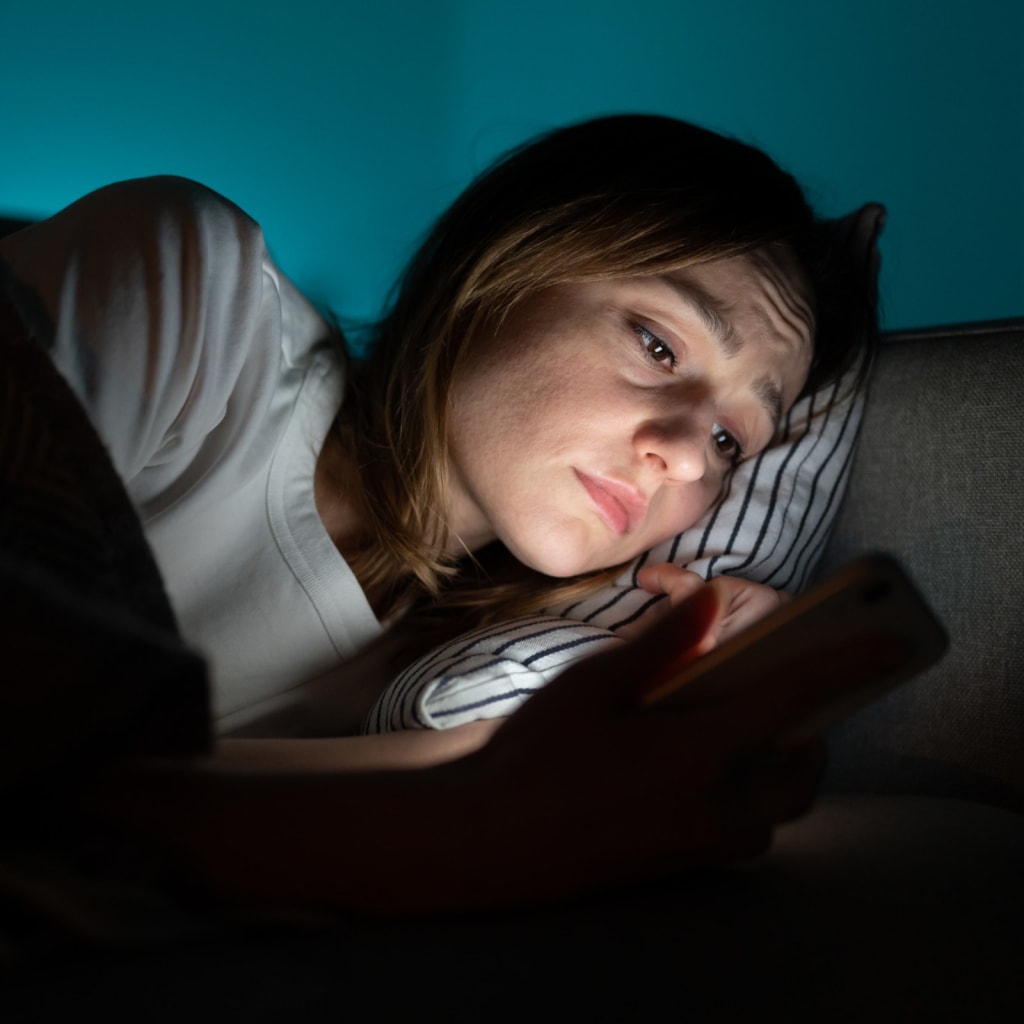
You know that awful feeling you get when you're sleep-deprived: your brain feels fuzzy, your body aches with fatigue, and you could literally fall asleep anywhere. In our modern, fast-paced society, it's become a common struggle to get a full night's rest. While you might think that a simple cup of coffee or an occasional energy drink will cure your tiredness, researchers are now finding that sleep deprivation can have far more serious consequences on your body than you might think.
So, why do we sleep? Virtually every creature on Earth sleeps, and it’s a vital process for our continued survival. While it may appear that sleep is simply a time for our bodies to shut down, the reality couldn’t be more different. There are two main ways in which we benefit from sleep: our physical health and our mental health. While we sleep, our bodies take the time to repair and rejuvenate themselves. Human growth hormone is released, which allows muscles to grow, damaged tissues to be replaced, other hormones to be produced, and cells to prepare themselves for the following day's activities. The brain uses this time to sift through all of the information it has collected throughout the day, process it, and decide what's important and needs to be retained, and what is irrelevant. Furthermore, the brain performs physical repairs on itself as well. The neurons in the brain are refreshed and restored by two different types of glial cells, often thought of as the support structure of the nervous system. Microglia cells are responsible for removing neurons that have become old or worn out by a process known as phagocytosis, which means "devour" in Greek. The other type of glial cells, the astrocytes, alter the synapses that connect neurons to ensure that their structure is as efficient as possible.
So, what if we don’t get enough sleep? A study conducted in Italy looked at mammalian brains during sleep and found stark similarities between sleep-deprived brains and those that were well-rested. They noticed that in sleep-deprived brains, the glial cells were still functioning but in an elevated and seemingly uncontrolled way. Their experiments involved four test groups of mice. The first group acted as the control and was allowed to sleep normally. The second group was woken up from their sleep at regular intervals. The third group represented sleep deprivation and was kept awake for an extra eight hours. The fourth group represented chronic sleep deprivation and was kept awake for five days in a row. The researchers looked at the activity of the astrocyte cells. They saw activity in 5.7% of the synapses of the well-rested brains and 7.3% of the synapses in the spontaneously awake brains. However, it was the sleep-deprived brains that surprised researchers the most. In these brains, the astrocytes had taken on a new role and started to behave like microglial cells, actually devouring the synapses instead of rewiring them. In the sleep-deprived brains, dust was seen in 8.4% of the synapses, and in the chronically sleep-deprived brains, it was seen in 13.5% of them. The researchers also noted that the synapses involved tended to be the largest and the oldest ones. While this process might help clean out harmful debris and remove worn-out connections in the short term, it is problematic in the long term because uncontrolled microglial activity has been linked to Alzheimer's and other degenerative brain conditions. This could explain why a lack of sleep seems to make people more vulnerable to these illnesses.
Beyond this, there are a number of other health issues that can arise if you don’t get enough sleep. You may start to experience memory problems, sore muscles, headaches, and irritability. You have an increased risk of diabetes and depression, your blood pressure can rise, you get sick more often, and you can even experience hallucinations. In conclusion, even though sleep is something that we all do and quite frankly can’t live without, there’s still a lot about it that we don’t fully understand. Whether getting more sleep over time helps to reverse the effects or protects the brain from a few sleepless nights, studies are continually showing that sleep disorders are linked to many other conditions. This reinforces how important it is for us to sleep well. In this day and age, it's perhaps more important than ever to do so, but we really do need to try; otherwise, there could be serious consequences for our health down the road.
About the Creator
Richchik Bardhan
A MBBS student,Love to read and write about science facts and sometimes sci-fic too because Some sci-fic can later be proven into facts someday.....
Keep reading
More stories from Richchik Bardhan and writers in Humans and other communities.
Internet evil or boon?
Just imagine what life would be without the internet. Some of us actually remember the time before everything was connected, but the thought of living without smartphones, maps, and search engines at our fingertips now seems completely alien to us. But how is our increasing reliance on the online world affecting us? Our relationships, sources of information, and the way we interact with each other are rapidly changing, and there are even noticeable effects occurring within our brains. With more and more devices relying on the internet, it's no surprise that worldwide access is continually increasing. In 2016, an estimated 3.5 billion people across the world accessed online services. The top three countries were China, with 721 million users, followed by India, and then the US, with 290 million users. By far, the most common language used online is English, followed by Chinese and Spanish.
By Richchik Bardhanabout a year ago in Humans
Smart phones, Humans and Aliens.
WARNING. I will be tapping into one of your favorite creative tensions: The absurdity of humans worshipping their glowing rectangles as if they were tiny oracles. There’s something deliciously poetic about that contradiction, and it lends itself beautifully to an instructive proviso.
By Novel Allen4 days ago in Poets



Comments (2)
Amazing
Thanks for the analysis