
Skyward Journeys Through Time: My Alternate Occupations in Different Historical Periods
From Early Innovations to Global Connectivity: Unveiling the Story of Commercial Air Travel
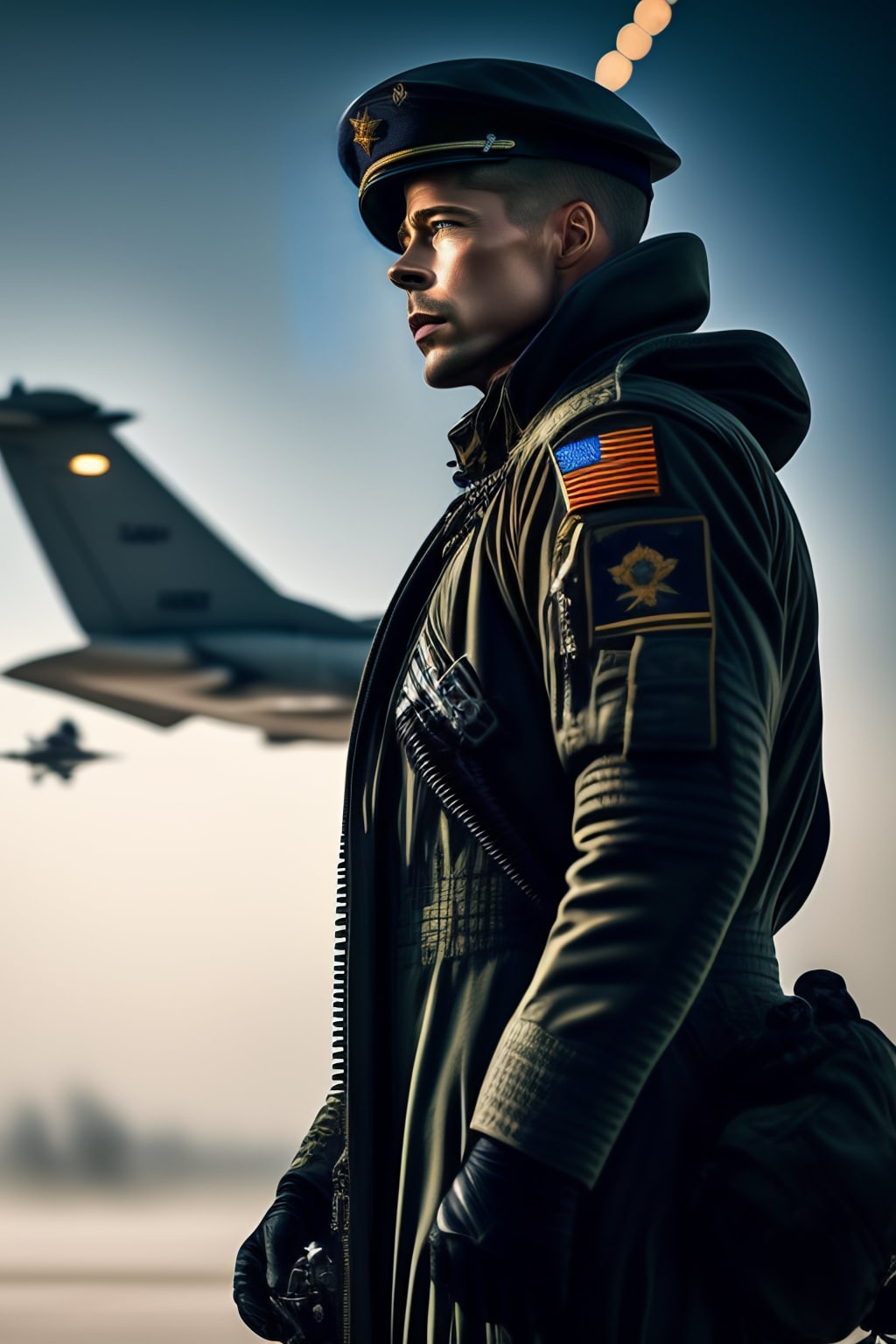
As a commercial pilot in the modern age, I fly the skies, connecting people and places to the wonders of aviation. However, let us embark on a captivating thought experiment and imagine what my occupation would have been if I had been born in a different historical period. From ancient civilizations to fascinating eras of human advancement, let's explore the alternative professions that may have shaped my life and contributed to the progress of humanity.
Ancient Egypt: The Pharaoh's Aerial Advisor
In the magnificent era of Ancient Egypt, amidst the sprawling banks of the Nile River and the towering pyramids, I envision myself as the Pharaoh's Aerial Advisor. Harnessing the ingenuity of hot air balloons and my knowledge of celestial navigation, I would ascend above the ancient kingdom, providing strategic counsel and ushering in a new era of aerial exploration. Join me as we explore the captivating role of the Pharaoh's Aerial Advisor in Ancient Egypt, where the sky becomes a gateway to power, knowledge, and prosperity.
In the grandeur of ancient Egypt, my occupation as the Pharaoh's Aerial Advisor would revolve around the utilization of hot air balloons crafted from the finest materials available to the kingdom. These majestic aerial vessels, adorned with vibrant colors and symbols of power, would carry me high above the Nile River and the vast desert expanses, offering a unique vantage point for surveying the kingdom's territories.
As the Pharaoh's Aerial Advisor, my primary responsibility would be to survey the lands, mapping out the kingdom's borders and resources. From the serene temples of Luxor to the bustling marketplaces of Thebes, I would observe and analyze the kingdom's landscape, identifying suitable locations for agriculture, mining, and trade routes. With this vital information, I would advise the Pharaoh on matters of economic development and resource allocation, helping to foster prosperity and maintain the kingdom's wealth.
Additionally, my aerial expeditions would enable me to gather intelligence on neighboring civilizations, contributing to the Pharaoh's understanding of potential allies and adversaries. From the ancient kingdoms of Nubia to the enigmatic empires of the Levant, I would observe their movements, fortifications, and trade activities. This strategic knowledge would assist the Pharaoh in diplomatic negotiations, military campaigns, and the expansion of Egyptian influence.
Beyond the practical aspects, my occupation as the Pharaoh's Aerial Advisor would also hold a cultural and symbolic significance. As I soared above the lands, I would be seen by the people as a celestial emissary, a link between the earthly realm and the heavens above. My presence would inspire awe and reverence, reinforcing the Pharaoh's divine authority and fostering a sense of unity among the populace.
In conclusion, as the Pharaoh's Aerial Advisor in Ancient Egypt, my occupation would encompass aerial exploration, surveying the kingdom's territories, gathering intelligence, and offering strategic counsel to the Pharaoh. Through the grace and majesty of hot air balloons, I would navigate the skies above the Nile, playing a vital role in shaping the kingdom's prosperity, security, and cultural fabric. The combination of innovation, strategic thinking, and symbolism would make the Pharaoh's Aerial Advisor an esteemed and influential figure in the annals of ancient history.
Renaissance: Leonardo da Vinci's aerial apprentice
In the captivating era of the Renaissance, amidst the flourishing of art, science, and human ingenuity, I envision myself as an aerial apprentice to the legendary polymath, Leonardo da Vinci. As his trusted collaborator, I would delve into the realm of flight, exploring the intricacies of aerodynamics and pushing the boundaries of human understanding. Join me as we embark on a remarkable journey as Leonardo da Vinci's aerial apprentice, where imagination takes flight and the skies become our canvas of innovation.
In the Renaissance, under the tutelage of Leonardo da Vinci, my occupation as an aerial apprentice would be defined by the pursuit of knowledge, artistic expression, and technological advancements. Collaborating closely with da Vinci, I would delve into his ingenious sketches, blueprints, and concepts, studying the principles of flight and the wonders of aerodynamics.
Leonardo da Vinci's fascination with flight and his visionary inventions, such as the ornithopter and the aerial screw, would serve as the foundation of our work. Together, we would analyze the mechanics of bird flight, studying the intricacies of wing structure, air resistance, and the art of achieving lift. Through meticulous observation and experimentation, we would strive to unlock the secrets of flight and bring da Vinci's visionary concepts to life.
As da Vinci's aerial apprentice, I would contribute to the construction and refinement of flying machines, participating in the fabrication of lightweight yet robust materials and innovative mechanisms. From the meticulous assembly of wooden frameworks to the creation of intricate wing designs, each step would be guided by the principles of aerodynamics and the pursuit of optimal performance.
Beyond the technical aspects, my apprenticeship would also involve collaborating with da Vinci on artistic representations of flight. Through sketches, paintings, and detailed illustrations, we would capture the beauty and grace of flying creatures, translating their essence onto canvas. These works of art would not only serve as expressions of creativity but also as a means to convey our understanding of flight to others.
As Leonardo da Vinci's aerial apprentice in the Renaissance, my occupation would encompass the pursuit of knowledge, artistic expression, and technological innovation in the realm of flight. Through collaboration with da Vinci, I would delve into the secrets of aerodynamics, contribute to the construction of flying machines, and create artworks that inspire awe and wonder. Together, we would push the boundaries of human understanding, leaving a lasting legacy in the realms of both science and art.
Industrial Revolution: Steam-powered airship engineers
In the transformative era of the Industrial Revolution, where steam power revolutionized transportation and manufacturing, I envision myself as an engineer specializing in steam-powered airships. Amidst the rising factories and bustling cities, my occupation would be dedicated to the design, construction, and operation of these majestic airborne vessels. Join me as we explore the exciting world of steam-powered airship engineering during the Industrial Revolution, where innovation takes flight and the skies become a realm of industrial progress.
As an engineer of steam-powered airships, my role would involve harnessing the power of steam engines to propel these massive dirigibles through the sky. Inspired by the advancements in steam technology, I would work alongside a team of skilled craftsmen, mechanical engineers, and visionary inventors to bring these magnificent flying machines to life.
The construction of steam-powered airships would require the mastery of both aeronautical engineering and steam propulsion systems. We would design and fabricate lightweight yet durable frameworks, incorporating advanced steam engines and propeller systems. The integration of boilers, turbines, and condensers would transform steam power into upward thrust, allowing our airships to gracefully navigate the heavens.
Safety and efficiency would be paramount considerations in our engineering endeavors. We would develop innovative methods to control the pressure and temperature of the steam, ensuring stable and reliable operation during flight. Our designs would incorporate sophisticated navigation systems, enabling us to chart courses, avoid hazards, and navigate with precision through the skies.
Steam-powered airships would find applications in various industries during the Industrial Revolution. They could serve as cargo carriers, transporting goods between industrial centers and expanding trade networks. Additionally, they would have military applications, offering aerial surveillance, reconnaissance, and even the potential for air-based bombardment.
As engineers of steam-powered airships during the Industrial Revolution, our occupation would be at the forefront of technological innovation and industrial progress. Through the mastery of steam propulsion systems, aeronautical engineering, and navigation, we would shape the future of airborne transportation. Our steam-powered airships would symbolize the remarkable achievements of the Industrial Revolution, transforming the skies into a new realm of exploration and industrialization.
World War II: Fighter Pilot Ace
In the crucible of World War II, amidst the thunderous roar of engines and the soaring adrenaline, I find myself embracing the daring occupation of a fighter pilot ace. In the historic struggle for freedom, my role takes me to the skies, where dogfights and aerial combat define the ultimate test of skill, courage, and determination. Join me as we explore the thrilling life of a fighter pilot ace in World War II, where the fate of nations hangs in the balance and heroism reaches new heights.
Training and Preparation:
Becoming a fighter pilot ace demands rigorous training and unwavering dedication. I would undergo intense flight training, honing my skills in maneuvering agile fighter planes like the Spitfire, Mustang, or Messerschmitt. Physical fitness, marksmanship, and tactical awareness would be ingrained through countless hours of simulation exercises and aerial drills, preparing me for the challenges of air combat.
Aerial Battles and Dogfights:
As a fighter pilot ace, I would engage in thrilling aerial battles against enemy aircraft. With adrenaline coursing through my veins, I would execute daring maneuvers, engage in high-speed chases, and employ expert marksmanship to shoot down enemy planes. The skies would become my battleground, and each dogfight would test my skill, nerves, and strategic thinking as I strive to defend freedom and protect my comrades.
Escorting Bomber Formations:
One vital role of a fighter pilot ace in World War II was to provide crucial air cover and protection to bomber formations. Flying alongside heavy bombers, I would form a protective shield, engaging enemy fighters and intercepting incoming threats. Our coordinated efforts would ensure the success of critical bombing missions and safeguard the lives of the courageous men aboard the bombers.
Surviving the Unpredictable:
The life of a fighter pilot ace is fraught with danger and unpredictability. Evading anti-aircraft fire, navigating through turbulent weather conditions, and overcoming mechanical failures would be constant challenges. Survival depended on quick reflexes, split-second decision-making, and the ability to adapt to ever-changing circumstances. The camaraderie and trust built among fellow pilots would serve as a lifeline in the face of adversity.
Legacy and Heroism:
The fighter pilot aces of World War II left an indelible mark on history, their bravery and heroism inspiring generations to come. Whether it was the Battle of Britain, the Pacific Theater, or the Eastern Front, these courageous aviators played a pivotal role in shaping the outcome of the war. Their extraordinary feats in the skies became a testament to human resilience, sacrifice, and the pursuit of freedom.
In the crucible of World War II, the occupation of a fighter pilot ace represented the pinnacle of skill, courage, and honor. From intense training to engaging in aerial battles, escorting bomber formations, surviving the unpredictable, and leaving a lasting legacy of heroism, the life of a fighter pilot ace was a testament to the triumph of the human spirit. Their bravery and unwavering commitment to defending freedom remind us of the sacrifices made by those who fought valiantly in the skies, shaping the course of history and inspiring us to cherish the peace we enjoy today.
Space Age: Interstellar Navigator
In the vast expanse of the space age, where humanity reaches out to the stars, I find myself embracing the exhilarating role of an interstellar navigator. As a master of celestial navigation and a pioneer of deep space exploration, my occupation takes me on a cosmic journey beyond the boundaries of Earth. Let us delve into the captivating life of an interstellar navigator, where the mysteries of the universe unfold, and humanity's dreams of intergalactic exploration become a reality.
Training for the Unknown:
Becoming an interstellar navigator requires rigorous training and a deep understanding of astrophysics, celestial mechanics, and space navigation systems. In specialized academies, I would learn to interpret the complex data from telescopes, satellites, and interstellar probes. Mastery of advanced spacecraft control systems, astrogation techniques, and communication protocols would be essential for the challenges that lie ahead.
Charting the Cosmic Terrain:
Equipped with state-of-the-art spacecraft designed for long-duration space travel, my role as an interstellar navigator would involve charting the cosmic terrain. I would meticulously plan trajectories, taking into account the gravitational forces of celestial bodies, cosmic radiation patterns, and interstellar phenomena. Navigational calculations would guide our course through asteroid belts, nebulae, and even wormholes, opening up new frontiers of exploration.
Guiding Interstellar Missions:
As an interstellar navigator, I would be an integral part of pioneering missions to distant star systems. Whether it's discovering habitable exoplanets, conducting scientific research, or establishing human colonies, my expertise in navigating the vast distances of space would be vital. I would work closely with scientists, engineers, and astronauts, ensuring the safe passage of our missions and optimizing travel efficiency.
Encountering Alien Worlds:
One of the most captivating aspects of being an interstellar navigator is the possibility of encountering alien worlds and extraterrestrial life forms. As we venture into uncharted territories, we would observe and study planets, moons, and other celestial objects up close, unraveling their secrets and expanding our knowledge of the cosmos. Each discovery would fuel humanity's imagination and deepen our understanding of the universe.
Inspiring Future Generations:
Beyond the scientific and exploratory aspects, my occupation as an interstellar navigator carries the responsibility of inspiring future generations. Through public outreach programs, educational initiatives, and media collaborations, I would share the wonders of space exploration, igniting a passion for science and encouraging young minds to pursue careers in astrophysics, aerospace engineering, and interstellar navigation.
As an interstellar navigator in the space age, I embrace the privilege and excitement of exploring the unknown, charting new frontiers, and unraveling the mysteries of the cosmos. From rigorous training to charting the cosmic terrain, guiding interstellar missions, encountering alien worlds, and inspiring future generations, my occupation offers limitless possibilities and a profound impact on the course of human history. Together, as we navigate the vastness of space, we embark on an extraordinary journey, expanding our horizons and reaching for the stars.
In this imaginative journey through time, we explored the alternative occupations I could have been involved in during various historical periods in my life as a commercial pilot. From mentoring pharaohs to collaborating with da Vinci, from commanding steam-powered airships to engaging in aerial combat, and finally, from piloting spaceships to the stars, each era is a unique and thrilling tale. While the reality of being a modern commercial pilot is undoubtedly extraordinary, considering these alternate paths reminds us of the diverse opportunities and contributions that different historical periods have provided to the human story.
About the Creator
Jilay Parikh
🛩️ Pilot & Blogger ✈️
Soaring the skies & the internet! ✨
Sharing aviation adventures & travel tips.
Join me on this thrilling journey! ✈️🌍
#Aviation #Blogging #Travel
Keep reading
More stories from Jilay Parikh and writers in Humans and other communities.
Andy Murray's Heartwarming Gesture: Paying Tribute to His Wife on the Tennis Court
In the realm of professional tennis, Andy Murray stands out not only for his incredible skills but also for his heartwarming tribute to his beloved wife. Every time he steps onto the court, Murray finds a unique way to honor his partner. This article dives into the intriguing story behind Andy Murray's unusual gesture, showcasing his deep love and admiration for his wife.
By Jilay Parikh3 years ago in Men



Comments
There are no comments for this story
Be the first to respond and start the conversation.