

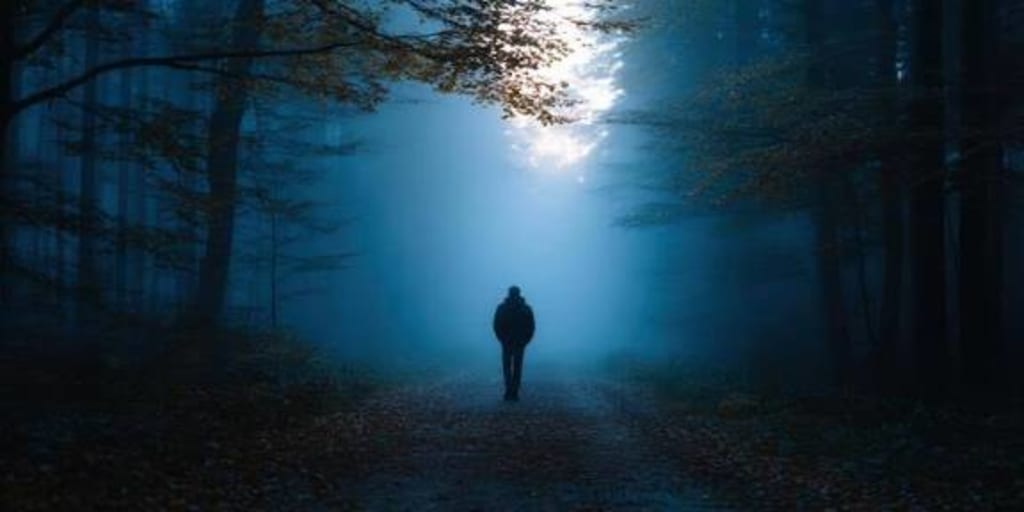
There is a voice most people never talk about, not because it is rare, but because it is so familiar it feels like part of the self. It is not loud in the way the world understands loudness. It does not shout or demand attention. It hums beneath thought, beneath action, beneath moments that should feel complete. It carries weight quietly, shaping how brilliance is held rather than how it is expressed.
Brilliance lives there — sharp, alive, capable — and yet often cloaked in shadow. Not because it is lacking, but because it has learned restraint. Because somewhere along the way, being visible became complicated.
You hear the voice clearly, even when no one else does. Others see the result — the work done well, the answer given correctly, the moment earned. What they do not notice is the tightening in the chest that follows, the subtle pull to minimize what just happened, the instinct to step back rather than forward. The voice arrives precisely when relief should settle.
Often, it comes after success.
Not dramatically. Not cruelly. Just familiar.
It begins with small revisions of reality. You had help. Anyone could have done this. You didn’t really earn it on your own. The words sound reasonable, even responsible. They don’t accuse; they explain. And because they sound like explanations, they are easy to accept.
So even as people look at you, even as praise is offered, a part of you withdraws. You nod instead of smiling. You downplay instead of receiving. You treat the moment as temporary, undeserved, fragile. You tell yourself it’s humility, or caution, or maturity. Quietly, carefully, you make yourself smaller than your own achievement.
No one notices. You do.
This is where the Phoenix enters — not as myth, but as pattern. Being the one who endures. The one who carries. The one who absorbs pressure and keeps moving. Rising again and again is not glamorous when it becomes expected. There is a cost to always being capable, always being resilient, always being the one who can take more.
The voice does not attack this role. It reinforces it.
Rest is risky, it reminds you. Recognition is risky. Being seen creates expectations, and expectations demand repetition. If you let yourself enjoy this, if you settle into the warmth of acknowledgment, you might be asked to burn again — and again — and again.
Sometimes the voice speaks in fragments. Don’t let them see you smile too much. Don’t get used to this. They’ll expect more now. Other times it lingers after the noise fades, whispering that this moment will not last, that slowing down would be irresponsible, that stopping would expose you.
So you fold yourself into the applause, as if that makes it safer. As if reducing yourself could neutralize the demand that follows being seen.
What this feels like, in the body, is not arrogance or insecurity. It is exhaustion disguised as doubt. A warning masquerading as self-criticism. The voice feels internal because it has been rehearsed for so long it no longer sounds external at all.
And yet, beneath it, something else exists.
A quieter signal. Steadier. Less articulate, but more honest. It does not argue with the voice or try to disprove it. It simply persists. It remembers the effort you carried, the insight you earned, the work that was done even when no one was watching. It knows the fire was real, even if you hesitate to name it.
Endurance without reciprocity is erosion. The Phoenix understands this instinctively. Every unacknowledged effort, every absorbed expectation, every moment spent rising for others while neglecting the self leaves a residue. The shadow keeps track of this cost. That is why it appears when recognition arrives — not to punish joy, but to warn against depletion.
Still, something shifts over time.
Not through affirmation or philosophy, but through lived experience. The body begins to recognize that acknowledgment does not automatically demand self-abandonment. That being seen does not always lead to being consumed. That brilliance can exist without requiring constant sacrifice.
The shadow does not disappear. It never does. But it loosens its grip. The pulse beneath it grows more reliable. The fire no longer burns without consent. It is held, guarded, and released more deliberately — not in response to expectation, but in alignment with the self.
Some people will misread this change. They may call it distance or restraint. They may mistake boundaries for coldness. That is a risk the Phoenix eventually accepts.
Because the alternative is erosion.
The quiet place inside still hums. The voice still exists. But it no longer gets the final word. Not because it was defeated, but because it was understood.
And in learning to carry only what is chosen, not what is demanded, survival begins to feel less like endurance — and more like life.
About the Creator
Gladys Kay Sidorenko
A dreamer and a writer who finds meaning in stories grounded in truth and centuries of history.
Writing is my world. Tales born from the soul. I’m simply a storyteller.
Keep reading
More stories from Gladys Kay Sidorenko and writers in Humans and other communities.
Nigerians Mourn Death of Fast-Rising Singer Nanyah After Snakebite Tragedy
Nigeria’s entertainment industry and fans across the country are mourning the sudden death of fast-rising singer Nanyah, who reportedly died after being bitten by a snake in a tragic incident that has shocked the music community. The young artist, whose career had begun to attract national attention for her unique sound and emotionally resonant lyrics, passed away earlier this week after what family sources described as a medical emergency following the bite. News of her death spread rapidly on social media, prompting an outpouring of grief from fellow musicians, fans, and cultural figures. Tributes have poured in from across Nigeria, with many describing her death as a heartbreaking loss for the country’s growing independent music scene. A Promising Career Cut Short Nanyah had recently gained recognition for her blend of Afro-pop and soulful melodies, earning praise for her powerful voice and relatable storytelling. Her songs often touched on themes of hope, resilience, and personal struggle, resonating with young audiences who saw her as a symbol of determination and creativity. Music producers who worked with her said she was on the verge of a major breakthrough. “She had everything — talent, discipline, and a clear vision,” said one Lagos-based producer. “This is someone who was just getting started. Her future was bright.” In recent months, Nanyah had been performing at small but growing venues and had begun collaborating with other emerging artists. Industry insiders say her social media following had been increasing steadily, and she had plans to release a new EP later this year. Circumstances of Her Death According to local reports and family statements, Nanyah was bitten by a snake while visiting a rural area. She was rushed to a nearby medical facility, but complications reportedly developed before anti-venom treatment could be administered in time. Health officials have not released full medical details, but community leaders noted that snakebite incidents remain a serious health risk in many parts of Nigeria, particularly in regions where access to emergency medical care is limited. “This tragedy reminds us how dangerous snakebites can be and how urgently we need better access to treatment in rural communities,” said a public health advocate in Abuja. The World Health Organization classifies snakebite envenoming as a neglected tropical disease, and Nigeria is among the countries most affected, with thousands of cases reported each year. Fans and Fellow Artists React As news of Nanyah’s death spread, the hashtag bearing her name trended on Nigerian social media platforms. Fans shared clips of her performances and lyrics from her most popular songs, expressing disbelief and sorrow. “She inspired me to keep chasing my dream,” wrote one fan on X (formerly Twitter). “This is too painful to accept.” Several well-known Nigerian artists also paid tribute. One singer wrote, “We lost a young star today. May her soul rest in peace. The industry will remember her voice.” Another musician described her as “a humble soul who loved music and loved people.” Radio stations in parts of Lagos and Port Harcourt reportedly played her songs in tribute, while online music communities organized virtual vigils in her memory. A Broader Health Concern Beyond the emotional impact on the entertainment industry, Nanyah’s death has drawn attention to Nigeria’s struggle with snakebite emergencies. Rural health clinics often lack sufficient supplies of anti-venom, and transportation delays can prove fatal. Medical experts say that early treatment is critical. “A snakebite is a race against time,” said a Nigerian emergency physician. “Without rapid access to anti-venom and proper care, survival chances decrease significantly.” Public health organizations have urged the government to increase funding for anti-venom distribution and awareness campaigns, especially during rainy seasons when snake encounters are more common. Family’s Message Nanyah’s family released a short statement thanking Nigerians for their support and prayers. They described her as a loving daughter and a passionate artist who dreamed of using her music to uplift others. “She lived for her music and her fans,” the statement said. “We are grateful for all the love shown during this painful time.” The family asked for privacy as they make funeral arrangements and cope with the loss. The Impact on Nigeria’s Music Scene Nigeria’s music industry has grown rapidly over the past decade, producing global stars and creating opportunities for young talent. Nanyah’s death has highlighted the vulnerability of emerging artists who often lack the resources and security enjoyed by established performers. Cultural commentators say her passing is a reminder of how fragile life can be, even for those on the path to success. “She represented a new generation of voices,” said a music critic. “Her loss is not just personal — it is cultural.” Plans are reportedly underway for a tribute concert organized by fellow musicians to honor her life and work. Conclusion The death of Nanyah has left Nigeria in mourning, cutting short the life of a singer whose talent and ambition promised a bright future. While fans remember her voice and songs, her passing has also drawn renewed attention to the dangers of snakebites and the urgent need for improved medical response in vulnerable communities. As tributes continue to flow, Nanyah’s music remains a testament to her brief but meaningful contribution to Nigeria’s vibrant cultural landscape. For many, she will be remembered not only for how she died, but for the hope and inspiration she shared through her art.
By Fiaz Ahmed a day ago in Humans



Comments
There are no comments for this story
Be the first to respond and start the conversation.