
Sex and Spirituality in African Culture
Unveiling Sacred Connections
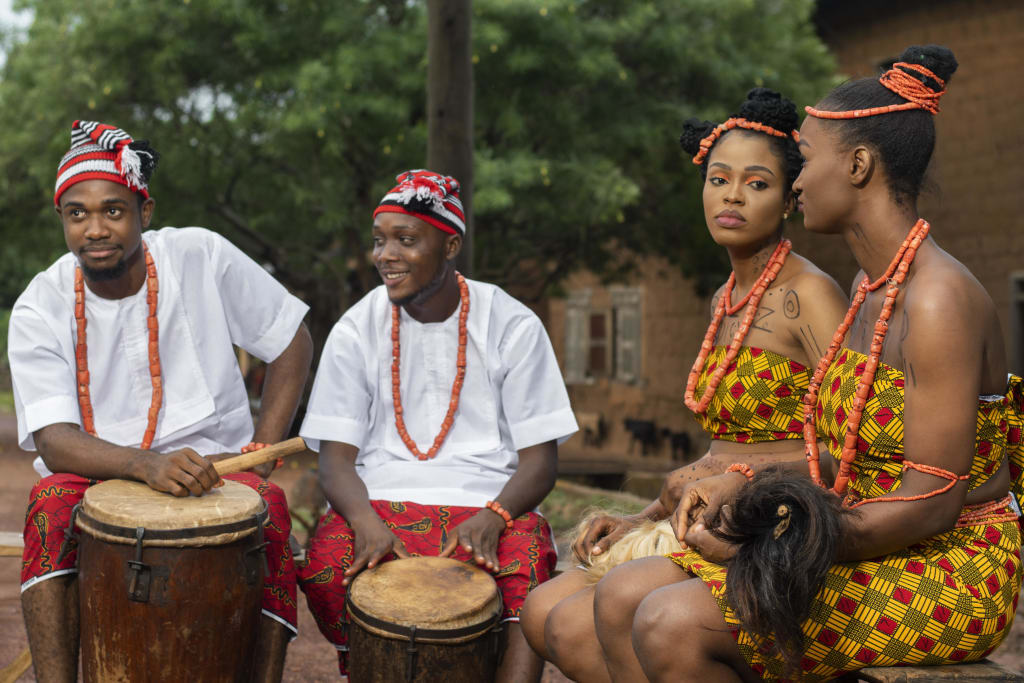
The way traditional African cultures view sex represents an entirely fresh perspective from modern Western understanding. Traditional African beliefs about sex show that pleasure serves as only one part of a sacred ritual. The overwhelming number of African cultures throughout centuries have established sexual experiences as a holy link that connects physical experiences with the spiritual realm (Amadiume, 2017).
In traditional African cultures, sex retained a central position as an absolute essential of human existence instead of being defined as secretive or forbidden. These cultures joined their sexual practices to ancestor honor practices along with human fertility functions and maintaining community balance, according to Mbiti (1990). It is fascinating to me that all these components formed a deep connection.
The journey ahead will show you the sacred aspects of African sexual traditions by explaining their religious ideas and ceremonial practices while showing their transformation under colonial rule. The true nature of sex has revealed itself to be a sacred union between visible and invisible worlds.
The Sacredness of Sexuality in African Traditions
Traditional African communities considered sexuality as both spiritual and communal, so they didn't practice secrecy in sexual matters. The people believed that sexual energy served to preserve universal harmony and reproductive capacity, secure generational succession, and safeguard community health.
According to the Dogon people in Mali, they considered sexual activities and the origin story of creation to be intertwined. Religious beliefs of the Dogon people express that the divine creator Amma crafted life itself when his first human creations performed sacred sexual mating (Griaule & Dieterlen, 1986). The Bantu-speaking communities believed sexually generated power could result in divine gifts or eternal misfortune based on its usage patterns (Janzen 2010).
The traditions of these people incorporated interesting beliefs that stated sexual activities during mourning periods triggered curses, but pre-war rituals that included sexual conduct could invoke ancestral support. Sexuality served as more than pleasure because Bantu-speaking communities used it to keep spiritual balance within their community.
Sex as a Connection to the Ancestral World
Different African cultures used sexual behavior as an extraordinary spiritual link to communicate with ancestors. People believed their ancestors remained present daily, and sexual energy provided the most vigorous method of establishing connections with them (Asante, 2009).
ancestral spirits, as Through sexual dance and drumming rituals, the Shona people in Zimbabwe brought forth described by Bourdillon (1987). People of the Yoruba faith venerated Oshun (goddess of love and fertility) using sensual dance techniques alongside sacred sexual postures (Thompson, 1984).
These expressions served as public rituals that did not carry any traces of shame while connecting people to the cosmic energies of ordering the universe. People from many communities participated in sexual rites that involved symbolic sexual conduct to guarantee favorable harvests and healthy offspring. Spiritual life and sexual relations appeared inseparably linked throughout this period.
Initiation Rites and the Spiritual Education of Sexuality
Learning about sex required proper education, which exceeded the basic autonomous discovery of sexual knowledge. African communities organized detailed initiation rituals to train their young men and women regarding their future sexual duties.
Young Baganda women in Uganda received Ssenga training from their aunts, who instructed them about sexual pleasure together with marriage and spiritual matters (Tamale, 2005). According to these teachings, sex functioned beyond child creation because it was a spiritual act that strengthened connections between couples.
The Zulu society conducted rituals for initiation by including symbolic sexual activities, which instructed young men about proper respect alongside sexual and spiritual responsibilities (Ngubane, 1977). These traditions gave people knowledge about sex through sacred teachings that replaced ignorance and ignorance with respect for sex.
The lesson approaches sex differently from modern-day individual-based sex education because it incorporates community accountability with spiritual knowledge in everything relating to sexuality.
Spiritual Unions and Mystical Sexuality
Most African spiritual traditions acknowledged supernatural sexual bonds, which they referred to as spirit spouses and divine marriages. The belief in actual spirit marriages with entities from invisible dimensions existed throughout western parts of Africa and Congo (Boddy, 1989).
According to Dagara, in the religious practices in Burkina Faso, selected people can be born with spiritual beings who function as their otherworldly partners to determine their connections and plan for life (Somé, 1997). Treating spirit unions through Vodou ceremonies is common in Haiti and Benin, where devotees seek spiritual marriage to obtain blessings and divine protection, according to Brown (2001).
Sexual beliefs demonstrate that spiritual forces were seen as intensely powerful because they formed the pathway by which people shaped their life outcomes. Many African groups implemented sexual purifications and prohibitions because they believed their sexual power drew good and bad spiritual attractions.
Sexual Taboos and Their Spiritual Significance
Sexual energy received sacred spiritual status from various African communities, so they enforced strict sexual taboos to safeguard this holy power. At the time of the battle in Kenya and Tanzania, the Maasai warriors maintained a rule against sexual activity because they felt that sex before combat weakened their spiritual powers (Saitoti, 1986).
Concurrently, several cultures adopted a policy of promoting sexual intercourse before agricultural events since they believed sexual acts could summon spirits responsible for fertility. The transgression of adultery went beyond marital infidelity because it generated disturbances in the spiritual order, which affected the entire community.
Under Igbo customs and traditions in Nigeria, someone who violated sexual taboos had to perform prescribed rituals for purification because improper sexual conduct resulted in communitywide disasters such as droughts or failed agricultural production (Uchendu, 1965). The cultural restrictions went beyond morality since they maintained a complex relationship between human behavior and cosmic balance. Sexual energy received sacred spiritual status from various African communities, so they enforced strict sexual taboos to safeguard this holy power. At the time of the battle in Kenya and Tanzania, the Maasai warriors maintained a rule against sexual activity because they felt that sex before combat weakened their spiritual powers (Saitoti, 1986).
Concurrently, several cultures adopted a policy of promoting sexual intercourse before agricultural events since they believed sexual acts could summon spirits responsible for fertility. The transgression of adultery went beyond marital infidelity because it generated disturbances in the spiritual order, which affected the entire community.
Under Igbo customs and traditions in Nigeria, someone who violated sexual taboos had to perform prescribed rituals for purification because improper sexual conduct resulted in communitywide disasters such as droughts or failed agricultural production (Uchendu, 1965). The cultural restrictions went beyond morality since they maintained a complex relationship between human behavior and cosmic balance.
Colonialism, Christianity, and Changing Sexual Beliefs
European colonialism introduced Christianity and Islam as two new religions which transformed everything. A substantial number of traditional beliefs regarding sexual sacredness in African cultures gave way to Western moral codes that depicted out-of-marriage sexual behavior as sinful (Oyěwùmí, 1997).
Missionaries strongly condemned polygamy and initiation rites and fertility rituals throughout their missions, resulting in their decline throughout various regions (Comaroff & Comaroff, 1991). The introduction of Western morality brought sexual shame toward women because it diminished their traditional role as sexual knowledge holders.
While outside pressures exist, numerous African communities maintain their traditional sexual behaviors integrated with modern religious beliefs. These conventional beliefs maintained their place against harsh encroaching challenges because they remain deeply fundamental to African spiritual practices.
Modern-Day Revivals of African Sexual Spirituality
The present time witnesses an outstanding movement that seeks to retrieve traditional African views about sexuality. Cultural activists and researchers promote the "decolonization of sexuality" because they maintain traditional perspectives possess elevated understanding rather than being primitive (Tamale, 2011).
The Ouidah Voodoo Festival in Benin joins other events that honor traditional religious worship, including rituals concerning sexuality and fertility (Rush, 2013). Healing communities in South Africa use traditional sexual teachings during spiritual counseling to help people rediscover ancient ancestral knowledge (van Dijk et al., 2014).
Social media functions as an exceptional platform for young people to study pre-colonial African sexual beliefs, thus building fresh recognition for the sacred essence of sex. The efforts demonstrate a cultural revival that permits Africans to fuse contemporary practices with traditional ancestral knowledge.
Conclusion
Within African cultures, sex and spirituality have always operated as interlocked elements that demonstrate a global perspective toward sexuality that transcends physical boundaries. This power holds sacred meaning to join mortal beings with divinity as it molds human societies while balancing all cosmic aspects.
The essential religious meaning of sexual energy remains central throughout various ancestral rituals and spiritual marriage customs in African traditions. The traditional belief system suffered drastic alterations from colonial powers, yet people are actively restoring native beliefs, according to Nkabinde (2008).
The modern African community preserves cultural and spiritual insights that reveal that sex exists as a sacred divine force that modern Africans use to recover their traditional understanding that sex is powerful, holy, and life-giving. Many people find the enlightened outlook on sexual energy to be exceptionally attractive. We could all benefit by learning its teachings.
About the Creator
Reader insights
Outstanding
Excellent work. Looking forward to reading more!
Top insights
Compelling and original writing
Creative use of language & vocab
Easy to read and follow
Well-structured & engaging content
Excellent storytelling
Original narrative & well developed characters
Expert insights and opinions
Arguments were carefully researched and presented
Eye opening
Niche topic & fresh perspectives
Heartfelt and relatable
The story invoked strong personal emotions
Masterful proofreading
Zero grammar & spelling mistakes
On-point and relevant
Writing reflected the title & theme
Keep reading
More stories from oyabi Nyagaka and writers in Humans and other communities.
Broke men and Dating
We need an open talk about the relationship between money and dating. Everyone tends to ignore this issue but it deeply influences relationships specifically for young men who seek romantic partners. Society undergoes constant change in relationship patterns, but cultural norms strongly expect men to show financial stability in all types of partnerships. We should acknowledge this reality to understand better why wealth stability builds strong meaningful relationships.
By oyabi Nyagaka10 months ago in Humans
What Makes the Maldives the Most Romantic Destination in the World
The romance of the Maldives begins with its geography. Scattered across the Indian Ocean, the islands are naturally isolated, surrounded by open water rather than neighbouring towns or tourist districts. This physical separation creates emotional space. Couples are not navigating crowds, traffic, or schedules; they are sharing an island that feels intentionally removed from the rest of the world. In the Maldives, privacy is not an upgrade or a premium add-on; it is the default. That sense of being alone together is the foundation on which all the romance is built.
By Claudia Fennela day ago in Humans



Comments (3)
Excellent work.
Nice work. Keep it up
I love both the dinner subject of sex and spirituality! Great work!