
Scientific Proof Of Islam
The Quran and its interpretation
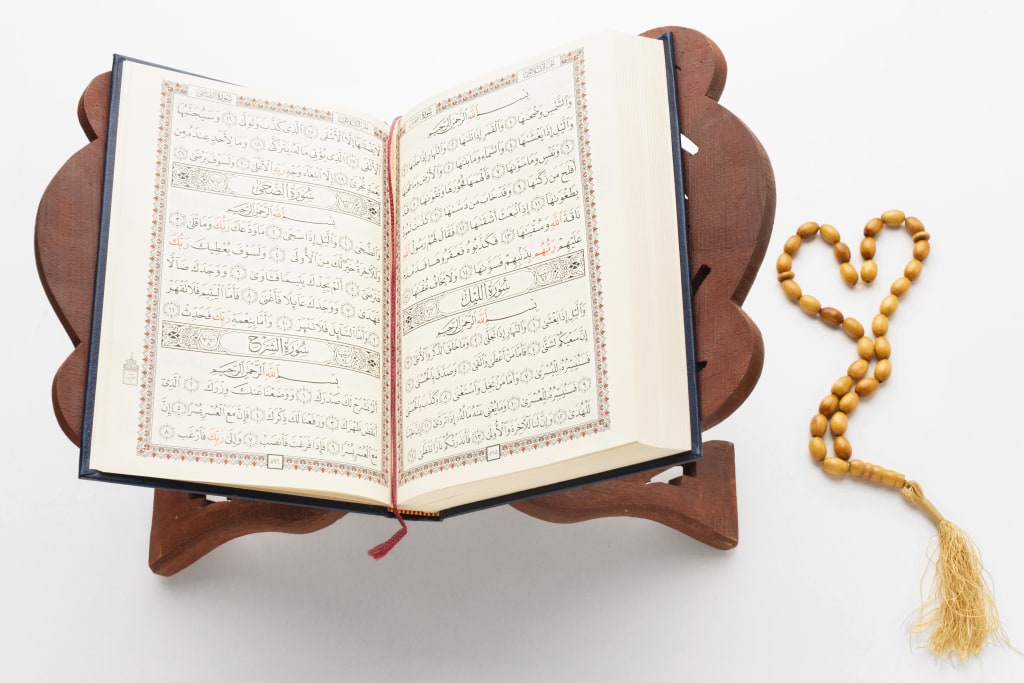
The Quran is the holy book of Islam, and it is believed by Muslims to be the word of God as revealed to the Prophet Muhammad. One of the most fascinating aspects of the Quran is its scientific content, which has been the subject of much debate and discussion among scholars and scientists. In this blog, we will examine some of the scientific miracles in the Quran and explore how they provide scientific proof of Islam.
The Quran and Astronomy
The Quran contains many references to the heavens and the celestial bodies. One of the most significant of these is the reference to the Big Bang theory, which is a cornerstone of modern astronomy. Another way to phrase the verse from the Quran would be: "Do the unbelievers not realize that the heavens and the earth were once joined together as one entity, and then We separated them?" (21:30). This verse describes the universe as a closed-up mass that was then opened out, which is precisely what happened during the Big Bang.
The Quran also contains references to the orbits of the planets and stars. In Surah Yasin, for example, the Quran describes the sun as "a shining glory" and says that it "runs its course to a settled place" (36:38). This verse refers to the fact that the sun follows a specific orbit around the centre of the Milky Way galaxy, which is known as the "settled place" of the sun.
The Quran and Biology
The Quran contains several references to biological processes and the natural world. One of the most striking of these is the reference to the creation of human beings. The Quran describes the creation of humans in detail, saying: "We created man from an extract of clay. Then We made the human being as a tiny drop of fluid, placed in a secure and protected place. Then We made the drop into a clot, then We made the clot into a lump, then We made the lump into bones, then We clothed the bones with flesh, and then We brought him forth as another creation" (23:12-14).
The accuracy of the Quran's descriptions of scientific phenomena, such as human embryonic development and the process of pollination, is impressive considering these revelations were made over 1,400 years ago. The holy book also contains references to the natural world, acknowledging the diversity of human languages and colours as signs of Allah's power and knowledge. For example, Surah Ar-Rum describes pollination as one of Allah's signs, stating that He created mates from within ourselves to find tranquillity in and place between us affection and mercy. This recognition of the natural world's wonders and complexities, including those beyond human understanding, serves as further evidence of the Quran's divine origin and the scientific proof of Islam.
The Quran and Geology
The Quran also contains references to geological processes and the formation of the earth. In Surah Al-Anbiya, the Quran describes the creation of the earth as follows: "And We made the earth a stable ground for them, and the mountains as stakes" (21:31). This verse refers to the fact that the mountains play an essential role in stabilizing the earth's crust, which is a fundamental principle of geology.
The Quran also contains references to the water cycle, which is another important geological process. In Surah Al-Hijr, the Quran describes the water cycle as follows: "And We have sent down rain from the sky in a measured amount and settled it in the earth. This verse from Surah Al-Hijr states that Allah has the power to take away anything that He has created. (15:22). This verse accurately describes the water cycle, which is the process by which water evaporates from the earth's surface, forms clouds, and then falls back to the earth as rain.
In conclusion, It's important to note that the scientific miracles in the Quran are a topic of interpretation and debate among scholars and believers. The Quran and its interpretation play a crucial role in understanding the scientific references mentioned in the text.
Muslim scholars have developed various methodologies to interpret the Quran, including linguistic, historical, and contextual analysis. Some argue that the scientific references in the Quran should be taken literally, while others believe they are metaphorical or symbolic.
About the Creator
Keep reading
More stories from writers in Humans and other communities.
The CEO of Everything
They say "jack of all trades, master of none," but they forgot to mention the part where the jack of all trades is also the camera woman, the makeup artist, and the person currently yelling at a tangled Wii microphone cable in a her own bathroom while recording herself singing and trying to make it look realistic and professional. (As professional as you can make it with nothing but a cell phone camera and a mic that doesn't work)
By Sara Wilson6 days ago in Humans
The Path to Salvation
The late autumn evening air filled the monk's lungs, but it wasn't the season that chilled his bones. The heavy-handed presence of evil he had sensed upon entering the woods surrounding this mountain village had not bothered to conceal itself from him.
By Made in DNA2 days ago in Fiction


Comments
There are no comments for this story
Be the first to respond and start the conversation.