
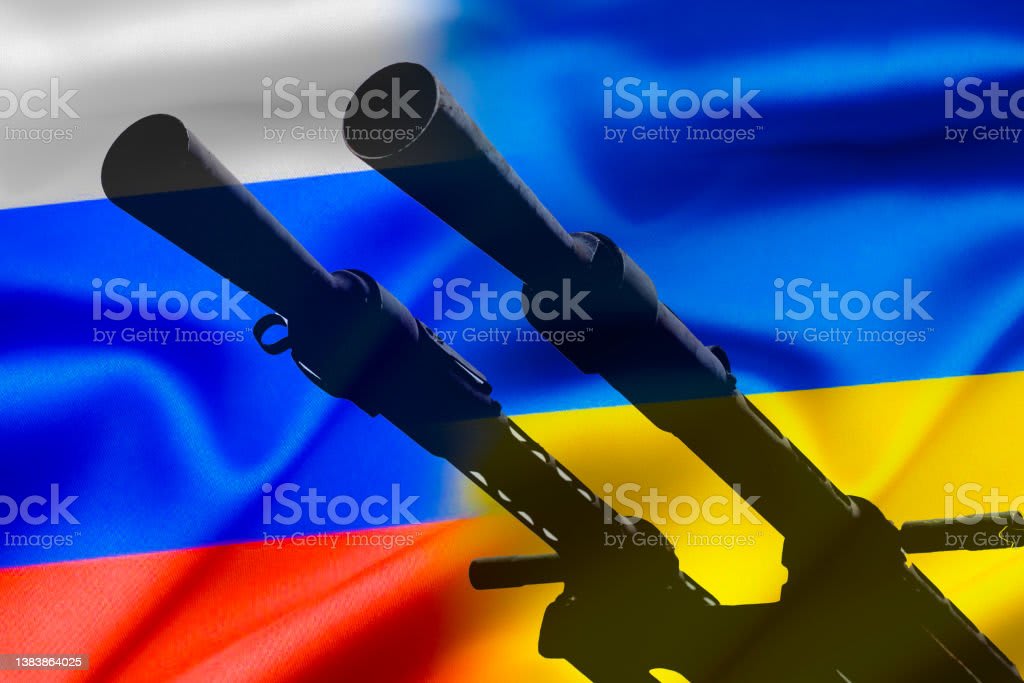
The ongoing conflict between Russia and Ukraine has resulted in the deaths of thousands of people. Both countries have sustained significant losses in the conflict, which has been marked by the use of deadly weapons. In this article, we will provide a list of the ten most deadly weapons used in the conflict in 22-23.
1.Caliber Cruise Missiles:The Russian Caliber cruise missile is a highly advanced weapon system capable of delivering precise strikes against a wide range of targets with remarkable accuracy and lethality. Developed by Russia's leading defense companies, the Caliber missile employs advanced guidance and navigation systems, along with a highly sophisticated propulsion system, to deliver its warhead to its intended target. The missile is capable of traveling at supersonic speeds and can be launched from a variety of platforms, including submarines, ships, and aircraft.The Caliber missile has been deployed in several military conflicts, including in Syria, where it demonstrated its effectiveness in hitting targets from long ranges with great precision. Its versatility and lethality make the Caliber missile a significant asset in Russia's arsenal of advanced weaponry.
2.Cluster Bombs:Cluster bombs are a controversial weapon that has been used in several conflicts around the world, including by the Russian military. These bombs are designed to release numerous smaller bomblets over a wide area, potentially causing significant damage to both military targets and civilians.Russian cluster bombs, also known as RBKs, have been used in conflicts such as the Syrian Civil War, where their use has been condemned by international human rights organizations. These bombs have been known to cause significant harm to civilians, as unexploded bomblets can remain in the area for an extended period,posing a threat to local communities long after the initial attack.The use of cluster bombs has been banned by the Convention on Cluster Munitions, which Russia has not signed. While the Russian military maintains that its use of these weapons is legal, their use remains a contentious issue within the international community.
3.Phosphorus Bombs: Russian phosphorus bombs, also known as incendiary bombs, are a type of weapon that contain a mixture of chemicals and elements, including white phosphorus. When these bombs explode, they release a shower of burning particles that can ignite flammable materials and cause extensive damage to buildings and infrastructure. The use of phosphorus bombs has been criticized for their potential to cause harm to civilians and the environment. The particles can cause severe burns and can even ignite clothing or bedding, leading to further injuries or fatalities. The use of these weapons is also considered a violation of international humanitarian law, as they can cause indiscriminate harm to civilian populations.
4.Russian Kinzhal missiles: also known as the Iskander-M, are a type of air-launched ballistic missile. Developed in response to the United States' missile defense systems, the Kinzhal missiles are designed to evade radar and air defense systems, allowing them to strike their targets with pinpoint accuracy. The missile has a range of over 1,000 km and can reach speeds of up to Mach 10, making it nearly impossible to intercept.The Kinzhal missile is carried by the Tu-22M3 strategic bomber, giving it the ability to be launched from long distances away from the target. The missile is equipped with a variety of warheads, including conventional and nuclear options. With its advanced capabilities and versatility, the Kinzhal missile is a significant part of Russia's military arsenal, providing a powerful tool for the country's defense and deterrence strategies.
5.Vacuum Bombs:Russian Vacuum Bombs, also known as thermobaric bombs, are one of the most powerful non-nuclear weapons in existence. These weapons work by creating a high-pressure explosion that sucks all the oxygen out of the surrounding area, creating a vacuum that is then filled with explosive gases. The resulting blast is devastating, capable of destroying fortified structures and even underground bunkers.Russia's development of these weapons has been a cause for concern among many nations, as they have the potential to cause massive casualties and destruction. While their use is limited due to their indiscriminate nature, the threat of their deployment has been a powerful deterrent in conflicts around the world.As with any weapon of this type, the use of vacuum bombs raises serious ethical and humanitarian concerns, and their continued development and deployment must be carefully scrutinized.
6.Iskander Ballistic Missiles: These short-range ballistic missiles are leading the Russian attacks in Ukraine. The missile can travel at supersonic speeds of up to Mach 5 and has a range of up to 500 kilometers. Its advanced guidance system allows for quick targeting and evasion of enemy defenses.The Iskander is known for its exceptionalaccuracy and maneuverability, making it a formidable weapon in modern warfare. Its ability to carry a range of warheads, including nuclear, chemical, and conventional, adds to its versatility.Russia has been increasing its deployment of the Iskander missile system in recent years, drawing concerns from neighboring countries and Western powers. Despite international pressure, Russia has continued to develop and test the missile system, asserting its strategic importance in the country's defense.The Iskander ballistic missile system represents a significant advancement in missile technology and remains a critical component of Russia's military arsenal.This specific missiles have destroyed homes, hospitals, and schools in many Ukrainian cities.
7.Multiple Rocket Launchers: These weapons are designed to destroy military installations and troop concentrations. Their deployment against populated areas invariably results in significant civilian infrastructure damage and high casualty rates. Russia has employed multiple rocket launchers against Ukraine, including the BM-30 Smerch, which can fire up to 12 rockets simultaneously with a range of up to 90 kilometers.The Tornado, they are mounted on tracked vehicles and are capable of firing various types of rockets, including guided and unguided missiles, at ranges of up to 120 km. The MRLs use advanced automated systems for quick target acquisition and engagement, and they can be easily reloaded in the field, and BM-27 Uragan is a multiple rocket launcher system, similar to the BM-21 Grad. It was introduced in the 1970s and is still in service with some militaries today. Its NATO reporting name is "Hurricane.".
8.T-14 Armata Tank: The T-14 Armata Tank is a state-of-the-art Russian battle tank designed for modern warfare. Developed by Uralvagonzavod, the T-14 Armata features advanced technologies such as an unmanned turret, a powerful 125mm smoothbore cannon, and advanced sensors for increased situational awareness.The tank's unmanned turret allows the crew to operate the tank from a safer position inside the hull, reducing the risk of injury or death from enemy fire. The 125mm smoothbore cannon is capable of firing a variety of ammunition types, including armor-piercing and high-explosive rounds.In addition to its offensive capabilities, the T-14 Armata features advanced defensive systems such as active protection systems and composite armor for increased protection against enemy fire. The tank's sensors include thermal imaging cameras, laser rangefinders, and a digital fire control system that allows for highly accurate targeting.The T-14 Armata represents a significant advancement in Russian tank technology and is expected to be a key asset in Russian _ Ukraine conflict. With its advanced capabilities and advanced defensive systems, the T-14 Armata is a formidable weapon system that can dominate the battlefield.
9.S-400 Missile System: The S-400 missile system is a state-of-the-art air defense system developed by Russia. It is designed to provide protection against a wide range of aerial threats, including aircraft, cruise missiles, and ballistic missiles. The system is highly mobile and can be deployed in a matter of hours, making it ideal for rapid response scenarios.The S-400 features advanced radar technology that allows it to detect and track targets at long ranges, and multiple missile types that can be used to engage different types of threats. Its capabilities have made it a popular choice for countries seeking to modernize their air defense systems.However, the system has also been the subject of controversy, particularly in geopolitical contexts. Concerns have been raised about its potential use in offensive operations, as well as its impact on regional security dynamics. Despite these concerns, the S-400 continues to be a widely sought-after air defense system around the world.
10.Drones: Both Russia and Ukraine have employed drones in the conflict. Drones are used for reconnaissance, target acquisition, and offensive operations. They have been used to target military and civilian infrastructure, resulting in significant damage and loss of life.
In conclusion, the conflict between Russia and Ukraine has been marked by the use of deadly weapons, resulting in the deaths of thousands of people and significant damage to infrastructure. The international community must work together to find a peaceful resolution to the conflict and prevent further loss of life
About the Creator
Keep reading
More stories from writers in Humans and other communities.
The CEO of Everything
They say "jack of all trades, master of none," but they forgot to mention the part where the jack of all trades is also the camera woman, the makeup artist, and the person currently yelling at a tangled Wii microphone cable in a her own bathroom while recording herself singing and trying to make it look realistic and professional. (As professional as you can make it with nothing but a cell phone camera and a mic that doesn't work)
By Sara Wilson4 days ago in Humans



Comments
There are no comments for this story
Be the first to respond and start the conversation.