
Rico's Bounce
The Quiet Violence of a Mental Health System That Sees the Pattern—But Can't Break It

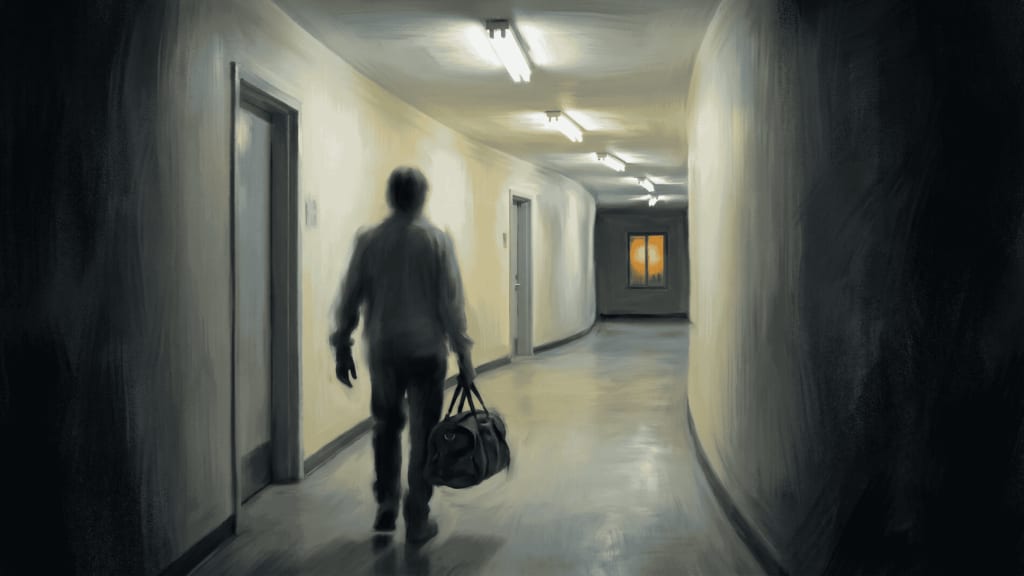
Rico knows the discharge coordinator's voice before she rounds the corner. Third floor, east wing, room 314. Seven days in. The manila folder under her arm holds his aftercare plan—a photocopy of a photocopy, edges soft from being filed and refiled. She'll sit in the blue chair by the window, the one with the torn vinyl armrest, and she'll ask how he's feeling.
Better, he'll say. Because that's what you say on day seven.
He is better. The medication has dulled the worst of it—the intrusive thoughts that loop like broken cassette tape, the night terrors that leave him gasping into a pillow that smells like industrial bleach and someone else's sweat. The walls of the psychiatric unit are painted pale yellow, a color chosen by committee to suggest calm. It doesn't. But it's predictable, and after a childhood where every day brought a new threat disguised as care, predictable is its own kind of mercy.
The discharge coordinator's name is Janet. She's been doing this for nineteen years. She sits, flips open the folder, and reviews the same script she's read to him four times before. Outpatient therapy twice a week. Medication management appointment in ten days. A list of crisis numbers he already has memorized. She doesn't look at him when she talks. Not because she doesn't care—Janet cares deeply, enough that it costs her sleep—but because looking means seeing, and seeing means acknowledging the thing they both know: he'll be back.
Rico is thirty-one. He has dark eyes that hold more exhaustion than anger, though both live there. His hands shake slightly, a side effect of the antipsychotic that finally brought him down from a mixed episode that felt like being trapped inside a car with the gas and brake pressed to the floor simultaneously. He was diagnosed with bipolar II at twenty-three. Major depressive disorder at twenty-five. Borderline personality disorder at twenty-seven. Substance use disorder has been a constant since he was nineteen, though if you asked the intake clinician to name a precipitating event—one clean trauma that set this all in motion—she couldn't. There isn't one.
There are thousands.

His developmental years were a clinic in ambient violence. A mother whose own untreated schizophrenia made her belief that Rico was possessed not metaphor but medical conviction. A father who left when Rico was four, then returned when he was seven with a new girlfriend and a rage that needed somewhere to land. The belt. The locked closet. The meals withheld not as punishment but as preemptive correction for sins he hadn't yet committed. Emotional neglect so thorough that by the time Rico was ten, he'd learned to parent himself—cooking eggs on a hot plate, stealing quarters from his mother's purse to do laundry at the laundromat three blocks away, talking himself to sleep by narrating his own life like a nature documentary. Here we see the boy, surviving.
The DSM-5 requires a precipitating event for PTSD. A before and after. Rico's trauma has no befores. It was the weather.
The psychiatric system isn't designed for people like Rico. It's designed for people with resilience—an existing scaffolding of internal resources and secure attachments that a brief crisis temporarily destabilizes. Those people arrive at the hospital, get medication adjusted, learn a few coping skills in group therapy, and leave with enough structural integrity to hold until the next outpatient appointment. They're called Track A.
Rico is Track B. Track B means every day of childhood was survival without a blueprint. It means the therapeutic relationship isn't just helpful—it's the whole treatment, a corrective experience that takes months or years to build. It means you don't need symptom management; you need a foundation installed where there was only sand.
But Track B clients rarely get Track B care. The average psychiatric inpatient stay is seven to fourteen days—insurance won't pay for more. Long enough to stabilize acute symptoms. Not long enough to build trust. Not long enough for Rico to believe that the clinician sitting across from him will still be there when he calls at 2 a.m. three weeks from now, drowning.
So the discharge plan gets written. Janet hands him the folder. She wishes him well, and she means it. He nods, packs his things in a black duffel bag that has followed him through four admissions, and walks out into a world that feels louder and colder than the pale yellow room ever did.
Three weeks later, he's using again.
It starts small. A drink at a bar where nobody knows his name. Then two drinks. Then something harder, something that doesn't just quiet the thoughts but erases them entirely, a white static that feels like relief until it doesn't. The substance abuse treatment center is thirty miles away, a converted motel off the highway where the rooms still smell faintly of old carpet and cigarettes. He stays ninety days. He does the work. He learns about triggers and relapse prevention and the neurobiological effects of childhood trauma on the developing brain. The counselor—a kind man named Marcus who has fifteen years sober and a tattoo of a phoenix on his forearm—tells Rico he's making progress.
He is. And then he isn't.
The decompensation happens gradually, then all at once. First the missed doses of medication because the pharmacy's prior authorization got delayed and he can't afford the out-of-pocket cost. Then the skipped therapy appointments because he got fired from the dishwashing job for being late too many times, and without the job there's no bus fare. Then the intrusive thoughts return, hungrier now, whispering that he's a burden, that everyone would be better off, that there's a way to make it stop.
He calls the crisis line. They tell him to go to the emergency room. The ER sends him to the psychiatric unit. Third floor, east wing, room 314. Janet isn't working the day shift, but her replacement—a younger woman named Keisha who hasn't yet developed the careful neutrality that comes with years in the job—reviews his file and says, "You've been here before."
He nods.
"Four times. In eighteen months."
He nods again, slower this time, and the exhaustion in that movement says more than any answer could.
She doesn't say it unkindly, but the question hangs in the air anyway: Why isn't this working?
The attending psychiatrist is different this time, but the assessment follows the same rhythm. Adjust the medication, probably. Another seven days, maybe ten if they can get approval. Then the discharge plan, like always. Keisha hands him the folder. She doesn't know yet that she'll see him again. That she'll learn to recognize his gait in the hallway, the particular way he folds his arms when he's trying to hold himself together.
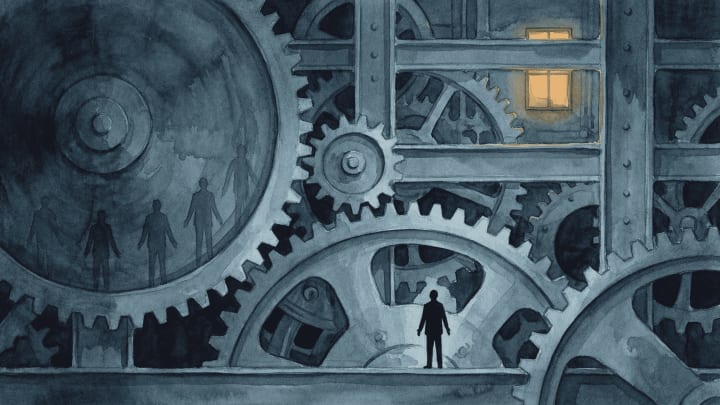
The system operates like clockwork. And everyone can see it.
The nurses know. They've charted Rico's admissions, watched the pattern emerge like film developing in a darkroom.
Admission, stabilization, discharge. Decompensation, readmission.
They've mentioned it in staff meetings, suggested that maybe he needs longer-term residential treatment, the kind that lasts ninety days or six months, the kind that actually has a trauma track designed for people whose childhoods were long campaigns of survival rather than isolated incidents.
Those programs exist, but they're scarce. And none of them take Medicaid.
The insurance company knows. There's an algorithm that flags high-utilizers, people whose claims history follows predictable loops. The algorithm doesn't care why. It just counts: four admissions, ninety days total, at an average cost of $1,850 per day. Someone in a cubicle three states away reviews the file and determines that the current level of care is appropriate. Stabilization happens in seven-day cycles because that's what gets billed. Healing—the kind that lasts—takes longer than insurance will cover.
Rico knows. He doesn't have the clinical language—terms like "complex trauma" or "Phase 1.5" or "attachment-focused EMDR"—but he knows the feeling. It's the sensation of being a problem too expensive to solve, a body that keeps breaking in the same place because the fix is always temporary. He knows the staff recognize him now. The way their faces shift when he's brought in—not judgment, exactly, but a kind of resigned familiarity, like watching a movie you've seen too many times. He knows he's supposed to feel grateful for the seven days of safety, the clean sheets and the regular meals and the brief suspension of the world's expectations. And he is grateful.
But he also knows it isn't enough.
The violence of the system isn't loud. It doesn't announce itself in locked doors or four-point restraints, though those exist too. The violence is structural, embedded in the design itself. It's in the intake forms that ask for the event—a singular moment that cleaved life into before and after—when Rico's life has never had that kind of narrative tidiness. It's in the discharge meeting scheduled for day six, just as the medication starts to work, just as the fog begins to lift enough that he can finally imagine talking about what lives underneath. It's in the insurance authorization that approves seven days when the research says ninety. It's in the aftercare plan that lists resources he can't access—sliding-scale therapy with a six-month waitlist, a psychiatrist who doesn't take new patients, a sober living house that costs more per week than he makes in a month.
It's in the way everyone involved—Janet, Keisha, Marcus, the attending psychiatrist, the case manager who calls to confirm his outpatient appointment—knows the system is failing him and can't do anything about it. They work within the infrastructure they're given. The infrastructure is designed to cycle, not cure.
Six months after his fifth admission, Rico is sitting in the day room of a different psychiatric unit in a neighboring county. He switched because he thought maybe a new hospital would mean a new pattern. It didn't. The walls here are pale blue, not pale yellow like before. The discharge coordinator is named Michelle. She's been doing this for twelve years. She sits in the chair with the torn vinyl armrest—every hospital has one—and opens the manila folder.
"How are you feeling?" she asks.
Better, he says.
And he is. For now. The medication is adjusted. The crisis has passed. In three days, he'll be discharged with the same aftercare plan, the same list of resources, the same gap between what he needs and what the system can provide. In six weeks, maybe eight, he'll decompensate. He'll use. He'll call the crisis line. He'll come back.
Michelle knows. She doesn't say it, but he sees it in the way she holds the pen, the small sigh she releases before writing the date. She's a good person doing a job designed to fail people like Rico—people whose trauma is too old, too layered, too expensive to treat in seven-day increments.
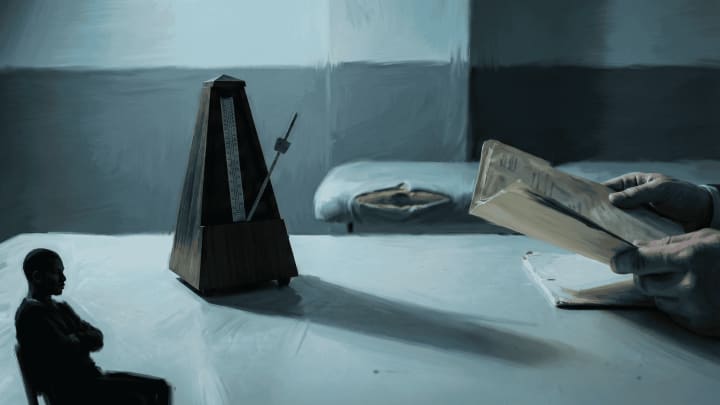
This is the quiet violence: predictability without change. Everyone can see the bounce. The data is there, the pattern undeniable. Clients with complex trauma cycle through psychiatric hospitals and substance abuse programs with the regularity of a metronome.
Admission, stabilization, discharge. Decompensation, readmission.
The system doesn't deny the pattern. It counts it. It budgets for it. It builds infrastructure around the assumption that some people will always come back.
What it doesn't do is stop.
Because stopping would require Phase 1.5—the extended stabilization, the months of therapeutic relationship-building, the trauma-specific programming that teaches affect regulation and distress tolerance and what it feels like to trust another human being. It would require facilities that don't discharge on day seven because the insurance authorization ran out. It would require a diagnostic framework that recognizes developmental trauma as its own category, not a constellation of comorbidities that get treated separately and inadequately. It would require wages high enough that therapists can afford to stay, caseloads small enough that they can actually form relationships, insurance policies that measure outcomes over years instead of days.
It would require believing that people like Rico deserve more than seven-day Band-Aids on wounds that never had a chance to close.
The system doesn't believe that. Or maybe it does, theoretically, the way we all believe things that feel too expensive to act on. So it operates as designed: efficiently, predictably, ineffectively. It stabilizes Rico every time he arrives, because that's what it's built to do. It discharges him on day seven, because that's what the authorization allows. It documents the pattern, because that's what the quality metrics require.
And it waits.
Three weeks. Six weeks. Eight. However long it takes for the weight of trying to survive without a foundation to become unbearable again. For the medications to run out or the therapy appointments to get missed or the intrusive thoughts to grow teeth. For Rico to reach the edge of what he can hold alone and call the crisis line one more time.
The system waits because it knows he'll come back. Because the infrastructure perpetuates the very pattern it's designed to address. Because somewhere in the calculus of care, someone decided that seven days of safety on a loop is more cost-effective than ninety days of actual healing.

And so the bounce continues. Predictable. Visible. Unchanged.
Rico is thirty-one. He has dark eyes and shaking hands and a black duffel bag that carries everything he owns. He has been diagnosed with four different disorders and none of them capture the truth: that he's a person who survived a childhood that never should have happened, navigating a system that sees his survival as a series of billable events rather than a life worth investing in.
He'll be back.
The system is counting on it.
About the Creator
R. Antonio Matta
Once a quiet voice on Vocal...
I now write from the intersection of Recovery Dialogues & Hermetic wisdom—honest, curious, resilient. Here’s 🥂 to stories that ask hard questions and kindle hope, where truth meets tenderness—and both grow.
Keep reading
More stories from R. Antonio Matta and writers in Humans and other communities.
Elegy of a Serendipitous Demise
“Rico, it won’t be the same here without you,” Shawn says in a grievous tone. Rico’s colleague started working at the Manhattan company along with him eight faithful years ago. "I can't believe they are letting you go. It's disgraceful. Where's the loyalty?"
By R. Antonio Matta5 years ago in Humans
Lifestyle Practices That Encourage Patience And Emotional Balance In Dating
Emotional stability that results in patience in dating happens as a result of a routine that can be created daily. As long as life is organized and predictable, people will not be as stressed about the possibilities of romantic relationships. The routine of sleep, proper meals and scheduled work and rest periods help manage mood and energy levels. This steadiness decreases emotional swings and rises which commonly contribute to the impulsive choice in dating. Single people are more likely to be relaxed in their daily lives and not lose their heads when they become grounded and it is then that the relationship will grow naturally as opposed to trying to seek reassurance or getting their emotional needs met at once.
By Robert Smith4 days ago in Humans




Comments
There are no comments for this story
Be the first to respond and start the conversation.