
Remote Education
Global Impact of Online Learning

The COVID-19 pandemic fundamentally altered many aspects of daily life, not least of which was education. As schools around the world shuttered to prevent the virus's spread, remote education became the primary mode of learning for millions of students. This sudden shift has had far-reaching implications, both positive and negative, and has catalyzed a rethinking of educational paradigms. The global impact of online learning is a multifaceted phenomenon that warrants close examination.
### The Rise of Online Learning
Prior to the pandemic, online learning was already growing, albeit at a gradual pace. Platforms such as Coursera, Khan Academy, and edX were pioneers in offering online courses and resources. However, the global crisis accelerated the adoption of online learning technologies at an unprecedented rate. Schools, universities, and educational institutions were compelled to pivot quickly, adopting digital tools to facilitate remote instruction.
The rapid deployment of online education has highlighted both the potential and the challenges of this modality. On the one hand, online learning offers unprecedented access to educational resources. Students from remote or underserved areas can access high-quality education without the need to relocate or travel. Additionally, online platforms can cater to diverse learning styles through multimedia content, interactive exercises, and adaptive learning technologies.
### Benefits of Online Learning
One of the most significant benefits of online learning is its flexibility. Traditional classroom settings often require rigid schedules that may not accommodate all students' needs. Online education allows students to learn at their own pace and on their own schedules. This flexibility is particularly beneficial for non-traditional students, such as working professionals or parents, who may find it challenging to attend regular classes.
Another advantage is the democratization of education. Online learning platforms can bridge the gap between resource-rich and resource-poor regions. Students in developing countries can access courses from top universities and educators, gaining knowledge and skills that might otherwise be out of reach. This potential for widespread access can contribute to reducing educational inequality on a global scale.
Moreover, online learning fosters digital literacy and skills that are increasingly essential in the modern workforce. As students navigate digital platforms, they develop competencies in using technology, managing online communication, and collaborating in virtual environments. These skills are invaluable in a world where remote work and digital collaboration are becoming the norm.
### Challenges and Limitations
Despite its benefits, online learning is not without its challenges. One of the most pressing issues is the digital divide. While online education can potentially democratize learning, it also risks exacerbating inequalities if access to technology is uneven. Many students, particularly in low-income or rural areas, may lack the necessary devices or reliable internet connections to participate fully in online learning. This disparity can hinder their educational progress and widen the achievement gap.
Another challenge is the question of quality and engagement. Online learning environments can sometimes lack the interactivity and personal connection of traditional classrooms. Teachers may find it difficult to engage students, assess their understanding effectively, and provide personalized feedback. Additionally, students may struggle with self-discipline and motivation in a less structured online setting, leading to lower completion rates and academic performance.
The sudden shift to online learning has also placed significant strain on educators. Many teachers were unprepared for the transition and had to quickly adapt to new technologies and teaching methods. This rapid change has highlighted the need for professional development and support for educators to effectively deliver online instruction.
### Innovations and Adaptations
In response to these challenges, numerous innovations and adaptations have emerged. Educational technology companies have accelerated the development of tools designed to enhance online learning experiences. Platforms are incorporating features such as live interactive sessions, gamified learning, and artificial intelligence-driven personalization to make online education more engaging and effective.
Blended learning models, which combine online and in-person instruction, are also gaining traction. These models leverage the strengths of both modalities, offering flexibility while maintaining the benefits of face-to-face interaction. Hybrid approaches can provide a more balanced and comprehensive educational experience, addressing some of the limitations of purely online learning.
### Long-term Implications
The long-term implications of the global shift to online learning are profound. The experience of the pandemic has demonstrated that remote education is not only feasible but also valuable. As a result, many educational institutions are likely to retain some form of online learning even as in-person classes resume. This hybrid approach could become a new standard, offering greater flexibility and accessibility for students.
Furthermore, the widespread adoption of online learning has spurred significant investment in educational technology. This investment is likely to continue, driving further innovation and improvement in digital learning tools. The increased focus on edtech could lead to more sophisticated and effective educational solutions, benefiting learners worldwide.
The shift to online learning also has implications for the future of work. As students develop digital skills and become accustomed to remote collaboration, they are better prepared for a workforce that increasingly values these competencies. Online education can thus play a crucial role in equipping the next generation with the skills needed for success in a rapidly evolving job market.
### Conclusion
The global impact of online learning is a complex and evolving phenomenon. While the rapid shift to remote education during the COVID-19 pandemic has presented significant challenges, it has also revealed the potential of online learning to transform education. The flexibility, accessibility, and digital skills fostered by online education offer substantial benefits, though issues such as the digital divide and the need for quality engagement must be addressed.
As the world moves forward, the lessons learned from this period will shape the future of education. Hybrid models that blend online and in-person instruction, continued innovation in educational technology, and a focus on equitable access will be key to maximizing the potential of online learning. By leveraging these developments, we can create an educational landscape that is more inclusive, flexible, and prepared for the demands of the 21st century.
About the Creator
Keep reading
More stories from AKANJI ABDULAFEEZ and writers in Humans and other communities.
Global Warming Solutions
In the face of escalating climate change, innovative solutions are emerging as beacons of hope in the fight against global warming. As temperatures rise and extreme weather events become more frequent, scientists, engineers, and entrepreneurs worldwide are developing groundbreaking technologies and approaches to mitigate the effects of climate change and pave the way for a sustainable future. This article explores some of the most promising innovations that are helping to save our planet.
By AKANJI ABDULAFEEZabout a year ago in Humans
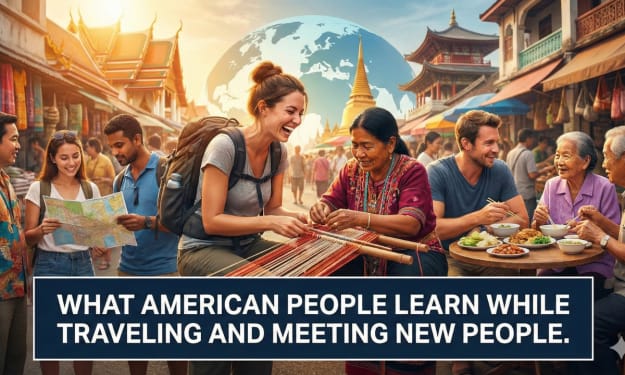
What American People Learn While Traveling And Meeting New People
As the American people move across the world and encounter other people, they take a ride that extends well beyond the geographical boundaries. Every place is turned into a living classroom where you do not learn by reading lectures and reading books, but by talking, living and being connected to others. Traveling makes the world a learning world as each individual we meet provides a fresh insight into this life, culture and identity.
By Tiana Alexandra7 days ago in Humans



Comments
There are no comments for this story
Be the first to respond and start the conversation.