
Religion, Faith, and Science in a Modern World
Exploring the Harmony and Tension Between Scientific Inquiry and Spiritual Belief in the 21st Century

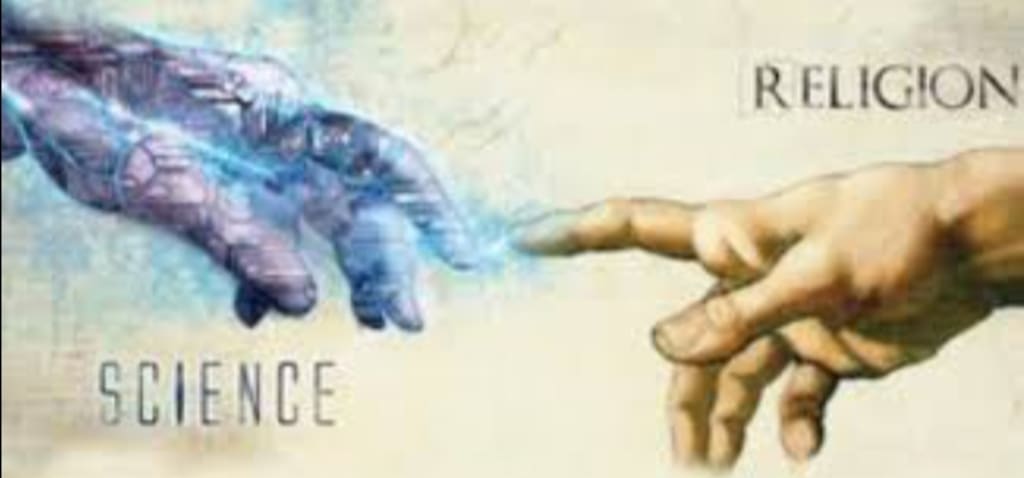
In an age dominated by rapid technological advancement and scientific discovery, the age-old debate between religion, faith, and science continues to spark curiosity and controversy. At first glance, these domains may appear to be irreconcilable—science grounded in evidence and empirical proof, and religion founded on faith, tradition, and spiritual belief. However, this seemingly stark contrast need not be a battleground. Instead, understanding their distinct roles and appreciating their mutual relevance may provide a deeper, more holistic perspective on existence.
The Nature of Science:-
Science is a systematic enterprise that builds and organizes knowledge in the form of testable explanations and predictions about the universe. It relies on observation, experimentation, and skepticism. From unraveling the mysteries of DNA to exploring the cosmos, science seeks to explain how things work. It thrives on doubt and inquiry, constantly evolving as new data emerges.
Importantly, science does not claim to answer metaphysical questions. It does not attempt to explain the meaning of life, the nature of the soul, or the existence of a higher power. These questions, although beyond the scope of scientific methodology, are central to the human experience. And it is precisely here that religion and faith enter the discourse.
Understanding Religion and Faith:-
Religion encompasses a system of beliefs, practices, and moral codes often centered on the worship of a divine power or powers. It provides a framework for understanding the why of existence—why we are here, what our purpose is, and what lies beyond this life. Faith, on the other hand, is the personal and often emotional conviction in these beliefs, even in the absence of physical evidence.
For billions across the globe, religion and faith offer guidance, hope, and a sense of belonging. They answer questions that science cannot—questions about morality, purpose, and the afterlife. While religious doctrines vary, the underlying human need for spiritual meaning is universal.
The Historical Conflict:-
The apparent tension between religion and science is not new. The trial of Galileo in the 17th century, for instance, is often cited as a symbol of this conflict. Galileo’s support for heliocentrism contradicted the Church’s geocentric teachings and led to his persecution. This event marked a significant moment in the history of scientific thought challenging religious authority.
However, such conflicts were often less about the fundamental incompatibility of science and religion, and more about institutional power and interpretation. Over time, the supposed war between science and faith has been perpetuated by extremists on both sides—those who reject all religious belief as superstition, and those who deny scientific evidence in favor of literal interpretations of sacred texts.
Can Science and Religion Coexist?:-
Yes, and in many ways, they already do. Numerous scientists throughout history and today are people of deep faith. Gregor Mendel, the father of modern genetics, was an Augustinian monk. Georges Lemaître, who proposed the Big Bang theory, was a Catholic priest. These examples illustrate that science and religion can enrich each other rather than exist in opposition.
From a philosophical standpoint, science and religion address different dimensions of human understanding. Science explains mechanisms and processes. Religion explores meaning and purpose. One does not necessarily invalidate the other. A person may believe in the Big Bang as the origin of the universe and still hold that a divine intelligence set it into motion.
The Role of Faith in Science:-
Interestingly, science itself requires a form of faith—not faith in the supernatural, but a foundational trust in the consistency of the natural world. Scientists must believe, for example, that the laws of physics operate uniformly throughout the universe, even in regions we cannot observe. This trust underpins the entire scientific enterprise. Furthermore, many scientific theories start with hypotheses or assumptions that are tested through evidence, often beginning with a creative leap not unlike religious intuition.
Faith’s Contribution to Human Progress:-
Religion has also played a significant role in advancing human civilization. Religious institutions have preserved knowledge, inspired art and literature, and founded schools and hospitals. Ethical teachings from various faiths have shaped legal systems and societal values across cultures. While history bears witness to conflicts and misuses of religion, it also records acts of compassion, justice, and peace driven by faith.
Moving Toward Dialogue:-
The key to reconciling science and religion lies in dialogue, not debate. Rather than forcing a choice between belief and reason, we should embrace both as complementary tools in our quest to understand reality. This approach requires humility from both sides—scientists acknowledging the limits of empirical knowledge, and religious adherents open to new discoveries about the natural world.
Education plays a vital role in fostering this dialogue. Encouraging critical thinking and religious literacy can help people navigate the complex relationship between science and faith. When individuals are exposed to both perspectives, they are more likely to appreciate the strengths and limitations of each.
Conclusion: Harmony Over Hostility:-
In a world facing existential challenges—climate change, artificial intelligence, global inequality—the need for collaboration between science and faith has never been greater. Science offers solutions, but faith provides the moral compass to guide their application. Both are essential for creating a just and sustainable future.
About the Creator
Zakir Ullah
I am so glad that you are here.
Keep reading
More stories from Zakir Ullah and writers in Humans and other communities.
What If You Never Get a Life Partner?
Not everyone gets a fairytale ending. But does that mean your story can’t be beautiful?” I used to believe love was inevitable. That no matter who I was or where I went, someday someone would walk into my life and choose me. That’s what the movies promised, what the stories whispered, what family and friends repeated whenever they said, “Don’t worry, it will happen.”
By Zakir Ullah4 months ago in Humans


Comments
There are no comments for this story
Be the first to respond and start the conversation.