
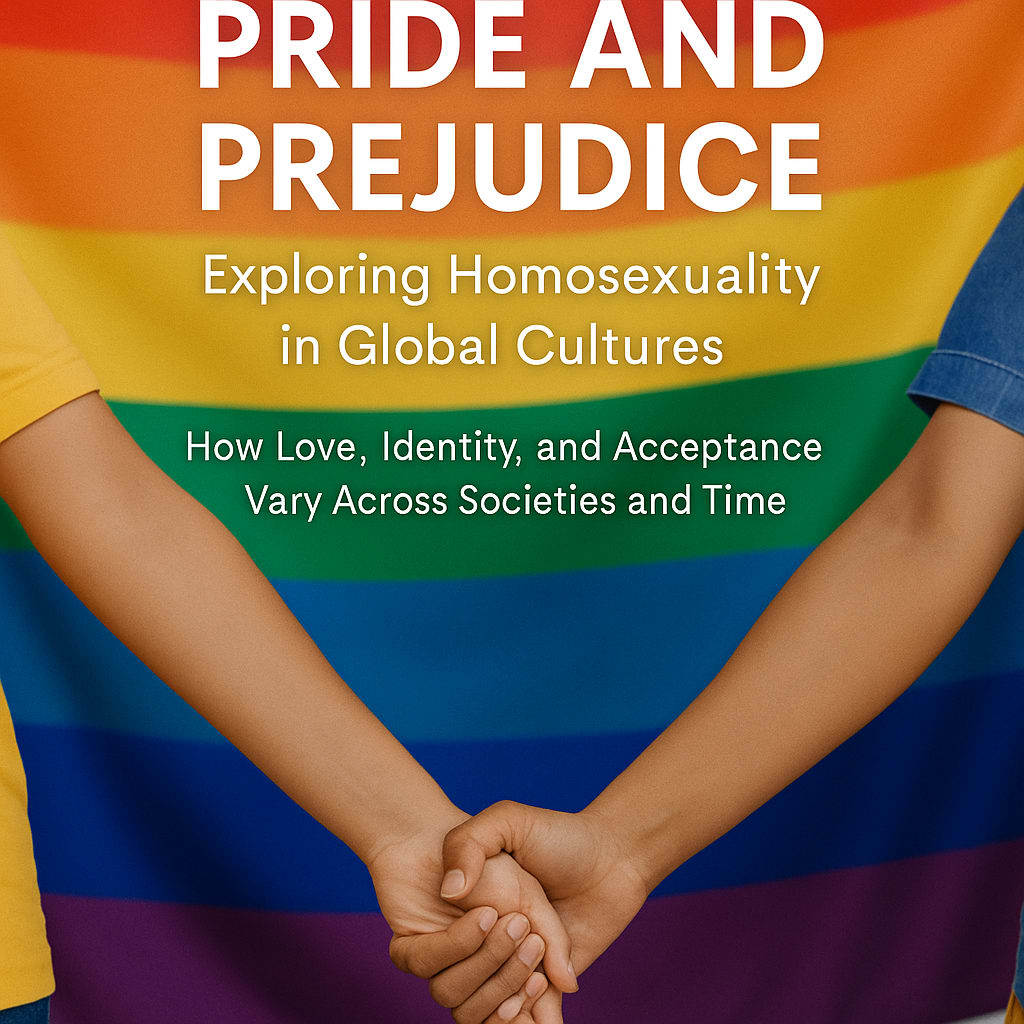
Pride and Prejudice: Exploring Homosexuality in Global Cultures
How Love, Identity, and Acceptance Vary Across Societies and Time

Introduction
Homosexuality means being romantically or sexually attracted to someone of the same gender. This has been part of human life for a very long time. But people around the world don’t all see it the same way. In some places, it is accepted and respected. In others, it is looked down on or even punished. This article talks about how different cultures view homosexuality, what psychology says about it, and how it affects people’s lives.
Homosexuality Through History and Culture
Homosexuality isn’t something new. It has existed in many cultures throughout history.
Ancient Greece
In ancient Greece, relationships between men were common and accepted, especially between older and younger men. These relationships were often about learning, friendship, and love.
India
Old Indian books like the Kamasutra spoke about same-sex love. Some Hindu temples have carvings showing same-sex couples. India also recognizes a third gender called "Hijra," which has existed for hundreds of years.
Native American Tribes
Some Native American tribes had people they called “Two-Spirit.” These people had both male and female energy. They were respected and often given special roles in their communities.
Africa
Before colonization, some African cultures also accepted same-sex relationships. In some tribes, women could marry other women to care for land or raise children.
Views in the Modern World
Today, views on homosexuality still depend a lot on the country or culture.
Western Countries
In places like Canada, the USA, and many parts of Europe, homosexuality is widely accepted. Same-sex couples can marry, adopt children, and live openly. LGBTQ+ people are seen on TV and in government.
(LGBTQ+ refers to a diverse community of individuals who identify as lesbian, gay, bisexual, transgender, queer, or questioning, with the "+" symbol representing other identities that fall under the umbrella of sexual and gender diversity)
Middle East and Some Parts of Africa
In some countries, being gay is illegal. People can be arrested or harmed just for being who they are. Religion and old traditions often influence these strict laws.
Asia
Some parts of Asia are open, while others are not. In Japan and Thailand, same-sex relationships are more accepted, but not always legal. In China, homosexuality is legal, but many LGBTQ+ people still face discrimination.
What Psychology Tells Us
Psychology is the study of the human mind and behavior. It helps us understand how people think and feel about themselves and others.
1. Homosexuality is Natural
Major psychology groups, like the American Psychological Association (APA), say that homosexuality is a normal part of being human. It is not a mental illness and does not need to be fixed or changed.
2. It Cannot Be Changed
Some people believe that being gay can be changed through something called "conversion therapy." But research shows that this does not work and can hurt people. It can lead to sadness, fear, and depression.
Dr. Jack Drescher, a well-known psychologist, says:
“Sexual orientation is not a choice. It is something people discover about themselves.”
3. Same-Sex Behavior Exists in Animals
Scientists have seen animals like penguins, dolphins, and lions show same-sex behavior. This proves that homosexuality is part of nature, not just human life.
How Culture Affects LGBTQ+ Lives
Where a person lives and how their culture treats homosexuality makes a big difference in their life.
When There Is Acceptance
In places where people are accepted, LGBTQ+ people are more likely to feel safe, happy, and supported. They can be open about who they are without fear.
When There Is Rejection
In places where homosexuality is judged or illegal, LGBTQ+ people often feel unsafe. They may have to hide their identity, which can lead to stress, depression, and loneliness.
A 2021 study in JAMA Pediatrics showed that LGBTQ+ youth who are accepted by their families are 50% less likely to try to hurt themselves.
Real-Life Example
Canada
Same-sex marriage is legal. LGBTQ+ people can live freely and safely. Schools teach about LGBTQ+ rights and history.
Nigeria
Being gay is illegal. Many LGBTQ+ people live in fear and hide who they are. Some are working quietly to change the law.
India
In 2018, India made homosexuality legal. This was a big moment for LGBTQ+ people. But many still face rejection from family or society.
Psychological Side Effects of Rejection
Even though homosexuality is natural, being rejected by others can hurt LGBTQ+ people’s mental health.
1. Anxiety and Stress
Many LGBTQ+ people live with constant fear of being judged or hurt. This leads to stress and anxiety.
2. Depression and Loneliness
People who are not accepted by their families or communities often feel deeply alone. This can lead to sadness and depression.
3. Low Self-Esteem
If someone is told that their identity is wrong, they may feel worthless or ashamed of who they are.
4. Risk of Suicide
In places where homosexuality is not accepted, LGBTQ+ youth are more likely to think about or attempt suicide.
Dr. Caitlin Ryan says:
“When families support their LGBTQ child, the risk of suicide drops by more than 80%.”
How to Build a Kinder Society
Psychology gives us ways to help build more understanding and kindness.
Teach People
Learning about LGBTQ+ people helps reduce hate and fear.
Share Real Stories
When people hear what LGBTQ+ people go through, they feel more empathy and care.
Show Role Models
Seeing LGBTQ+ people in media and leadership helps others see that being gay is okay and human.
Psychological Side Effects Caused by Stigma, Rejection, and Discrimination
1. Minority Stress
Definition: Ongoing stress faced by LGBTQ+ people due to being different from the social “norm.”
It comes from fear of rejection, hiding one's identity, and facing hate or bullying.
This stress can lead to long-term mental and physical health issues.
🧠 Dr. Ilan Meyer, a psychologist, developed the concept of "Minority Stress" to explain how living in a rejecting society affects LGBTQ+ mental health.
2. Anxiety and Depression
Repeated rejection by family, friends, or society can lead to deep sadness.
LGBTQ+ youth are 2 to 3 times more likely to experience anxiety and depression compared to straight youth.
Depression often grows when someone hides who they are or lives in fear.
3. Low Self-Esteem and Shame
When people hear negative messages about homosexuality, they may start to believe those things about themselves.
They might think they are "wrong" or "bad," which lowers their self-confidence and self-worth.
4. Suicidal Thoughts and Behavior
Rejection, bullying, and isolation can lead to suicidal thoughts, especially in young LGBTQ+ individuals.
Statistics:
LGBTQ+ youth are 4 times more likely to attempt suicide than straight youth.
If a person is rejected by their family, that risk goes up even more.
5. Substance Use and Risky Behavior
Some LGBTQ+ individuals turn to alcohol or drugs to cope with emotional pain.
This is more common in environments where people cannot safely express their identity.
6. Internalized Homophobia
This happens when an LGBTQ+ person starts to believe negative things that society says about them.
They may feel self-hate, deny their identity, or try to change themselves.
It leads to inner conflict and poor mental health
Religious Views on Homosexuality
1. Christianity
Christian beliefs on homosexuality vary a lot by denomination and country.
Traditional view (conservative groups):
Homosexual acts are often seen as sinful.
Based on verses from the Bible (e.g., Leviticus 18:22, Romans 1:26–27).
Some churches promote "sexual purity" and ask LGBTQ+ people to remain celibate.
Progressive view (liberal churches):
Many believe that God loves everyone, regardless of sexuality.
Churches like the United Church of Christ, the Episcopal Church (USA), and some Lutheran branches accept LGBTQ+ members and same-sex marriages.
These groups believe the message of Jesus is about love, compassion, and inclusion.
2. Islam
In most traditional Islamic teachings:
Same-sex relationships are considered sinful.
This view is based on the story of the people of Lot (Lut) in the Qur’an, often interpreted as condemning homosexuality.
Homosexual acts are illegal in many Muslim-majority countries, with harsh punishments.
However:
Some Muslim scholars and LGBTQ+ Muslims argue these interpretations are based on cultural ideas, not core faith.
Groups like Muslims for Progressive Values support full equality for LGBTQ+ individuals.
There is a growing conversation within Islamic communities about mercy, human dignity, and modern understanding.
3. Judaism
Judaism has a wide range of beliefs depending on the branch:
Orthodox Judaism:
Holds to traditional laws (Halakha) that forbid same-sex acts.
LGBTQ+ people may be welcomed, but not their relationships.
Conservative and Reform Judaism:
These branches support LGBTQ+ inclusion.
Same-sex marriages are performed.
Emphasis is on equality, respect, and love.
4. Hinduism
Hinduism is complex and doesn’t have one central authority or view:
Ancient texts like the Kamasutra mention same-sex love.
Some deities (like Shiva and Vishnu) are shown in forms that blur gender.
Modern views in India vary—some Hindus accept homosexuality as natural, others do not.
Some temples even celebrate gender-diverse identities (e.g., Ardhanarishvara, the half-male, half-female form of Shiva and Parvati).
5. Buddhism
Buddhist teachings focus more on avoiding harm and following a path of peace.
There is no strict ban on homosexuality in most Buddhist teachings.
The Dalai Lama has said that people should be kind and loving, regardless of their orientation.
Views vary by country—some Buddhist cultures are more accepting than others.
6. Sikhism
Sikh holy texts do not directly mention homosexuality.
Some Sikh leaders see marriage as between a man and a woman.
However, many Sikhs believe that equality and love are core Sikh values, and LGBTQ+ people should be respected.
Important Notes
Religion and culture often mix. Sometimes what people call "religious views" may be influenced more by tradition or society than by the original texts.
Many LGBTQ+ people remain deeply religious and find ways to live their faith with pride and peace.
Around the world, religious groups are having new conversations about love, justice, and identity.
About the Creator
Getting Serious About Comedy (Part I)
If I were asked to remark on my life and the childhood that paved some road leading me to this point, I would have to say something about all the funny people who surrounded me for the last 26,872 days (and counting). Somewhere along that road, I became a big fan of laughter and the comedy that spawns it – and, I mean not only my own laughter, but the laughter of others, some of which I have actually been responsible for inducing.
By John Oliver Smith7 days ago in Humor




Comments (1)
This article on different views of homosexuality is really interesting. It's amazing to see how it's been part of various cultures throughout history, like in ancient Greece and Native American tribes. But it's also sad that in some places today, it's still so stigmatized. How do you think we can work towards more acceptance globally? I remember when same-sex marriage became legal here. It was a huge step. It made me realize how important it is to keep fighting for equality. Do you think more countries will follow suit in the future?