
Pawtucket: A Small City with a Powerful Story
Some cities whisper their history. Others carry it in brick walls, quiet rivers, and streets that remember what came before. Pawtucket is one of those places.

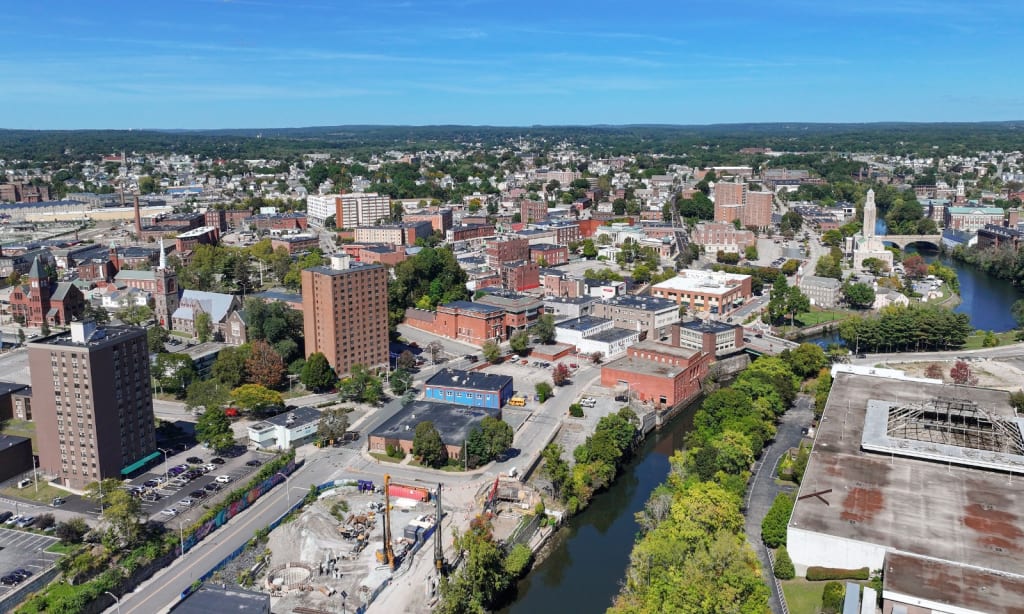
Some cities whisper their history. Others carry it in brick walls, quiet rivers, and streets that remember what came before. Pawtucket is one of those places. At first glance, it may seem like just another small New England city. But if you slow down and look closer, you begin to see layers. Old mill buildings standing beside new art studios. Families who have lived there for generations. Young creatives searching for affordable space and a fresh start.
Pawtucket is not loud about its story. It does not need to be. Its past shaped American industry. Its present reflects resilience. Its future feels uncertain yet hopeful. To understand Pawtucket is to understand how small cities survive change without losing themselves.
Where Pawtucket Began
Pawtucket sits along the Blackstone River in Rhode Island. Long before factories lined its banks, Indigenous communities lived and fished along these waters. The river was a source of life.
In the late 18th century, Pawtucket became one of the birthplaces of the American Industrial Revolution. Samuel Slater built one of the first successful water-powered cotton spinning mills in the United States. That single development changed everything.
The sound of water wheels and machines replaced the quiet rhythm of the river. Workers arrived. Houses were built. The city grew quickly.
Pawtucket became known for textiles and manufacturing. For many families, factory jobs meant steady income and stability.
The Mill Era and Its Human Cost
Industrial growth brought opportunity. It also brought hardship.
Mill work was demanding. Hours were long. Conditions were often harsh. Entire families sometimes worked in the same factories, including children.
Imagine walking into a brick building before sunrise, working beside loud machinery for most of the day, then returning home exhausted. That was daily life for many Pawtucket residents in the 19th century.
Yet these mills built more than fabric. They built neighborhoods. Immigrant communities from Ireland, Portugal, Italy, and other countries settled in Pawtucket. Churches, schools, and local shops followed.
The city became a mosaic of cultures, languages, and traditions.
Economic Shifts and Decline
Like many industrial cities in the Northeast, Pawtucket faced decline in the 20th century.
Factories closed or moved elsewhere. Jobs disappeared. Buildings once filled with workers stood empty.
When industry left, it left behind uncertainty.
Families that had relied on mill jobs for generations suddenly faced unemployment. Younger residents moved away seeking work. Downtown streets grew quieter.
Pawtucket did not collapse, but it struggled.
You can still see traces of that era today in the large brick structures that line the river. Some remain abandoned. Others have found new purpose.
A City Searching for Renewal
In recent decades, Pawtucket has worked to redefine itself.
Old mill buildings have been converted into artist studios, apartments, and small businesses. The same spaces that once echoed with machinery now hold galleries and creative workspaces.
This shift did not happen overnight. It required investment, patience, and belief that the city still had value.
Local leaders and residents began focusing on arts and culture as a path forward. Events, festivals, and markets brought life back to downtown.
Pawtucket’s identity started evolving from industrial powerhouse to creative hub.
The Arts Scene in Pawtucket
One of the most noticeable changes in Pawtucket has been the growth of its arts community.
Affordable studio space attracted painters, sculptors, musicians, and designers. Large open mill floors provided room to experiment.
Events such as art walks and open studio nights gave residents a reason to explore their own city.
For example, a former textile mill might now host dozens of artists under one roof. Visitors can walk through hallways, step into studios, and see work in progress.
This kind of access creates connection.
Pawtucket may not compete with larger cities in size, but its creative spirit feels personal and accessible.
The Blackstone River Still Flows
The Blackstone River remains central to Pawtucket’s story.
Once heavily polluted by industrial waste, the river has undergone cleanup efforts. Today, it is part of the Blackstone River Valley National Historical Park.
Walking along the river offers a quiet reminder of the city’s origins.
You can stand near the water and imagine the early mills powered by its current. You can also see kayakers and families enjoying the space.
The river connects past and present.
It is both witness and survivor.
McCoy Stadium and Community Identity
For decades, McCoy Stadium was a symbol of local pride. It was home to the Pawtucket Red Sox, a minor league baseball team.
Summer nights at the stadium brought families together. Fireworks lit up the sky. Children chased foul balls.
When the team relocated in 2021, it felt like the end of an era. Many residents felt a sense of loss.
Sports often bind communities. In Pawtucket, McCoy Stadium was more than a venue. It was shared memory.
Even though the team has moved, the emotional connection remains part of the city’s identity.
Education and Opportunity
Pawtucket’s public schools reflect both challenges and determination.
Like many urban districts, they face funding pressures and social inequality. Yet teachers and families continue striving to create opportunity.
Community programs aim to support students beyond the classroom. After-school initiatives and local partnerships try to bridge gaps.
Education plays a key role in Pawtucket’s future.
A city shaped by industry now relies on knowledge and skills to move forward.
Small Businesses and Local Flavor
Walking through Pawtucket, you will find family-owned restaurants, bakeries, and shops that reflect the city’s diverse heritage.
Portuguese bakeries selling sweet bread. Italian markets with homemade pasta. Dominican and Cape Verdean restaurants offering traditional dishes.
These businesses tell stories of migration and resilience.
When you eat at a local restaurant in Pawtucket, you are tasting history.
Small businesses also provide employment and stability. Supporting them strengthens the local economy.
Housing and Affordability
Compared to larger cities in the region, Pawtucket has historically offered more affordable housing.
This affordability has attracted young professionals and artists priced out of nearby areas.
However, rising interest in the city has also brought concerns about displacement. Longtime residents worry about rent increases and property taxes.
Balancing growth with fairness is not easy.
Pawtucket stands at a crossroads where development must consider community roots.
Transportation and Location
Pawtucket’s location near Providence and the Massachusetts border gives it strategic importance.
Recent investments in public transportation, including a new train station, aim to improve connectivity.
Better access can mean more visitors, more businesses, and more opportunity.
At the same time, increased traffic and development require careful planning.
Location can be both advantage and challenge.
The Role of Community Voices
One strength of Pawtucket is its engaged residents.
Community meetings, local activism, and neighborhood groups shape decisions about development and services.
When new projects are proposed, residents often speak up.
They ask questions about impact, affordability, and long-term benefit.
This participation reflects pride.
People care deeply about what happens to Pawtucket.
Challenges That Remain
Despite progress, Pawtucket faces ongoing issues.
Economic inequality persists. Some neighborhoods struggle with poverty and limited resources.
Infrastructure improvements require funding. Public services face pressure.
No city solves its problems easily.
Yet acknowledging challenges openly is part of moving forward.
Pawtucket’s history shows resilience, but resilience does not erase difficulty.
Pawtucket’s Cultural Identity
Culture in Pawtucket is layered.
It is found in church festivals, street fairs, and family gatherings. It is heard in different languages spoken on the same block.
Generations overlap. Older residents remember factory shifts. Younger residents talk about art shows and start-ups.
This blend creates a unique atmosphere.
Pawtucket feels grounded. It does not pretend to be something it is not.
Looking Toward the Future
What comes next for Pawtucket?
Redevelopment projects continue. New housing complexes rise near old mill buildings. Creative spaces expand.
There is cautious optimism.
If managed carefully, growth can bring jobs and vitality without erasing history.
The key lies in balance.
Preserving historic character while welcoming change requires thoughtful leadership and community trust.
Why Pawtucket’s Story Matters
Pawtucket represents many small American cities shaped by industry.
It shows how economic shifts ripple through generations. It shows how culture survives hardship.
When factories closed, Pawtucket did not disappear. It adapted.
The city’s story reflects broader themes of migration, labor, decline, and renewal.
Understanding Pawtucket helps us understand the resilience of working-class communities across the country.
Conclusion: A City That Refuses to Fade
Pawtucket is not defined by a single chapter.
It is not only a mill town. It is not only an arts hub. It is not only a city facing challenges.
It is all of these things at once.
Its brick buildings stand as reminders of labor and ambition. Its river flows quietly through time. Its residents continue shaping what comes next.
Pawtucket may be small on a map, but its story carries weight.
And as long as people walk its streets, open new businesses, teach in its schools, and gather at community events, Pawtucket will continue writing that story in its own steady way.
About the Creator
Muqadas khan
Hi! Welcome to my Vocal page. I’ll be sharing fresh articles every day covering stories, ideas, and a bit of inspiration to brighten your feed. Thanks for reading and supporting daily writing! 📖💫
Keep reading
More stories from Muqadas khan and writers in Humans and other communities.
Maya Hawke: Fame, Talent, and Finding Her Voice
There is something quietly magnetic about Maya Hawke. She does not demand attention with loud headlines or constant controversy. Instead, she draws people in with sincerity. When she appears on screen, there is a softness in her expression that feels real. When she sings, her voice carries vulnerability rather than polish. In an industry often built on spectacle, Maya Hawke stands out for her calm presence. Many first noticed her in a hit streaming series. Others discovered her through music that feels personal and unfiltered. But behind the growing fame is a young artist trying to understand herself while the world watches. This is the story of Maya Hawke, her career, her family background, and how she is shaping her own path.
By Muqadas khanabout 14 hours ago in Humans
Think for Me
"How do you calculate the circumference of a circle? Submit your answer when ready." [Pause] "Excellent! Every student was able to call up the answer electronically very quickly. If I, as a robot had feelings, I would express pride. You may break for lunch. Return to this cyber room in 45 minutes."
By Julie Lacksonen3 days ago in Humans
Maintaining Peace In An Uncertain World
The world we live in at current is in a state that I don’t believe any of us has ever witnessed, and with everything that is taking place it can cause a sense of uncertainty, anxiety and fear to arise, which no matter who you are, living in this state of constant stress in relation to wondering what will come next is something that will have detrimental effects on an individuals entire state of being.
By Kaylon Forsyth5 days ago in Humans
No Other Choice (2025)
It is only February, so other films may well surpass “No Other Choice”, but I think this is the best film I’ve seen so far this year. And that surprises me, because, it is a subtitled film and while I am pretentious enough to choose to watch foreign-language films, I was also very tired and that was an extra commitment from me. But more importantly, let me warn you, this film is gruesome and violent. There were times I had to turn away from the screen to avoid the worst of it (including some self-inflicted dentistry).
By Rachel Robbins4 days ago in Geeks




Comments
There are no comments for this story
Be the first to respond and start the conversation.