
One Last Call
A struggling bartender faces a difficult choice.

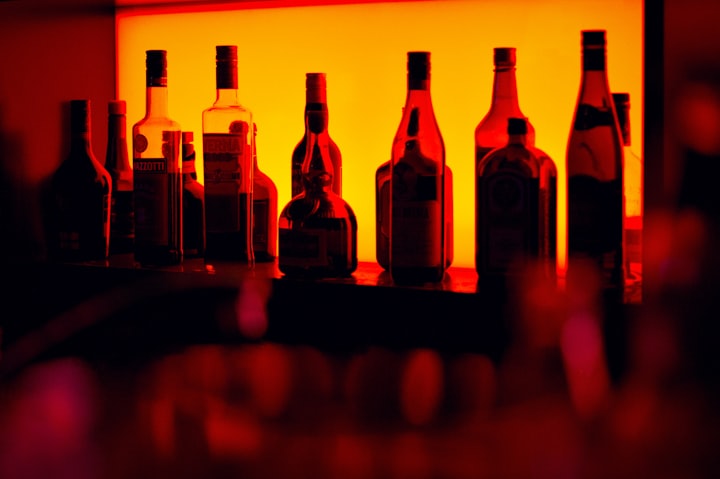
22 years of her life, gone.
Jodie swept a towel across the surface of the bar, her bar, trying not to think about the fact that soon, much sooner than she’d once expected, she’d find herself cleaning it for the last time. The bar had been a passion project, a dream come to fruition, despite her ex-husband’s doubts and distrust in a woman's ability to do anything but spend her days bent over a burning kitchen stove.
The bar stood a testament to the fact that she’d done it. She’d overcome him, and everyone else who’d said she never could.
But now, business wasn’t what it had once been. It hadn’t been, not for years, not since newer, younger, hipper pop-up bars and breweries and kitschy themed pubs had taken root along the road. 22 years ago, Jodie had only been a few years older than most of the students at the local college. Now, she thought, she probably was closer in age to their parents. Grandparents, even.
With a sigh, Jodie tossed the cloth aside and took in the state of the bar. Not too dirty. It never was, not anymore. She almost missed cleaning up after the Friday night swarms of drunken college football players and disgruntled employees alike, almost missed sweeping up shattered shards of brown bottle glass, even almost missed mopping up the trails of beer and urine and god knew what else from the men’s restroom tile. She still swept, and she still mopped, but the annoying surprises were few and far between; it was more common for her to find a mouse caught in one of the backroom traps than it was to find any signs of drunk patrons after they’d left for the night.
There weren’t many drunk patrons to begin with. On an average weekend night, Jodie served drinks to maybe six people, max, most of whom were already drunk from the younger bars lining the street. Jodie didn’t see many fresh faces these days, but somehow, despite the decades, the bar had retained its charm with a few regulars. For that, Jodie was thankful.
Most of them had already gone from the bar earlier that night, but she noticed now that one customer remained: a graying, elderly man named Marvin, whose drinks Jodie had been serving since opening night. She’d always felt a bit of pity for him; surely he was too old to drink at a smarmy, smoky bar every night, had been too old for at least ten years now. But night after night, he sat himself in one of the stools to the far end of the bar, ordered a glass of whiskey on the rocks, and sipped it in silence by himself. Jodie couldn’t imagine it to be a fulfilling way to pass the evening.
Jodie made her way across the bar. “Sorry, Marvin,” she said, taking his empty glass and setting it aside to wash later. “Last call was twenty minutes ago. Want me to call you a cab?”
Marvin shook his head. “No, thank you,” he said, but he didn’t make any moves to leave.
Jodie glanced at the clock on the wall. 2:21.
“I’ve always loved this place,” Marvin said, and Jodie realized this was probably the first time he’d volunteered any personal information about himself to her. (It wasn’t as if she hadn’t tried, but he’d always been pretty private). “Do you know what I like best about it?”
Jodie had no idea what Marvin liked best about it. In fact, she had no idea what anyone liked best about the bar, aside from herself, and even then, it was just that it was hers, that she’d created it. Before she could respond, Marvin spoke up again.
“I met my wife here, 57 years ago. Before you owned the place, I mean. It was a little diner. We were both students here, both studying alone. It wasn’t like me to approach a girl like that, especially not one as pretty as Charlotte—but that’s beside the point.” He tapped his fingers against the bar, slow. Jodie noticed that they trembled with the telltale signs of arthritis. For a moment, he didn’t speak, and then he let out a laugh. “Sorry. When you get to be my age, you ramble a lot.”
“That’s okay,” Jodie said. Something about the night felt important somehow. It had been years since she’d had these kinds of personal conversations with a customer, and she figured Marvin could use her company just as much as she could use his.
From his pocket, Marvin procured a little black notebook. Leather-bound. A Moleskine. Jodie had bought one just like it for her niece’s birthday last month.
Marvin tugged at the band wound around the notebook. “They diagnosed me with pancreatic cancer last week,” he said, and Jodie felt a sinking in her chest for this man she’d barely known but seen every day for the past 22 years. “Same damn thing that got Charlotte.”
Jodie stood, eyes transfixed on the notebook in his hands, unsure of what to say. What did you say to a dying man who had only just found out he was dying?
Luckily, she didn’t have to say anything, because Marvin continued on.
“They said it’s pretty far along. Surprised me, even, because I felt just fine. Went in for my yearly checkup, and...guess things weren’t so fine after all. Said I’ve got weeks, maybe.”
Jodie gathered the strength to speak, unscrambled the emotions she couldn’t process into words that she could, that she hoped would suffice despite their simplicity. “I’m sorry to hear that.”
Marvin shrugged. “That’s life, I guess. I’m just glad I lived it while I could. Mostly, anyway.” His shaking fingers pried the notebook open, flipped through the pages. Jodie wasn’t sure what he’d written in there; she’d seen him at the bar a few times before, years before, scribbling into it, but had never thought to ask. Now she wished she had, but it didn’t feel appropriate in the moment.
“You know, I’ve been writing my bucket list in this little journal for years now, since Charlotte passed. She said there were so many things she never got to do, and I told myself I’d do them all and then some, just for her. But I guess I won’t get that chance either.”
Jodie chewed her lower lip. Somehow, she thought, that made it worse. She tried to see things from Marvin’s point of view and realized a part of him probably thought he was disappointing his wife, dying too soon. “I’m sure she understands,” she said, surprising herself. Jodie had never been religious, didn’t think the dead were capable of understanding or disappointment, but hoped it brought comfort to Marvin.
Marvin smiled at that, just a bit, just barely noticeable. “Oh, I’m sure too. There wasn’t a thing on this earth she couldn’t empathize with.” He turned his attention back to the notebook. “But still, I wonder if I might ask you a favor.”
“Of course,” Jodie said without hesitation, because how could she say no?
“I want you to take this book here, all these little goals, and...maybe try them out for yourself. It’s too late for me, but you’ve got a few good decades left.” He skimmed the book one last time before passing it to Jodie.
Written in neat, print handwriting was a long, winding list of goals, each with a checkbox to the left of it. Some of the boxes were checked, and some weren’t. Jodie took in a few of the checked boxes: try that new sandwich shop on 7th street; call Martha and apologize; go skydiving (that one surprised her, as Marvin had never struck her as the adventurous type). Then she took in the unchecked boxes, which undoubtedly dominated the journal: swim with dolphins, take an art class, get a tattoo, visit Brazil, write a book…
One in particular stuck out to her. Die with dignity.
“What’s this one mean?” she asked, turning the notebook back to Marvin so he could read it.
Marvin reached into his coat pocket, drawing out a small plastic bag filled with white pill capsules. He set it on the counter with a soft thud, then folded his hands in his lap. He looked up at Jodie then, and she saw something shift in him. Not sadness. Not regret. Pleading.
“During her last few weeks, Charlotte was miserable. Couldn’t keep down any food. Couldn’t move. Was too weak to turn the page of a newspaper, even. I always said that would never be me.” Marvin looked down at his hands. “But I’m too cowardly to do it myself. I’ve tried. I just...I can’t.” He looked up again, and Jodie noticed the redness about his eyes. “I know it’s asking a lot, but...could you make me one last drink?”
Jodie’s first instinct was to tell him no, absolutely not, to throw him out into the street and lock the doors. Or maybe she should call someone, a paramedic or something. Someone to make sure Marvin stayed safe. But looking at him, she could tell even now that he’d lost a bit of weight, and he’d said it himself: he didn’t have long. He’d seen this happen before, and he didn’t want to have to live it himself.
She was Marvin’s out. He was coming to her for help, to avoid the fate he’d spent the past few decades dreading.
But it was illegal. Jodie would go to jail. The bar would be shut down. And it wasn’t her place to decide another human’s death, even when that death had already been decided for him.
“There’s a $20,000 inheritance for you written into my will,” Marvin said. “For the bar. I know things probably haven’t been great lately, what with this economy and...all these kids preferring to drink elsewhere now. But it’s the last bit of Charlotte I’ve got. I’d hate it to die with both of us.”
$20,000.
That could save the bar.
$20,000 was enough to renovate, to modernize the furniture, to install those bare wooden beams and industrial light fixtures the newer bars had and then some. With $20,000, Jodie could buy all new cushioned bar stools, and hire more staff, and contract with a local craft beer brewery, and hire someone in marketing, maybe even some of the college students. With $20,000, Jodie would be out of the red. Off the hook. Back in business.
But this was Marvin’s life they were talking about. Was it still murder if someone asked you to kill them? Was it more immoral to refuse to honor a man’s dying wish, or to follow it, even if it meant poisoning him? That’s what she would be doing, she thought, even if he was watching her. Even if he supplied the pills. Even if he had requested it. She would still be poisoning him.
“I’m going to head to the restroom for a moment, if that’s alright,” Marvin said. “It’s your choice. I mean, either way, I’d like a drink, if that’s alright, but it’s your choice to...you know. Do it. Or not.”
With that, he rose from his seat and headed to the back, leaving Jodie alone at the bar with a choice.
Jodie swept the pills from the bar, that way no matter what she did, he wouldn’t have to know. Surely that was why he’d walked away, because he didn’t want to know while he was drinking it, not really.
She poured the ice into his glass from earlier, glad she hadn’t yet had the time to wash it. Poured the whiskey in after it.
Considered her options. Weighed them against each other.
Closed her eyes.
Made her decision.
Set the glass, its sides already sweating droplets of concentration, onto the bar.
About the Creator
Alyssa Tyson
Alyssa Tyson has been writing since she knew what words were. She lives in Richmond, VA with two cats and one guinea pig. When she's not writing, she enjoys reading, building virtual zoos, and plotting her future political agenda.
Keep reading
More stories from writers in Humans and other communities.
Dead and Wearing Green
She was wearing that green dress when I first saw her, five years ago to the day. Flowing meadow fabric draped over long legs, thick auburn hair flowing down her back. That smile. Of course, she is still beautiful now. But now she is no longer alive.
By Karen Cave5 days ago in Fiction



Comments
There are no comments for this story
Be the first to respond and start the conversation.