
Nuclear medicine
Nuclear medicine the emerging medicine for the benefit of humans.

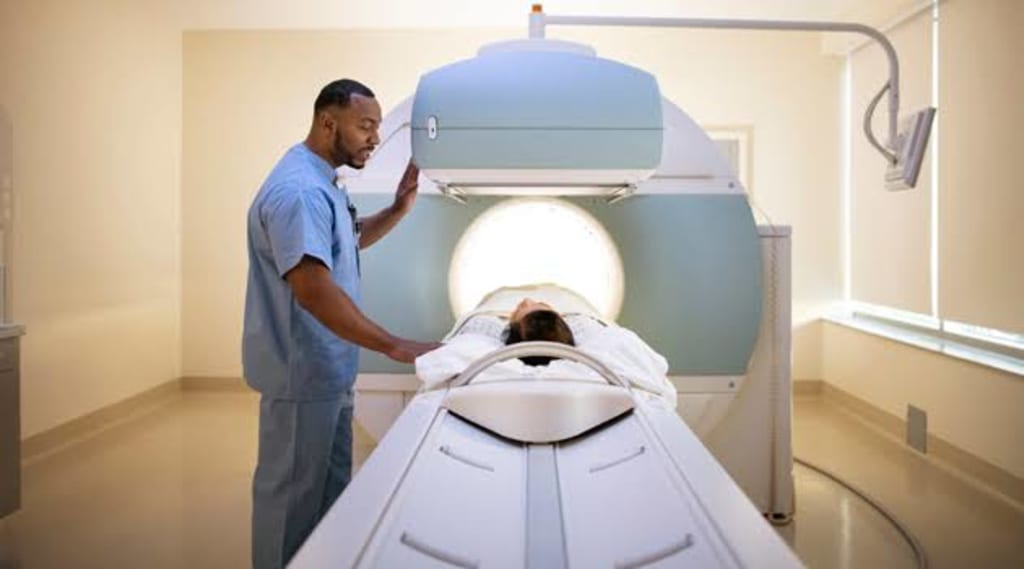
Nuclear medicine
Nuclear medicine is a branch of medical imaging that uses small amounts of radioactive materials, known as radiopharmaceuticals, to diagnose and treat diseases. It involves the use of gamma rays, positrons, or beta particles emitted by these radioactive materials to image and/or treat specific organs or tissues within the body. This technique is particularly useful in diagnosing and treating cancer, heart disease, and various neurological and endocrine disorders. In this article, we will discuss the scientific and technical concepts related to nuclear medicine, its advantages and limitations, and some applications of this technology.
Radiation in Nuclear Medicine:
Nuclear medicine procedures typically exploit the emission of gamma rays or positrons by radioactive materials. Gamma rays are electromagnetic radiation with high energy levels that can penetrate the body and are detected by gamma cameras. Positrons are positively charged particles that can annihilate with electrons in the body, producing gamma rays that are detected by positron emission tomography (PET) scanners. Beta particles are high-speed electrons emitted by certain radioactive materials and can be used for targeted radiation therapy.
Patient Preparation:
Before undergoing nuclear medicine procedures, patients are typically required to fast for several hours or avoid certain foods and medications that can interfere with the radiopharmaceuticals' uptake. In some cases, patients may need to have a catheter inserted to deliver the radiopharmaceuticals directly into the bloodstream or a specific organ. Patients are also advised to inform their healthcare providers if they are pregnant or breastfeeding, as radioactive materials can harm the fetus or infant.
Advantages and Limitations:
One of the main advantages of nuclear medicine is its ability to detect diseases at an early stage, often before symptoms appear. It can also provide detailed functional information about the body's organs and tissues that cannot be obtained with other imaging techniques such as X-rays or CT scans. Additionally, nuclear medicine can be used to deliver targeted radiation therapy to cancer cells, minimizing damage to healthy tissue.
However, there are also some limitations to nuclear medicine. The radiation exposure from radiopharmaceuticals can be a concern, particularly for children and pregnant women. Additionally, the images produced by nuclear medicine can be less clear than those produced by other imaging techniques, and some radiopharmaceuticals may not be available or effective for all diseases.
Applications of Nuclear Medicine:
There are many applications of nuclear medicine, ranging from diagnostic imaging to targeted radiation therapy. Here are three examples:
PET scans: PET scans are used to detect cancer, heart disease, and neurological disorders such as Alzheimer's disease. They can also be used to monitor the effectiveness of cancer treatments.
Iodine-131 therapy: Iodine-131 is a radioactive material that is used to treat thyroid cancer by delivering targeted radiation therapy to the thyroid gland.
Hybrid scanning techniques: Hybrid scanning techniques such as PET/CT or PET/MRI combine the functional information obtained from PET scans with the anatomical information obtained from CT or MRI scans, providing more detailed and accurate images. Nuclear medicine has brought a teremendous revolution in the field of medical. Due to nuclear medicine humans are now capable to cure and diagnose multiple diseases that were considered impossible in thd past. It is used to diagnose and treat diseases like cancer, tumor, and the diagnosis of brain stroke, blocked vein nerve pressed by the backbone due to the CT scan and MRI tests.
In conclusion without any doubt the advancements in the field of nuclar medicine is one of the blessing of God Almighty to the humans. It's a living saving medicine. The governments have to invest more in it so that it should be accessible to every human being in this world and they must benefitted by it when they are in need of it.
About the Creator
Keep reading
More stories from Abdul rafey and writers in Humans and other communities.
The mysterious angels
Angels are supernatural beings that are commonly found in various religious and spiritual traditions. They are typically depicted as messengers or servants of a higher power, such as God, and are believed to have various roles, such as guardians, guides, and protectors. Some traditions also believe in the existence of fallen angels, who have rebelled against the divine order. Angels are often depicted as having wings and a halo, and are associated with qualities such as purity, goodness, and beauty.
By Abdul rafey 3 years ago in Fiction



Comments
There are no comments for this story
Be the first to respond and start the conversation.