
Niagara Falls Has Frozen Over and It’s a Breathtaking Icy Wonderland
When roaring water meets deep winter cold, one of the world’s most powerful natural wonders transforms into a surreal frozen dream
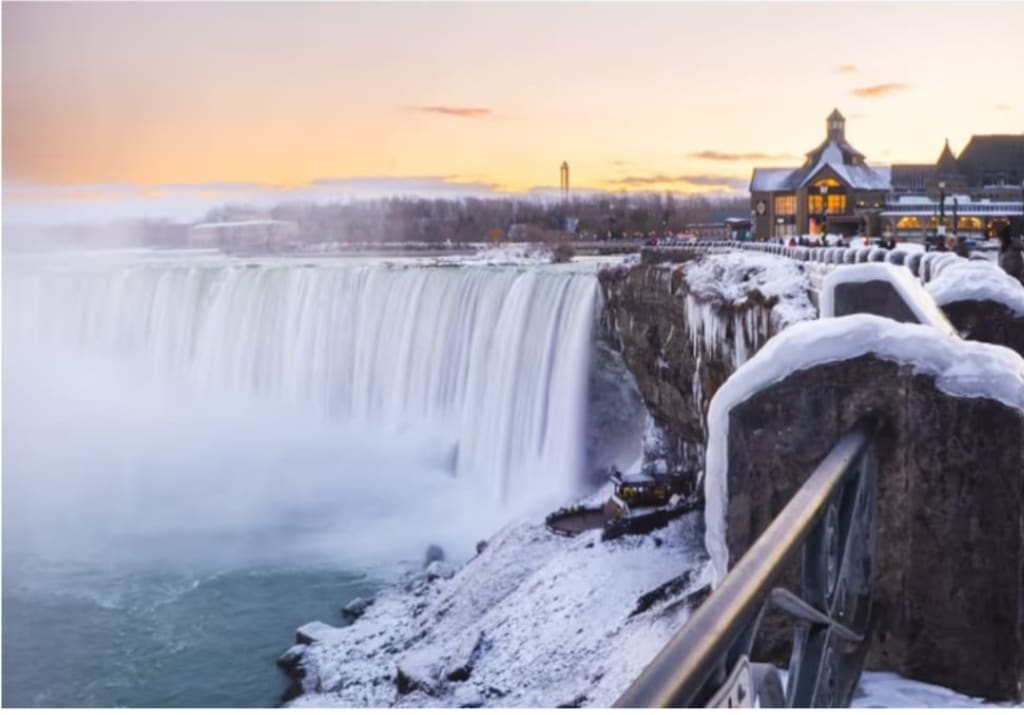
Niagara Falls has always been synonymous with raw power—thundering water, mist rising into the air, and a constant reminder of nature’s unstoppable force. But every so often, winter rewrites that familiar story. When temperatures plunge far below freezing, Niagara Falls undergoes a transformation so dramatic that it feels almost unreal. The waterfalls don’t stop flowing entirely, but the surrounding landscape freezes into an icy wonderland that looks like something pulled straight from a fantasy novel.
Images and videos of a “frozen” Niagara Falls quickly capture global attention whenever this phenomenon occurs. Towering icicles cling to cliffs, snow blankets walkways, and the once-deafening roar of water feels muted beneath layers of ice. For visitors lucky enough to witness it in person, the experience is both breathtaking and humbling.
Does Niagara Falls really freeze?
Despite the viral headlines, Niagara Falls never completely freezes solid. The sheer volume and speed of water flowing from Lake Erie to Lake Ontario make that nearly impossible. What does happen, however, is equally spectacular. Prolonged cold temperatures cause ice to form along the riverbanks, rocks, and observation areas. Massive ice formations build up at the base of the falls, sometimes creating the illusion that the water has stopped altogether.
One of the most striking features during extreme cold is the “ice bridge,” a natural accumulation of ice that forms over parts of the Niagara River below the falls. In the 19th and early 20th centuries, people even walked across these ice bridges, setting up temporary shops and photo stations. Today, for safety reasons, access is restricted—but the visual impact remains just as astonishing.
A rare but recurring winter spectacle
Niagara Falls freezing over isn’t a once-in-a-lifetime event, but it is rare enough to feel special each time it happens. The phenomenon typically occurs during periods of sustained subzero temperatures, often driven by Arctic air masses sweeping across North America. When strong winds combine with bitter cold, the mist generated by the falls freezes almost instantly, coating nearby trees, railings, and buildings in thick layers of ice.
This frozen mist effect is what creates many of the iconic images: trees encased in crystal-like shells, stairways transformed into ice sculptures, and viewing platforms that look carved from snow and frost. Even longtime residents say the sight never loses its magic.
The science behind the beauty
What makes Niagara Falls such a dramatic winter spectacle is the constant interaction between motion and cold. As water crashes over the falls, it generates fine mist that rises into the air. When temperatures drop low enough, that mist freezes upon contact with any surface it touches. Over time, layers build upon layers, creating massive ice formations that seem to defy gravity.
At the same time, chunks of ice flow down from Lake Erie and gather at the base of the falls. These ice floes can pile up several feet thick, further enhancing the illusion of a frozen waterfall. Beneath it all, though, millions of gallons of water continue to surge every minute—hidden, but unstoppable.
A photographer’s winter paradise
For photographers and travelers, a frozen Niagara Falls is nothing short of a dream. The contrast between icy blues, stark whites, and the occasional golden glow of winter sunlight creates a visual feast. Nighttime adds another layer of drama, as colored lights illuminate the falls and reflect off the ice, turning the scene into a shimmering winter spectacle.
Social media plays a major role in spreading the awe. Each winter freeze brings a new wave of viral photos and videos, drawing attention from people who may have seen Niagara Falls dozens of times—but never like this. The frozen landscape reminds viewers that even the most familiar places can still surprise us.
Tourism in the cold
While summer remains Niagara Falls’ peak tourist season, winter has a quieter, more intimate charm. Fewer crowds allow visitors to take their time, soaking in the frozen beauty without the hustle. Hotels offer winter discounts, and nearby attractions—from cozy cafés to scenic walking trails—take on a peaceful, snow-dusted atmosphere.
That said, safety is paramount. Icy conditions can be hazardous, and authorities often close certain walkways or viewpoints during extreme cold. Visitors are encouraged to dress warmly, wear proper footwear, and follow all posted guidelines. Experiencing a frozen Niagara Falls is unforgettable—but respecting the power of nature is essential.
A reminder of nature’s extremes
Niagara Falls frozen over is more than just a beautiful anomaly; it’s a powerful reminder of nature’s extremes. In one season, the falls symbolize relentless motion and energy. In another, they appear almost still, wrapped in ice and silence. Both states are equally real—and equally awe-inspiring.
As climate patterns shift and weather becomes increasingly unpredictable, these moments take on added significance. They prompt reflection on how delicate the balance of natural systems can be, even in places defined by strength and permanence.
A fleeting winter miracle
Eventually, the ice melts, temperatures rise, and Niagara Falls returns to its familiar thunderous rhythm. The frozen wonderland disappears, living on only in photographs, memories, and stories shared online. That fleeting nature is part of what makes the experience so special.
When Niagara Falls freezes over, it offers a rare pause—a moment when one of the world’s most powerful natural wonders reveals a softer, quieter side. It’s a reminder that beauty often appears when we least expect it, transforming the ordinary into something truly magical.
About the Creator
Keep reading
More stories from Aarif Lashari and writers in Humans and other communities.
Mom: The Quiet Strength Behind Every Story
There are stories we celebrate loudly—of victories, milestones, and visible success. And then there are the stories that unfold quietly, behind the scenes, carried forward by a steady presence that rarely asks for applause. At the heart of so many of these stories stands Mom: the quiet strength behind every journey, every becoming, every dream realized.
By Aarif Lashari18 days ago in Humans
Top 10 Web Application Development Frameworks in 2026
The landscape of web application development continues to transform rapidly as we navigate through 2026. Selecting the appropriate framework has become critical for businesses seeking to build scalable, secure, and high-performing digital solutions. Whether you're developing custom software in Chicago or creating mobile apps for a global audience, understanding current framework capabilities is essential for project success.
By Supreme Technologiesabout 17 hours ago in Humans
Center Stage with Paul Stewart
*** I'm keen to republish the interviews I did for my series with Vocal creators. It's been a few years and I thought it might be nice to revisit these wonderful conversations. I'll be releasing them one at a time for a few weeks/months.
By Heather Hubler5 days ago in Interview




Comments
There are no comments for this story
Be the first to respond and start the conversation.