
Under the bronze leaves a colt was foaled. Came out under a ruddy sun, brown and moon jealous, laid bare in Morris Pritchard’s hands ten pounds underweight. Strange. Which was then named Clinton to its owners’ liking and set out into the pasture during a hailstorm. “Look, Jesse,” said Morris to his son. “That’s the most weak colt we’ve produced all year.”
For the son, Jesse, the gift of a colt hardly wanted on this stormy day of his youth. A friend. Became close. Bonded over the boredom of growing up siblingless on a farm. Flash, and in college, a girlfriend, that girlfriend - Carla - who, after breaking things off romantically, one hand on reins, closed the gate to the pasture, tilted her shoulders in a stern pose, and said, “Look, Jesse, but you know this colt is as much mine as yours.”
And took it.
And in the heavy winds harbored a deep sadness as being taken, the colt. Left alone to languish cavalierly in open country. Was never visited. Grew old. Blindness befell it under a particularly cold November, no longer able to gallop alongside passing highway motorists like it once could. One might have asked on its behalf: “What has the world given me but this swaying grass?”
Meek Paul Mitsch, Little Rock born ‘51, drives with all sails set down back roads lit by lightning bugs. Meek Paul Mitsch, teenage time wasted on ten cent soda and river swimming, few friends, found solace in little, picked up guitar but couldn’t play, fled home sweet home for the University of Missouri 1970. Scholarship of twenty thousand. Middled in the ranks. Average in all respects. Didn’t graduate. Was all but forgotten except for Religious Studies professor, believer in the Holy Trinity, Rock & Roll despiser and curmudgeon of the first degree Maurice Weil.
At this lone friend’s urging Mitsch got job as bible salesman and hit the road, car ailing in old age, fumes filling inside and cold front rolling in. With the car hardly running and sun low Mitsch drives, desperate, bibles tumbling around the trunk. Radio knob broken, snow falling, heat gone out miles ago. He passes a farm, empty, abandoned, owned once by a pretty young thing named Carla long since fled the state.
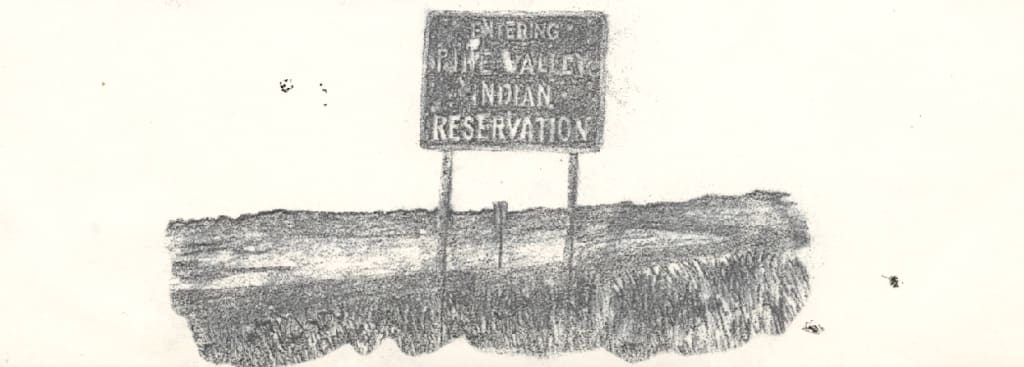
Twenty miles on: Dakota border. And as he drives, desperate, Mitsch becomes fixated on a feeble old horse, a horse named Clinton, as it gallops alongside the road. Blind. Once loved, long forgotten. Stole some years earlier in an act of spite. And thrilled, thrilled at this so-called sight of a quickly passing car. Mitsch rolls down the window, smiles and waves at the horse and then crashes, drives right into the town’s prized new wood job, a big round sign with native symbols carved in that reads:
PINE VALLEY INDIAN RESERVATION
Spends nine wet days defrosting in an argument with Indian mechanic who drags a dead eagle out of his fender. Symbolic of something, surely. Is tired. Checks the little black book, reads names of appointments unmet. Has travelled far and dreams of departing again. Wonders about the sale of bibles in this territory. Is told the damage and wait for parts to be an estimated three weeks and says, exasperated, “I’ve got to get the fuck out of Indian country.”
But couldn’t. For it was all around.
Note: The line “Under the bronze leaves a colt was foaled” comes from the poem “Anabasis” by St. John Perse. It is the inspiration for this text, and not original to it’s author. The rest of the poem by Perse serves as a rhythmic guide for some of the sentence structure that follows.
About the Creator
Whiskey At Dusk
Guess the whiskey was more important to you in the end, wasn’t it? It was more than the well-being of your friends; more vital than showing up to the places you promised you would and could come to; more critical of a matter than fulfilling your damn responsibilities and getting the press off your back.
By Snarky Lisa2 days ago in Humans


Comments
There are no comments for this story
Be the first to respond and start the conversation.